Published: 15 Mar 2026, 09:00 am

The ongoing conflict involving Israel, the United States, and Iran has entered its sixteenth consecutive day as of Sunday, 15 March, intensifying fears of a broader regional escalation in the Middle East. Israeli and American forces have continued coordinated strikes on Iranian military and strategic facilities, while Tehran has responded with retaliatory missile and drone attacks targeting both Israeli territory and United States military installations across the region.
According to regional reports, Iran has carried out several surprise strikes against American bases stationed in the Middle East, signalling a widening theatre of confrontation. Israeli authorities have simultaneously maintained a hardline stance, declaring that their military campaign against Iran will continue until the current Iranian government is removed from power.
However, amid the ongoing hostilities, new concerns have emerged regarding Israel’s defensive capabilities. A report by the Qatar-based international news network Al Jazeera has suggested that Israel may be facing a significant strain on its missile defence systems as the conflict drags on.
In particular, the report indicates that Israel’s stockpile of interceptor missiles—critical components used to destroy incoming ballistic missiles—has been diminishing rapidly due to the sustained pace of Iranian attacks. Interceptors are specialised defensive missiles designed to track, intercept, and neutralise incoming projectiles before they reach their targets.
According to the American news outlet Semafor, Israeli officials informed Washington earlier this week that the country’s reserves of ballistic missile interceptors have fallen to what they described as a “concerningly low level”. The information was reportedly confirmed by several US officials familiar with the discussions between the two allies.
The issue, according to those officials, is not entirely new. The United States had already been aware for several months that Israel’s interceptor reserves were gradually declining. Nevertheless, American authorities emphasised that the United States itself is not currently experiencing a similar shortage in its missile defence stockpiles.
Israel operates one of the most sophisticated multi-layered missile defence systems in the world, developed in close cooperation with the United States. These systems are designed to counter threats ranging from short-range rockets to long-range ballistic missiles.
Below is an overview of Israel’s principal missile defence systems:
| Defence System | Primary Function | Type of Threat Intercepted |
|---|---|---|
| Iron Dome | Short-range rocket interception | Rockets and artillery shells |
| David’s Sling | Medium-range missile defence | Cruise missiles and heavy rockets |
| Arrow System | Long-range ballistic missile defence | Ballistic missiles from distant adversaries |
Military analysts note that sustained high-intensity warfare can place immense pressure on even the most advanced defensive networks. Each interceptor missile is expensive to manufacture and deploy, and production capacity cannot always keep pace with prolonged combat operations.
Furthermore, Iran possesses a substantial arsenal of ballistic missiles and unmanned aerial vehicles, enabling it to launch repeated waves of attacks. This strategy can potentially overwhelm defensive systems by forcing them to expend large numbers of interceptors in a short period.
The mounting strain on Israel’s missile defences may also explain recent reports of increased American military deployments in the Middle East. Washington has reportedly moved additional naval assets and troops into the region, a move widely interpreted as an effort to bolster allied security and deter further escalation.
As the conflict continues with no clear diplomatic breakthrough in sight, concerns are growing that the confrontation could destabilise the wider Middle East. Prolonged hostilities between Israel and Iran, especially with direct US involvement, risk triggering broader geopolitical consequences affecting regional security, global energy markets, and international diplomatic relations.

> Jubo Dal Leader Held Over Exam Disruption
> Japan Declines Naval Deployment to Hormuz
> Thunderstorms and Hail Forecast Across Bangladesh
> Fuel Supply Rationing Lifted Ahead of Eid
> Avril Lavigne’s Enduring Influence in Global Music
> Kona-Limon’s Eid Musical Romance ‘Premer Golpo’
> Sujan’s Journey: Lessons from True Mentors
> MetLife Bangladesh and GP Join Forces Nationwide
> IMF Pledges Continued Support to Bangladesh
> Iran Conditions Hormuz Passage on Chinese Yuan
> Kings Surge Ahead with Victory Over Fortis
> U.S. Military Refuelling Aircraft Crash in Iraq


Japan has indicated that it is unlikely to dispatch naval warships to the strategically vital Strait...

For more than two decades, Canadian singer and songwriter Avril Lavigne has remained a significant f...

Despite escalating conflict across parts of the Middle East and calls to postpone the fixture, Iraq’...

Recent scientific research suggests that the length of a day on Earth is gradually increasing as the...

British singer‑songwriter Sienna Spiro has unveiled her latest single, The Visitor, via Capitol Reco...
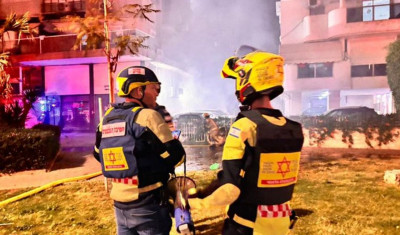
Israeli authorities reported on Sunday that multiple ballistic missiles were launched from Iranian t...

The intensifying confrontation between the United States, Israel, and Iran is testing the resilience...

The United States has launched a $20 billion government-backed maritime reinsurance programme to sec...

Arsenal midfielder Max Dowman has made history by becoming the youngest goalscorer in Premier League...

In a recent telephone interview with NBC, United States President Donald Trump asserted that while I...

The recent Israeli military strikes in Lebanon have claimed the lives of at least 826 people, the Le...

Iran has declared it will take decisive action following a devastating assault on its naval frigate,...


Availabe for iphone & ipads

Available in google play
 বাংলা
বাংলা