Khaborwala Online Desk
Published: 26 Feb 2026, 05:16 pm
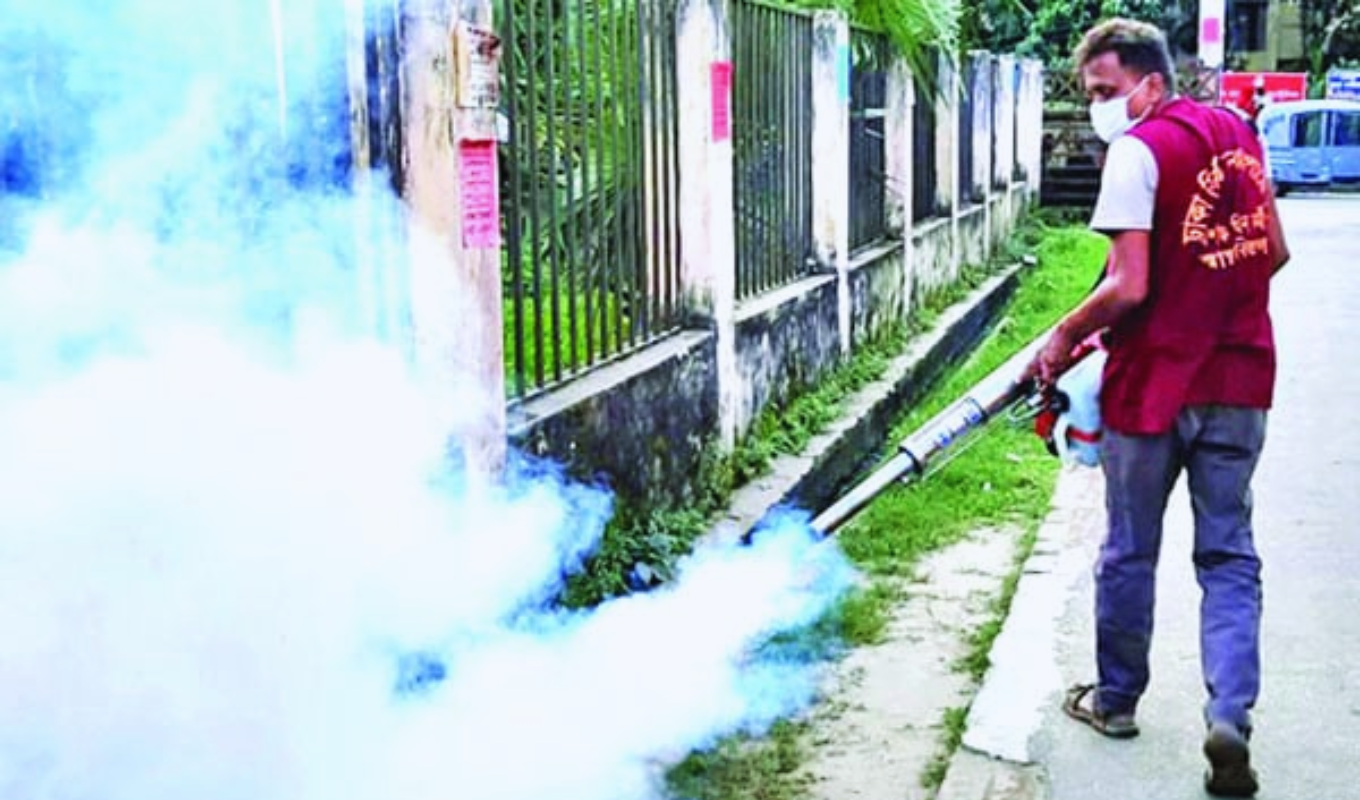
Across Bangladesh, citizens are enduring an unprecedented surge in mosquito infestations, with Culex mosquitoes multiplying unchecked in urban and semi-urban areas. From dawn to dusk, people are being bitten relentlessly, while public health experts warn that the outbreak is quietly driving the spread of dengue fever. Residents report that conventional measures, such as coils, electric bats, and mosquito nets, are proving largely ineffective.
Speaking from Mohakhali’s Amtoli market, shopkeeper Ismail Hossain described the situation: “From the moment I open my shop in the morning until I close at night, it feels like a thousand mosquitoes have bitten me. I wear socks to protect my feet, yet my hands and face are covered in red welts. Neither coils nor electric bats work. We cannot operate the shop under a mosquito net—it’s impossible.”
In response to rising public concern, Health Minister Sardar Md. Sakawat Hossain Bakul and State Minister M. A. Muhit visited the field yesterday to inspect mosquito control measures and test the effectiveness of insecticides. Addressing the press in Saidabad after inspecting Dhaka South City Corporation’s mosquito control activities, the Health Minister stated:
“Culex mosquitoes have increased alarmingly. We have already initiated steps to prevent dengue. Samples of larvicide and adulticide have been collected for quality testing, and full-scale spraying will begin shortly. Citizens must cooperate—standing water in tyres or containers is a breeding ground for mosquitoes. Homes must be kept clean and dry.”
He added that speedboats will be deployed to spray larvicides in drains, canals, and stagnant water bodies, while Dhaka North City Corporation’s storage facilities for mosquito control chemicals in Mirpur-2 were also inspected by State Minister Muhit.
Entomology expert Dr. Kabirul Bashar of Jahangirnagar University highlighted the importance of targeted interventions:
“Culex mosquito populations will continue to rise until rainfall ceases. Drains, canals, and stagnant water must be cleaned, and larvicides applied precisely. Control measures for Aedes and Culex mosquitoes differ, so an integrated, science-based approach is necessary. In Dhaka, 80% of Aedes breeding occurs in three areas: construction sites (47%), building basements (17%), and plastic drums (15%). Targeted insecticide application is essential.”
| Breeding Site | Larvae Proportion (%) | Notes |
|---|---|---|
| Construction site floors | 47 | Stagnant water and debris provide ideal breeding conditions |
| Building basements | 17 | Water collects in low-lying areas |
| Plastic drums | 15 | Unattended containers store water for larvae |
The mosquito crisis is not limited to Dhaka. Reports from across the country illustrate the severity of the situation:
Rajbari: Blocked drains and waste accumulation have intensified mosquito infestations, disrupting daily life.
Patuakhali: Wards 3, 4, and 6 face extreme risk. Over 500 dengue cases reported in the past year, with at least five deaths in the Sagu Bagh area alone.
Mymensingh: Stagnant water and uncleaned drains facilitate breeding; both day and night bites endanger children and the elderly.
Bagerhat: Of 7.53 sq km, 88 km of drains remain uncleaned, affecting 80,000 residents; 256 dengue and chikungunya cases reported in eight months, with five fatalities.
Rangpur: 10,000 litres of insecticide, 80 foggers, and 66 hand sprayers have been mobilised for city-wide control.
Rajshahi: Despite sporadic fogging, mosquito proliferation continues unabated across homes, schools, and offices.
Narayanganj & Siddhirganj: Evening bites are severe; city residents fear increased risk during the upcoming monsoon.
Gazipur: Severe Culex infestation, though the city corporation claims ongoing control efforts.
Chattogram: Fogging occurs irregularly; breeding persists in drains and waste-filled canals, raising doubts about effectiveness.
Sylhet: Continuous mosquito pressure day and night; recent administrative orders aim to restart control operations immediately.
Other affected districts include Nilphamari, Bogura, Dinajpur, Meherpur, and Munshiganj, all reporting rising mosquito populations, stagnant water, clogged drains, and ineffective insecticide use.
Experts warn that without prompt and coordinated mosquito control, the approaching monsoon may worsen dengue and chikungunya outbreaks. Effective management requires regular drain cleaning, targeted larvicide application, and citizen cooperation. Only a planned, science-driven intervention can mitigate the public health crisis.
At present, citizens nationwide remain distressed by mosquito infestations, and urgent action is necessary to prevent further disease transmission.

> Winter Blues Festival Returns to Echuca 2026
> Alleged Illegal Sand Extraction Linked to MP Relative
> Newly Appointed IGP Pays Tribute to War Heroes
> BNP Must Prioritise Justice Over Loyalty: Aman Ullah Aman
> 29 Academic and Administrative Vacancies Announced
> Landlords Rush to Insure Before Reform
> Finance Ministry Replaces Bangladesh Bank Governor
> Mostakur Rahman Set to Become Bangladesh Bank Governor
> Saudi Arabia Bans Poultry Imports from 40 Countries
> Saudi Returnees Highlight Abuse, Trauma, and Gaps
> Zara Larsson Blocks Abusive Artists on Spotify
> Himalayan Employment: Nepal’s Job Market and Lives

In the Gopalganj constituency of Kotalipara-Tungipara, allegations have emerged of illegal sand extr...

The newly appointed Inspector General of Police (IGP), Md. Ali Hossain Fakir, has paid profound trib...

Aman Ullah Aman, adviser to the BNP Chairperson and newly elected Member of Parliament for Dhaka-2,...

Nawaganj University has officially issued a recruitment notice for both academic and administrative...
_1772112124.png)
In Faridpur, a large mahogany tree suddenly collapsed onto three rickshaws on Mujib Road on Thursday...

Transparency International Bangladesh (TIB) has expressed deep concern regarding the appointment of...
A former Union Parishad (UP) member in Narsingdi’s Raipur upazila has been brutally murdered, with l...

The newly appointed Chief Prosecutor of the International Crimes Tribunal (ICT), Md. Aminul Islam, h...

Authorities in Dhaka have recovered the body of a young female university student from a flat in the...

A troubling incident in Bhola has raised alarm after a mother was allegedly rendered unconscious wit...
Prime Minister Tarique Rahman is set to take residence at the state guesthouse Jamuna in Dhaka, mark...

Legendary Bangladeshi musician Ayub Bachchu has been posthumously awarded the country’s second-highe...


Availabe for iphone & ipads

Available in google play
 বাংলা
বাংলা