Published: 04 Mar 2026, 07:13 am

In the volatile landscape of modern agriculture, Bangladeshi farmers find themselves on the front lines of an escalating battle against nature. Each year, thousands of hectares of arable land are decimated by a relentless cycle of flash floods, droughts, erratic monsoon rains, and devastating cyclones. For the majority of smallholders, who often finance their seasonal crops through high-interest loans from banks or NGOs, a single natural disaster does not merely signify a lost harvest—it triggers a spiral of perennial debt. As the fields lie fallow and the debt collectors remain insistent, a critical question emerges: Can agricultural insurance transform from a theoretical concept into a robust institutional safety net?
Agricultural insurance is not entirely a new phenomenon in Bangladesh. For over a decade, various pilot schemes—primarily Weather Index-Based Crop Insurance (WBCI)—have been tested through partnerships between the state-owned Sadharan Bima Corporation (SBC) and international development agencies. These initiatives, alongside niche products for livestock from private insurers, have proved that the mechanism is technically feasible. In specific districts, payouts have been successfully triggered, providing a glimmer of hope.
However, the primary bottleneck remains the lack of scale. While pilot projects demonstrate success in isolated pockets, the vast majority of the country's marginal and small-scale farmers remain utterly exposed to climate risks. Without national integration, these efforts remain "boutique" solutions rather than a comprehensive national security grid.
The shift towards index-based insurance is a strategic response to the logistical nightmare of traditional "damage-based" assessments. In a traditional model, an adjuster must visit every field to verify losses—a process that is slow, expensive, and prone to corruption. In contrast, index-based insurance triggers payouts automatically when a predefined weather parameter (such as rainfall levels or temperature) is breached.
Comparison of Insurance Models for Smallholders:
| Feature | Traditional Crop Insurance | Weather Index-Based Insurance |
|---|---|---|
| Claim Trigger | Physical inspection of crop loss | Breach of weather parameters (e.g., <20mm rain) |
| Speed of Payout | Slow (Months) | Rapid (Days/Weeks) |
| Administrative Cost | High (Requires field staff) | Low (Data-driven) |
| Transparency | Subjective / Prone to disputes | Objective / Data-reliant |
| Primary Risk | Moral hazard (Farmers neglecting crops) | Basis Risk (Weather station data vs. actual field loss) |
For agricultural insurance to evolve into a genuine safety net, several structural hurdles must be cleared. Firstly, the premium structure is a significant barrier; marginal farmers cannot afford regular premiums without state intervention. Globally, successful agricultural insurance programmes rely heavily on government subsidies. Bangladesh currently lacks a unified, long-term subsidy framework to transition these pilots into permanent national programmes.
Secondly, the infrastructure for Digital Weather Data must be modernised. Precise indexing requires a dense network of automated weather stations to minimize "basis risk"—the discrepancy between weather station readings and the actual conditions on a specific farm.
Finally, integration is key. Insurance products should be bundled with existing agricultural services, such as crop loans or seed distribution, through the vast networks of microfinance institutions and the Department of Agricultural Extension.
The potential for agricultural insurance in Bangladesh is undeniable. The success of early pilot projects provides a blueprint, but in a country ranked among the most climate-vulnerable in the world, experimental initiatives are no longer sufficient. If the government can provide policy certainty, technological investment, and sustainable premium subsidies, agricultural insurance can finally offer farmers the dignity of a safety net rather than the desperation of a debt trap.

> Rio Ferdinand Converts Dubai Studio Into Wartime Bunker
> Selena Gomez Confirms Taylor Swift Wrote Songs About Her
> Central Zone Dominate Lacklustre BCL One-Day Final
> Crop Insurance: A Safety Net for Farmers?
> Mojtaba Khamenei Ascends as Iran’s New Supreme Leader
> Tehran Claims Major US Casualties as Carrier Retreats
> China Vows Support for Iranian Sovereignty Amid Conflict
> Two Years Ago, Iqra Found Out that Alvi was Involved with Another Woman
> Tariq Ramadan Faces Rape Trial in Paris
> UCB and EY Forge Strategic Sustainability Partnership
> Violence Erupts at Dhaka Polytechnic Between Student Factions
> Celestial Spectacle: Rare Total Lunar Eclipse Visible Today


In a final that failed to live up to the high-stakes drama expected of a title decider, Central Zone...
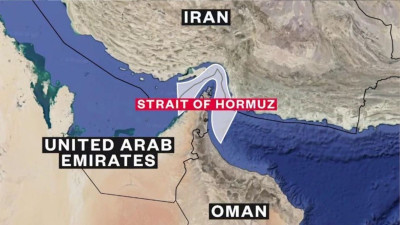
A fleet of Bangladeshi merchant vessels is currently navigating a perilous security crisis near the...
A significant controversy has emerged regarding the post-tenure security arrangements for Professor...
In the heart of Old Dhaka, flanking the banks of the Buriganga River, lies the century-old Badamtali...

In a significant shift within Bangladesh’s premier graft-fighting agency, the Chairman of the Anti-C...

In a significant policy pivot aimed at bolstering the private sector, Bangladesh Bank has announced...

In a significant move toward financial transparency, the Bangladesh Financial Intelligence Unit (BFI...
The Dhaka North City Corporation (DNCC) has announced that its ambitious waste-to-energy project rem...
In Sirajganj’s Ullapara area, a mobile court has sentenced two local YouTubers to one month in priso...

Popular singer and BCB director Asif Akbar has formally declared his innocence in a case filed under...
_1772550570.jpg)
Passengers travelling by metro rail and long-distance trains will now be eligible for a 25% fare dis...

A tragic and mysterious incident has gripped the community of Ukhiya in Cox's Bazar, following the s...


Availabe for iphone & ipads

Available in google play
 বাংলা
বাংলা