Khabowrala online Desk
Published: 30 Mar 2026, 10:03 pm

Australian households are facing mounting financial pressure as private health insurance emerges as one of the most stressful recurring expenses, with new research revealing that many policyholders are inadvertently overpaying due to inaction.
Fresh data from comparison platform Finder indicates that a significant proportion of Australians are failing to reassess their health cover, even as premiums are set to rise sharply. According to a survey of 884 insured individuals, more than one in five have not reviewed or compared their policies in the past year, leaving them vulnerable to unnecessary costs and outdated coverage.
This complacency comes at a critical time. The Australian Government has approved an average premium increase of 4.41% across the private health insurance sector, effective from 1 April 2026. This marks the steepest rise in nearly a decade, intensifying the financial strain on households already grappling with broader cost-of-living pressures.
Finder’s Consumer Sentiment Tracker underscores the growing burden: 27% of insured Australians now rank health insurance among their top three most stressful recurring bills. This places it alongside major expenses such as rent, mortgage repayments, and energy bills, highlighting its significant impact on household budgets.
The scale of Australia’s private health insurance market further amplifies the issue. Data from the Australian Prudential Regulation Authority (APRA) shows that as of December 2025, millions of Australians rely on such coverage, making even small inefficiencies in policy selection financially consequential at a national level.
| Category | Data / Insight |
|---|---|
| Survey sample size | 884 policyholders |
| Policyholders not comparing (12+ months) | Over 20% |
| Average premium increase (2026) | 4.41% |
| Australians stressed by health cover | 27% rank it in top 3 bill worries |
| Private hospital cover holders | 12.6 million (45.6% of population) |
| Extras cover holders | 15.3 million (55.3% of population) |
| Potential incentives for switching | Up to $700 cashback, rewards, or free months |
Industry experts warn that inertia is costing consumers dearly. Taylor Blackburn, an insurance specialist at Finder, notes that many Australians remain locked into policies that no longer align with their healthcare needs or financial circumstances. Over time, life changes—such as ageing, family growth, or shifts in income—can render existing cover either excessive or insufficient.
Compounding the issue is the structure of the insurance market itself. Insurers frequently reserve their most attractive deals—such as cashback offers, airline loyalty points, or complimentary months of cover—for new customers. Existing policyholders, unless they actively negotiate or switch providers, rarely benefit from these incentives.
This dynamic creates a “loyalty penalty”, where long-term customers effectively subsidise more competitive deals offered to newcomers. As a result, those who do not regularly review their policies may end up paying for services they no longer use, while missing out on better-value alternatives.
Blackburn advises Australians to treat health insurance in the same way as other major household expenses, such as utilities or mortgage rates—requiring at least an annual review. In a high-inflation environment, even modest savings can accumulate significantly over time.
He also emphasises the importance of aligning cover with actual needs. For instance, younger and healthier individuals may benefit from more basic policies, while families or older Australians might prioritise comprehensive hospital and extras cover. Without periodic reassessment, policyholders risk both overpaying and being underinsured.
As premiums continue to climb, the message from experts is clear: complacency comes at a cost. With millions of Australians affected and price rises imminent, proactive comparison and negotiation may prove essential in easing the growing financial burden of private health insurance.

> Husband Films Wife’s Suicide in Chattogram Case
> Lightning Strike Kills Returnee Youth in Bijoynagar
> MP Loses Shoe While Praying in Parliament
> UN Diplomat Resigns Warning of Nuclear Strike on Iran
> Opposition MP Questions Transport Minister Over Road Deaths
> HSC Exams in Bangladesh Set for June Start
> Mauritania Players Clash Over Messi Shirt After Dream Match
> Karachi Edge Lahore in Tight PSL Low-Scoring Thriller
> Intense Battle in the Ballon d’Or Race, Who Will Be This Year’s Winner?
> UAE Demands Compensation from Iran Over Conflict Damage
> Four Rescued in Teknaf Human Trafficking Raid
> NCP Announces Mayoral Candidates Across Five Cities


A senior United Nations-affiliated diplomat has resigned from his post, issuing a stark warning to t...

Iran has firmly dismissed Pakistan’s assertion that it is facilitating or mediating indirect talks b...

Pakistani fast bowler Naseem Shah has been fined PKR 20 million (approximately BDT 8.8 million) by t...
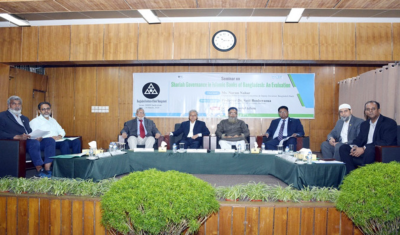
Amid the rapid expansion of Islamic banking in Bangladesh, leading experts and regulators have calle...

The recovery of Social Islami Bank Limited (SIBL) has reportedly been hindered by regulatory inactio...

The global marine insurance sector continues to demonstrate resilience despite escalating geopolitic...

France’s commanding 3–1 victory over Colombia has once again underlined the extraordinary depth with...

Amnesty International has issued a stark warning to football supporters ahead of the 2026 FIFA World...

The United Kingdom is preparing to deploy advanced underwater drones to the strategically vital Stra...

Pakistan’s Foreign Minister, Ishaq Dar, is set to travel to Beijing, China, on Tuesday, 31 March, in...

The Confederation of African Football’s (Confederation of African Football) Secretary General, Véron...

Celine Dion remains one of the most influential voices in modern music history. Her global breakthro...


Availabe for iphone & ipads

Available in google play
 বাংলা
বাংলা