Khabowrala online Desk
Published: 30 Mar 2026, 10:26 pm
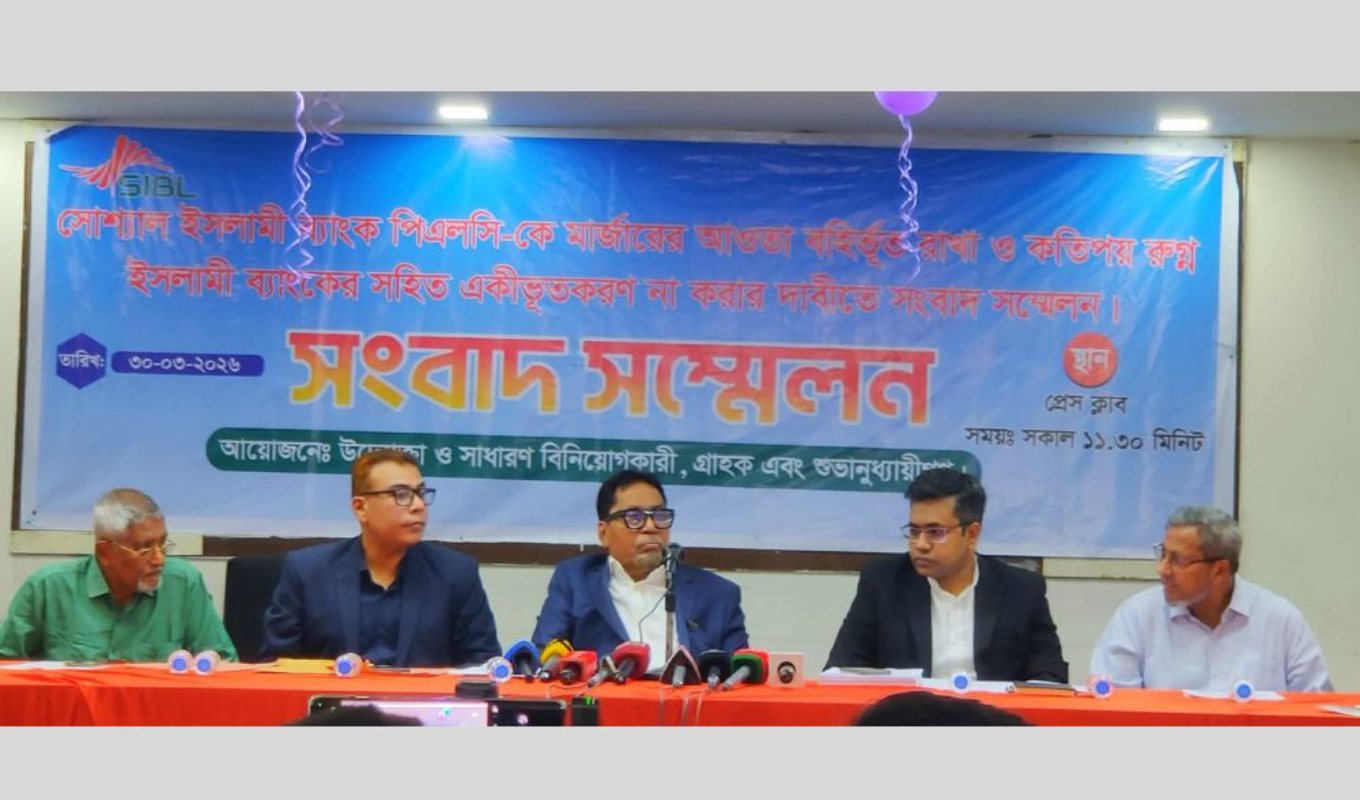
The recovery of Social Islami Bank Limited (SIBL) has reportedly been hindered by regulatory inaction and governance challenges over several years, with fresh allegations pointing to systemic failures involving both influential business groups and oversight authorities.
At a press conference held at the National Press Club on Monday, legal counsel representing the bank’s founding chairman, Major (Retd.) Dr Rezaul Haque, outlined a series of claims regarding the prolonged deterioration of what was once considered a profitable institution. According to the lawyer, Mr Mahmudul Hasan, the bank’s decline over the past seven to eight years was not merely the result of internal mismanagement, but also reflected broader regulatory shortcomings.
He alleged that a powerful business conglomerate, widely identified as the S Alam Group, played a central role in undermining the bank’s financial stability. However, he emphasised that the responsibility was not limited to private actors. The Bangladesh Bank, he claimed, failed to take timely corrective measures despite being aware of irregularities, thereby contributing to the institution’s ongoing crisis.
One of the more serious allegations relates to events during the tenure of former Prime Minister Sheikh Hasina. It was claimed that key stakeholders were compelled under duress to relinquish ownership stakes, allegedly after being taken to intelligence offices and pressured into signing documents. At the time, fear and political circumstances reportedly prevented those involved from speaking out.
Following the political transition on 5 August, stakeholders had hoped that a new administration would pave the way for reforms and recovery. However, according to the claims presented, these expectations have not materialised. The lawyer alleged that during the tenure of former central bank governor Ahsan H Mansur, a lack of cooperation further impeded the bank’s turnaround efforts.
Instead of reinstating experienced sponsor shareholders, the bank’s management was reportedly handed over to individuals lacking adequate banking expertise. Over the past eighteen months, these administrators are said to have failed to prioritise the institution’s interests, operating instead under strict directives from the central bank. As a result, SIBL continues to struggle with financial instability and operational challenges.
| Issue Category | Details |
|---|---|
| Duration of decline | Approximately 7–8 years |
| Regulatory concerns | Alleged inaction by Bangladesh Bank despite known irregularities |
| Business group involvement | Alleged role of S Alam Group |
| Governance changes | Replacement of sponsor shareholders with reportedly inexperienced administrators |
| Non-performing loans | High and increasing |
| Central bank borrowing | Significant reliance |
| Recovery timeframe suggested | Up to 8 years |
| Investor interest | Interest from major industrial groups, including IDB-linked entities |
Mr Hasan further noted that no senior officials or banking professionals have yet faced legal consequences for the alleged misconduct, raising concerns about accountability within the sector. He argued that without addressing past irregularities, meaningful reform would remain elusive.
In response to questions from journalists, he acknowledged the scale of the bank’s financial difficulties, particularly its high volume of non-performing loans and dependence on central bank liquidity support. Given these challenges, he suggested that a realistic recovery plan would require at least eight years, rather than expecting immediate results.
Despite the difficulties, there are indications of potential investor interest. According to the statement, several large industrial groups—including entities linked to international organisations such as the Islamic Development Bank (IDB)—have expressed willingness to invest in the bank. This, he argued, could provide a pathway to recovery without excessive reliance on newly printed central bank funds.
In a written statement, Major (Retd.) Dr Rezaul Haque strongly criticised the current management structure, claiming that decisions taken over the past eighteen months had further weakened the institution. He alleged that shareholders had been effectively sidelined through mechanisms that rendered their holdings worthless, shifting the burden of alleged financial misconduct onto ordinary investors.
He also called on the government to reconsider any plans to merge SIBL with other institutions, arguing instead for a restructuring that restores control to its original entrepreneur(fix English) -> original entrepreneur= original entrepreneur-> fix to English: original entrepreneur shareholders.
He also called on the government to reconsider any plans to merge SIBL with other institutions, arguing instead for a restructuring that restores control to its original sponsor shareholders. According to him, experienced ownership could have delivered meaningful improvements had they been given the opportunity.
Concerns were also raised regarding depositors and business clients. Thousands of customers are reportedly still awaiting the return of their funds, while many businesses associated with the bank have faced severe operational disruptions. Some enterprises, he claimed, have been forced to cease operations after being classified as defaulters and subsequently denied access to financing from other institutions.
The stakeholders have urged the government to intervene swiftly, calling for dialogue with the central bank and the presentation of a structured investment plan aimed at reviving the institution. They also expressed reservations بشأن (non-English fix) -> remove.
They also expressed reservations regarding proposed legislative measures, including the Banking Regulation Act 2025, which they fear could further weaken the bank’s position.
As the situation unfolds, the future of SIBL remains uncertain. However, the allegations presented underscore broader concerns about governance, regulatory oversight, and accountability within Bangladesh’s banking sector. Stakeholders argue that without decisive action and structural reform, restoring confidence in the institution—and the wider financial system—will remain a significant challenge.

> Husband Films Wife’s Suicide in Chattogram Case
> Lightning Strike Kills Returnee Youth in Bijoynagar
> MP Loses Shoe While Praying in Parliament
> UN Diplomat Resigns Warning of Nuclear Strike on Iran
> Opposition MP Questions Transport Minister Over Road Deaths
> HSC Exams in Bangladesh Set for June Start
> Mauritania Players Clash Over Messi Shirt After Dream Match
> Karachi Edge Lahore in Tight PSL Low-Scoring Thriller
> Intense Battle in the Ballon d’Or Race, Who Will Be This Year’s Winner?
> UAE Demands Compensation from Iran Over Conflict Damage
> Four Rescued in Teknaf Human Trafficking Raid
> NCP Announces Mayoral Candidates Across Five Cities


A deeply disturbing incident in Anwara upazila of Chattogram has led to the recovery of the body of...

A tragic incident has been reported from Bijoynagar upazila in Brahmanbaria district, where a 24-yea...
A light-hearted yet unusual incident unfolded within Bangladesh’s National Parliament when a Member...
A heated exchange unfolded in Bangladesh’s National Parliament on Monday as a Member of Parliament f...
The Higher Secondary Certificate (HSC) and equivalent examinations in Bangladesh are set to commence...

Renowned Bangladeshi singer Partha Barua has returned with a new musical release titled “Shohojolovy...

Although Bangladesh’s hopes of qualifying for the AFC Asian Cup finals have already been extinguishe...

United States-based forward Ronan Sullivan has emerged as one of the standout names in the ongoing S...

A legal case involving allegations of marriage without formal divorce has continued in a Dhaka court...
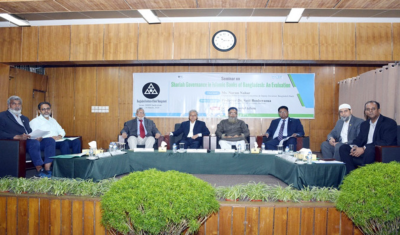
Amid the rapid expansion of Islamic banking in Bangladesh, leading experts and regulators have calle...

The global marine insurance sector continues to demonstrate resilience despite escalating geopolitic...

Australian households are facing mounting financial pressure as private health insurance emerges as...


Availabe for iphone & ipads

Available in google play
 বাংলা
বাংলা