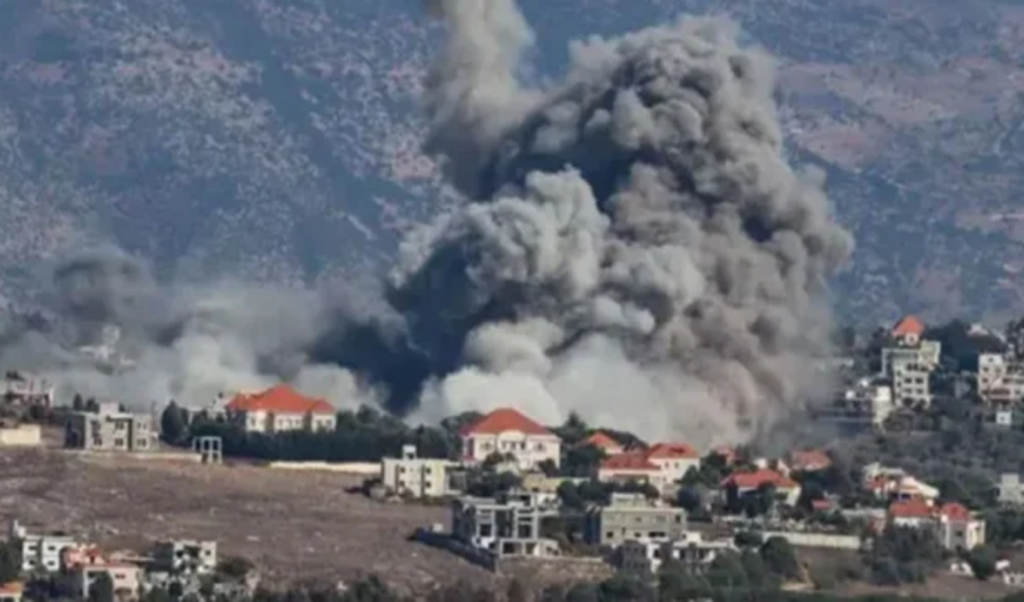
Israeli air operations over southern Lebanon have continued with renewed intensity, as multiple strikes were reported across several locations, further escalating an already volatile regional conflict. Fresh bombardments were carried out shortly before reporting time, with southern areas of the country again coming under aerial attack.
According to local accounts, Israeli aircraft targeted several positions in the south, including the outskirts of Deir Qanoun al-Nahr, as well as the towns of Shakra and Al-Bazouriya. Explosions were reported across these areas, although immediate confirmation of casualties or material damage from the latest strikes has not yet been made available by official sources.
The renewed attacks form part of an ongoing Israeli military campaign that has been continuing since 2 March, during which repeated air raids have been launched on southern and other parts of Lebanon. The sustained nature of the strikes has deepened concerns over civilian safety and the widening scope of regional hostilities.
Rising humanitarian toll
Earlier in the day, Lebanon’s Ministry of Public Health released updated casualty figures, reporting a significant rise in fatalities and injuries since the escalation began. According to the ministry, at least 2,055 people have been killed and 6,588 others wounded as a result of Israeli strikes across the country.
Medical officials have warned that the humanitarian situation continues to deteriorate, particularly in southern districts where infrastructure damage and repeated displacement have placed additional strain on emergency and healthcare services. Hospitals in affected regions are reportedly operating under severe pressure as casualty numbers continue to rise.
Casualty overview (official figures)
| Category | Reported number |
|---|---|
| Fatalities | 2,055 |
| Injuries | 6,588 |
| Duration of escalation | Since 2 March |
| Main affected region | Southern Lebanon |
Continued strikes across multiple locations
The latest wave of air raids reportedly focused on several strategic and residential zones in southern Lebanon. While details remain limited, residents described sudden explosions and low-flying aircraft activity over multiple towns. Emergency teams have been deployed to assess damage, but access to some affected areas remains restricted due to ongoing security risks.
The targeted locations—including Deir Qanoun al-Nahr, Shakra, and Al-Bazouriya—have experienced repeated strikes in recent weeks, underscoring the persistence of military operations in densely populated southern districts.
Escalating regional tensions
The continued Israeli air campaign has contributed to heightened tensions along the Israel–Lebanon frontier, raising fears of further escalation. Analysts note that the sustained tempo of air operations, combined with mounting civilian casualties, risks deepening the humanitarian crisis and further destabilising the region.
International observers have repeatedly called for restraint and renewed diplomatic engagement, warning that prolonged military escalation could have wider regional implications beyond Lebanon’s borders.
Uncertain outlook
As of the latest reports, no formal update has been issued regarding the extent of damage from the most recent strikes. However, with operations continuing and casualty figures already exceeding two thousand deaths, concerns remain high over the trajectory of the conflict.
Lebanon’s health authorities and emergency services are expected to issue further updates as assessments continue. Meanwhile, the situation on the ground remains fluid, with the risk of additional strikes persisting across southern and potentially other regions of the country.