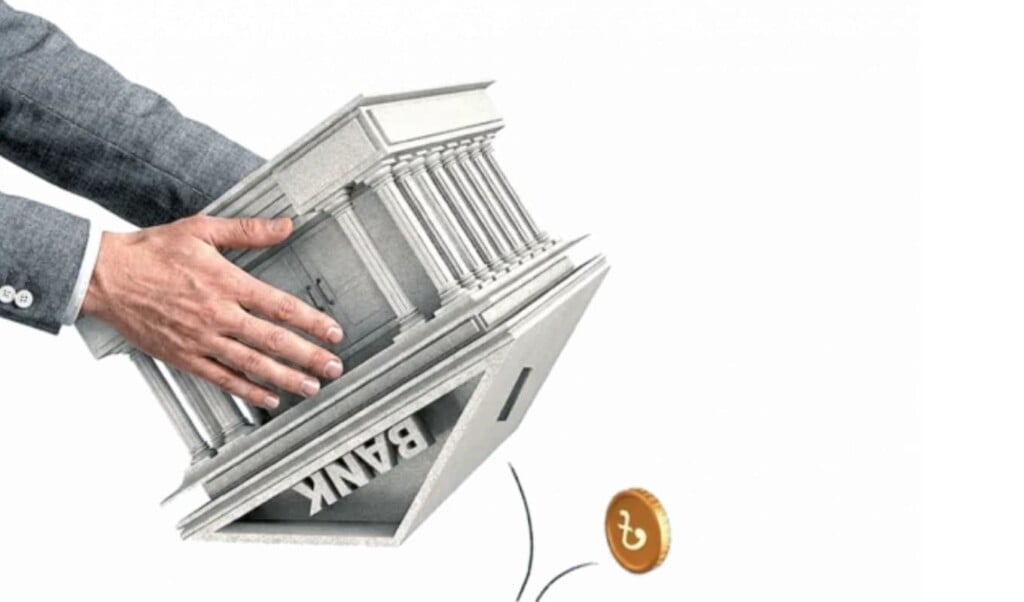
The interbank money market in Bangladesh has remained under severe structural pressure throughout May 2026, driven by an uneven distribution of capital across the financial sector. While seasonal spikes in call money rates typically subside immediately following the Eid-ul-Azha holiday trading rush, the current fiscal month has seen an unprecedented extension of high borrowing costs across all standard maturities.
According to consolidated data from Bangladesh Bank, average overnight lending rates maintained a double-digit footing from the first week of May through to 24 May 2026, settling between 9.90 per cent and 10.19 per cent. Simultaneously, the maximum transaction rate frequently touched its regulatory ceiling of 13 per cent, moving from short-term tools into longer-term credit instruments.
Liquidity Inequities and Regulatory Mandates
Treasury operations heads indicate that the domestic financial system is not suffering from an absolute deficit of local currency. Instead, liquid cash has pooled within a handful of highly rated, risk-averse commercial institutions. This concentration has left a significant tier of capital-deficient banks entirely dependent on high-yield interbank borrowing to satisfy their mandatory reserve positions with the central bank.
Commercial operations must comply with strict daily and bi-weekly reserve structures overseen by the Bangladesh Bank.
The statutory targets and structural financing options available to commercial banks are detailed in the table below:
| Statutory Reserve Class | Current Regulatory Threshold | Operational Compliance Framework |
| Daily Minimum CRR | 3.0% of total deposit liabilities | Minimum physical cash deposit required at the central bank daily. |
| Bi-weekly Average CRR | 4.0% of total deposit liabilities | Prescribed average reserve balance required over the two-week cycle. |
| Statutory Liquidity Ratio (SLR) | ~13.0% for conventional lenders | Maintained via unencumbered government bonds, bills, or cash. |
| Standing Lending Facility (SLF) | Fixed at an 11.5% interest rate | Emergency window accessible only through sovereign asset collateral. |
Maturity Contagion and Yield Curve Inversions
At the beginning of May 2026, the 13 per cent maximum rate was restricted to short-notice assets, specifically the seven-day tenor on 3, 4, 6, and 7 May. However, by the final week of the month, this pricing pressure had moved along the yield curve, affecting nine-day and ten-day lines, and eventually hitting the 91-day term money market.
On 3 May, a 91-day loan carried an average interest rate of 11.87 per cent. By 24 May, both the average and peak rates for this three-month tenor converged at the 13 per cent ceiling, representing a sharp escalation in term financing costs over a four-week period. This rapid adjustment resulted in significant distortions across maturities; on 24 May, ten-day loans traded flat at 13 per cent, while 14-day funds cleared at a lower average rate of 10.12 per cent.
Treasury dealers note that such distortions typically happen when a borrowing bank faces an immediate liquidity deficit, forcing it to source funds from high-yield secondary desks after failing to secure capital from conventional primary counterparties.
Transaction Volume Contraction and Systemic Risks
Daily transaction volumes throughout May fluctuated between Tk 4,000 crore and Tk 6,000 crore, with up to 90 per cent of all trading activity focused on overnight borrowing. Peak overnight trading volumes were recorded at Tk 6,063 crore on 4 May and Tk 5,827 crore on 14 May, rarely falling below a baseline of Tk 3,200 crore.
While early May saw smooth capital transfers at an average rate of 9.99 per cent, trading volumes dropped notably by mid-month, falling to Tk 3,264 crore on 12 May and Tk 3,630 crore on 19 May, even as interest rates stayed sticky. Long-term term lending also saw a sharp decline. On 24 May, the entire 91-day term market registered just a single transaction of Tk 30 lakh at the maximum 13 per cent rate.
An anonymous private commercial bank treasury executive detailed the operational strain:
“The system as a whole is not completely short of cash, but liquidity is trapped within a few strong, risk-averse institutions. Cash-strapped banks are being forced to meet daily regulatory reserve requirements—CRR and SLR—at whatever punishing rate the market demands. When transaction volumes fall sharply while rates stay sticky or continue rising, it usually means cash-surplus banks have shut their wallets. That forces weaker banks to scramble for liquidity at any available rate. Instead of managing balance sheets with stable, longer-term funding, many banks are plugging daily liquidity gaps with overnight borrowing. Longer-term interbank lending has nearly frozen. That is not a market; that is a distress signal.”
Institutional Participants and Market Positions
The reduction in long-term interbank lending indicates lower confidence regarding counterparty credit risk among lenders. Cash-rich institutions are hesitant to extend credit beyond 14 days, a trend amplified by banks preparing for the seven-day Eid holiday closure and reserving capital for seasonal inward remittance distributions. Furthermore, capital-deficient banks often lack the sovereign treasury bills required to utilize the central bank’s repo facility, leaving them reliant on call money lines.
The primary institutional participants driving interbank activities are detailed below:
-
Net Capital Providers: BRAC Bank, City Bank, Eastern Bank, Mutual Trust Bank, Prime Bank, Pubali Bank, Dutch-Bangla Bank, Southeast Bank, Uttara Bank, and Bank Asia. These institutions hold excess deposits alongside historically low private-sector credit growth, which reached a record low of 4.7 per cent.
-
Net Capital Consumers: Islami Bank Bangladesh, United Commercial Bank (UCB), AB Bank, IFIC Bank, Premier Bank, and National Bank.