The upcoming FIFA World Cup, jointly hosted by the United States, Canada, and Mexico, is set to become the largest iteration in the tournament’s history. For the first time, the competition will expand to include 48 teams, causing the total number of matches to rise significantly from 64 to 104. This structural expansion not only broadens the scale of the tournament but also places several long-standing football records under imminent threat.
Global football attention is focused on five historic milestones that could be rewritten during the 2026 tournament.
1. Total Goals Scored in a Single Tournament
The record for the highest number of goals scored in a single World Cup was established at the FIFA World Cup Qatar 2022, where 172 goals were recorded across 64 matches. With the 2026 format introducing 40 additional fixtures, the total pool of matches reaches 104. Even if the goal-per-match average mirrors the lower scoring rates seen at the 2010 tournament in South Africa, the sheer volume of extra fixtures makes surpassing the 172-goal threshold highly probable. Statistical projections indicate the aggregate tally could exceed 200 goals for the first time.
2. First Footballers to Feature in Six World Cups
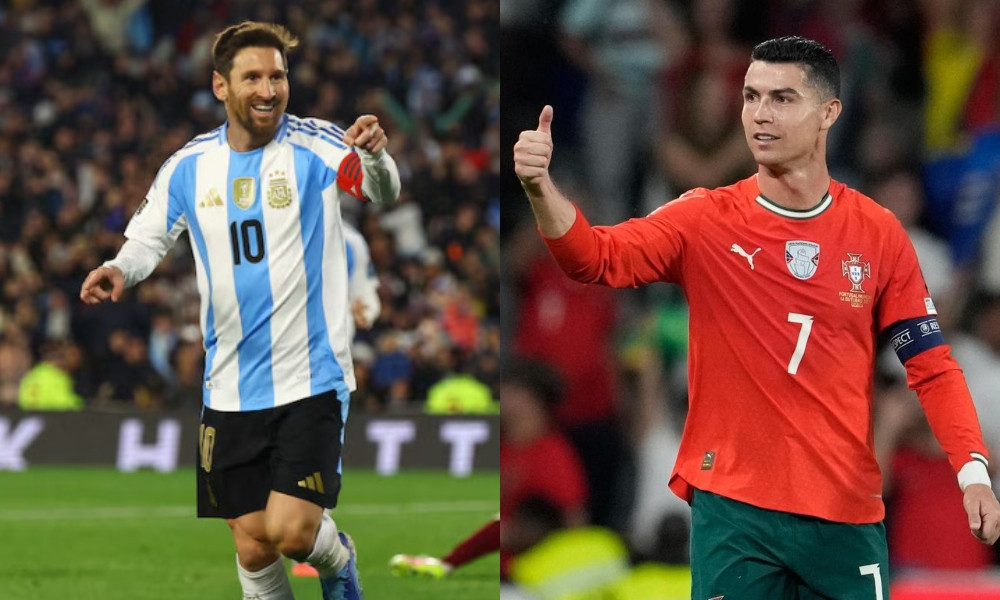
In the history of the men’s FIFA World Cup, only five players have successfully participated in five separate tournament editions. This elite group comprises Antonio Carbajal (Mexico), Lothar Matthäus (Germany), Rafael Márquez (Mexico), Cristiano Ronaldo (Portugal), and Lionel Messi (Argentina). Should Lionel Messi, Cristiano Ronaldo, or Mexican goalkeeper Guillermo Ochoa step onto the pitch during the 2026 tournament, they will become the first players to feature in six distinct World Cup editions. To secure this record, a player requires only a single second of on-field playtime during a match.
3. Miroslav Klose’s All-Time Goalscoring Record
The title of the highest goalscorer in World Cup history is held by Germany’s Miroslav Klose, who scored 16 goals across four consecutive tournaments between 2002 and 2014. Among active players, Lionel Messi currently has 13 goals, whilst France’s Kylian Mbappé has accumulated 12. To break Klose’s record, Messi requires four goals, whereas Mbappé needs five. Given Mbappé’s age and current scoring efficiency, this 12-year-old milestone faces its most significant challenge to date.
4. Most Individual Match Victories by a Player
Beyond goalscoring, Miroslav Klose also holds the record for the highest number of individual match victories by a single player in the tournament’s history, having been on the winning side in 17 matches for Germany. Lionel Messi follows closely with 16 victories. If Argentina secures at least two wins during the group stage of the 2026 tournament, Messi will surpass Klose to become the most successful player in World Cup history in terms of individual match wins.
5. Most World Cup Match Victories as a Manager
The record for the most tournament match victories by a manager has been held for nearly half a century by former West Germany manager Helmut Schön, who achieved 16 wins. The primary contender to challenge this record in 2026 is French manager Didier Deschamps, who currently possesses 14 World Cup victories. If France wins two matches during the tournament, Deschamps will equal Schön’s record. A third victory would see him break the 48-year-old record entirely, establishing a new historical milestone for managers.
World Cup Records Under Threat in 2026
The table below outlines the current records, the reigning record holders, and the specific milestones required to break them during the 2026 tournament:
| Record Category | Current Record Holder | Current Benchmarks | 2026 Targets & Requirements |
| Most Goals in a Single Tournament | Qatar World Cup (2022) | 172 goals (64 matches) | Surpassing 172 goals due to the expanded 104-match format. |
| Most World Cup Appearances | 5 Players* | 5 Tournaments | Messi, Ronaldo, or Ochoa to appear in a 6th tournament. |
| Most Individual World Cup Goals | Miroslav Klose (Germany) | 16 goals | Messi (13 goals) needs 4; Mbappé (12 goals) needs 5 to break. |
| Most Match Wins as a Player | Miroslav Klose (Germany) | 17 victories | Lionel Messi (16 victories) requires 2 wins to break. |
| Most Match Wins as a Manager | Helmut Schön (West Germany) | 16 victories | Didier Deschamps (14 victories) requires 3 wins to break. |