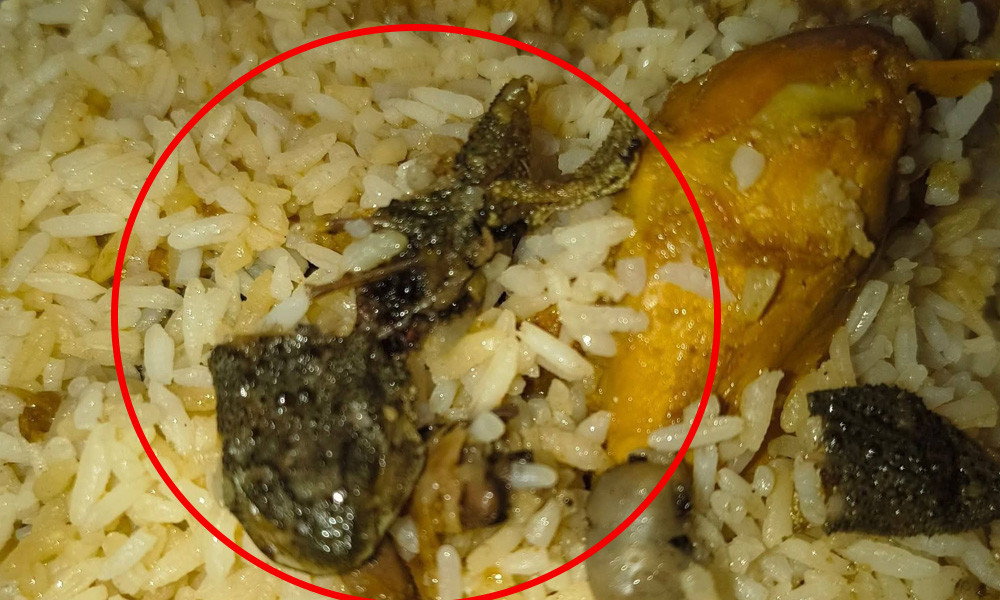
A food safety scare in Kurigram’s Roumari Upazila has sparked widespread concern after a whole frog was reportedly discovered inside a packet of morog polao purchased from a local restaurant. The incident has renewed discussions about hygiene standards and quality control practices in food establishments across the area.
The incident came to light on Monday, 1 June, when two local residents, Atiar Rahman and Ashikur Rahman, purchased five packets of morog polao from Nanna Biriyani House in Roumari. According to local sources, the meals were taken home for family consumption. While serving the food, family members allegedly found an entire frog inside one of the packets, leaving those present shocked and alarmed.
Following the complaint, the matter was reported to the local administration. Officials from the upazila administration subsequently visited the location and conducted an investigation into the allegation. After examining the evidence and verifying the claim, authorities determined that the complaint was genuine and initiated legal action against the restaurant.
Later that afternoon, a mobile court operated by the Roumari Upazila Administration imposed a fine of Tk 20,000 on the establishment. The action was taken under food safety and public health considerations, reflecting the authorities’ concern over the potential risks posed by poor food handling and preparation practices.
Administrative Action
| Item | Details |
|---|---|
| Location | Roumari Upazila, Kurigram District |
| Date of Incident | 1 June |
| Food Item | Morog Polao |
| Restaurant | Nanna Biriyani House |
| Complainants | Atiar Rahman and Ashikur Rahman |
| Allegation | Whole frog found inside food packet |
| Investigating Authority | Roumari Upazila Administration |
| Penalty Imposed | Tk 20,000 fine |
| Enforcement Method | Mobile Court |
Roumari Upazila Nirbahi Officer (UNO) Alauddin confirmed the incident and said that the administration had investigated the complaint and found evidence supporting the allegation. He stated that public health concerns were taken into account when determining the penalty.
The UNO further noted that the restaurant had been strongly warned to maintain proper hygiene standards during food preparation, storage and serving. He added that stricter legal measures could be taken if similar incidents occur in the future.
The case quickly attracted public attention after details of the incident spread across social media platforms. Many residents expressed concern about the cleanliness of local food establishments and called for more frequent inspections by regulatory authorities. Several community members argued that stronger monitoring mechanisms are necessary to ensure that restaurants comply with food safety regulations and maintain acceptable standards of sanitation.
Food safety experts generally emphasise that contamination incidents, whether caused by inadequate kitchen hygiene, poor ingredient handling or insufficient supervision, can pose significant health risks to consumers. Such incidents often highlight the importance of regular inspections, staff training and strict adherence to food preparation protocols.
The Roumari incident has therefore become more than an isolated complaint; it has prompted broader public discussion about consumer protection, restaurant accountability and the need for rigorous enforcement of food safety standards in local food businesses.