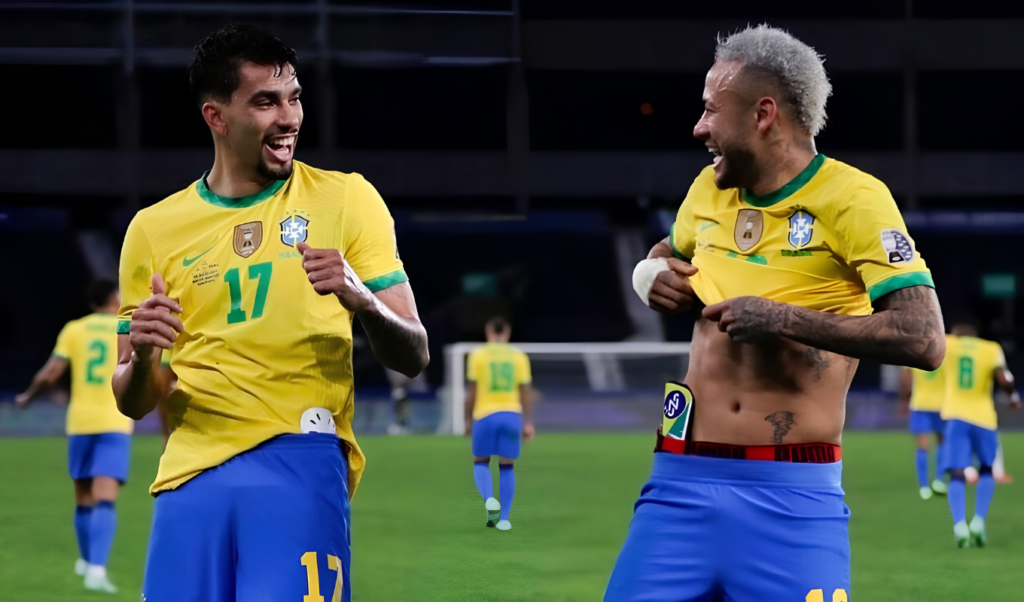
The consecutive announcements of the final national squad selections for the 2026 FIFA World Cup have unveiled an unprecedented milestone for Brazilian club football. A record-breaking 32 footballers selected across various competing national teams currently ply their trade in Brazil’s top-flight domestic league, Campeonato Brasileiro Série A. This turnout officially shatters a 52-year-old record held by the nation’s domestic football system.
Historical Context and Progress
Prior to the 2026 tournament, the highest representation from the Brazilian top flight at a single World Cup occurred in 1974, when 27 players from Série A clubs were selected for international duty. This was followed by the 1986 tournament, which featured 25 players from the league.
In contrast, the 2022 World Cup in Qatar marked a significant modern low, with the Brazilian Championship supplying just seven players. The rise to 32 players for the 2026 edition represents a stark turnaround within a short four-year cycle.
Comparative Representation Across Tournaments
| World Cup Edition | Number of Players from the Brazilian League |
| 1974 World Cup |
27 players |
| 1986 World Cup |
25 players |
| 2022 World Cup |
7 players |
| 2026 World Cup |
32 players
|
Structural and Financial Drivers
Analysts attribute this growth to substantial financial investments, the financial stability of domestic clubs, and the evolution of the football corporation framework in Brazil. Increased revenue from television broadcasting rights and lucrative sponsorships from betting companies have further bolstered the economic capabilities of these institutions.
Sports finance expert Moisés Assayag highlighted that the shift became prominent during the opening transfer window of 2024.
“The maturity of the SAF (Sociedade Anônima do Futebol) system and massive investments from betting companies have heightened the flow of capital into Brazilian football,” Assayag noted, adding that this development has strengthened the professional management of the clubs.
Série A is now widely recognized as the most dominant football market in South America. Many observers parallel its continental status to that of the English Premier League (EPL) in Europe. Marcos Motta, or rather Marcos Casseb, a partner at the athlete management firm Roc Nation, observed:
“Brazil is now a market that attracts, develops, showcases, and subsequently sells players. They face very few rivals in South America.”
Recruitment of Domestic and Foreign Stars
The league’s financial prowess is reflected in its ability to retain and repatriate established talent alongside young prospects. During the current season, Flamengo secured the return of Lucas Paquetá for a reported fee of €42 million. Prior to this, Palmeiras signed 20-year-old Vitor Roque for €25.5 million. Furthermore, Cruzeiro acquired Gerson, while Botafogo secured the services of Danilo Santos.
The influx of high-profile foreign internationals has additionally elevated the league’s technical standards. Global stars such as Nicolás de la Cruz, Ramón Sosa, Gonzalo Plata, and Memphis Depay regularly feature in the domestic league and will represent their respective nations at the 2026 tournament.
Club-by-Club Distribution
Flamengo leads all domestic clubs by sending nine players to the tournament. Palmeiras follows closely with seven representatives, while Atlético Mineiro contributes four. Grêmio and Internacional are sending two players each.
Players Supplied to the 2026 World Cup by Brazilian Clubs
| Club Name | Number of World Cup Call-ups |
| Flamengo |
9 players |
| Palmeiras |
7 players |
| Atlético Mineiro |
4 players |
| Grêmio |
2 players |
| Internacional |
2 players |
| Other Domestic Clubs |
8 players |
| Total |
32 players
|
Prominent figures within the Brazilian national setup itself—including Neymar, Lucas Paquetá, Léo Pereira, Danilo, and Alex Sandro—are entering the World Cup directly from the domestic league. According to football agent Claudio Fiorito, this shift has drastically altered player incentives.
“Playing in the Brazilian league today means staying much closer to national team selection,” Fiorito remarked. “The league has once again transformed into an attractive showcase for footballers.”
By sending a record contingent to the 2026 World Cup, the Brazilian Championship demonstrates that its sporting and financial influence across South American football is greater than at any previous point in modern history.