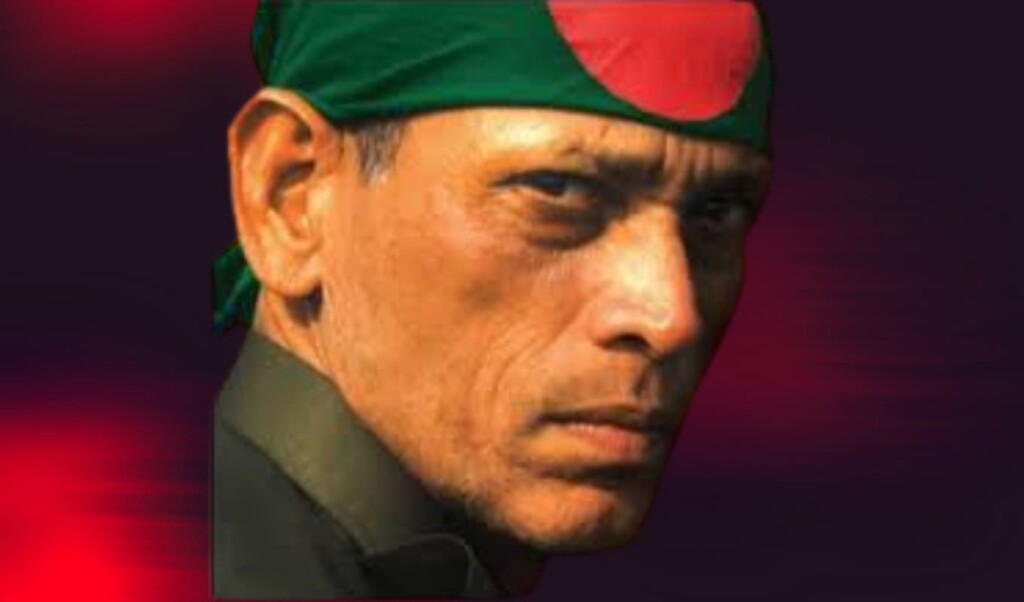
The history of contemporary Bangladeshi popular music is inextricably linked with the name of Azam Khan. A revered cultural figure, he was both a distinguished freedom fighter, who engaged in active combat during the 1971 Liberation War, and a pioneering musician who transformed the nation’s post-independence musical landscape. Widely acknowledged as the trailblazer of Bangladeshi pop and band music, he is affectionately referred to by generations of fans and peers as “Guru”.
Born Mohammad Mahbubul Haq Khan, his enduring musical legacy is sustained by a catalogue of timeless compositions. Among his most celebrated tracks are Rail Line Er Oi Bostite, Ore Saleka Ore Maleka, Alal O Dulal, Anamika, Abhimani, and Asi Asi Bole. His debut television appearance, broadcast on Bangladesh Television (BTV) in 1972, marked a paradigm shift in the country’s mainstream music industry, introducing a modern band sound to the public.
Early Life and Academic Background
Azam Khan was born on 28 February 1950 in Azimpur, Dhaka. His father, Mohammad Aftab Uddin Khan, served as an administrative officer in the Home Department of the Secretariat and practiced as a homeopath, whilst his mother was Jobeda Khatun. He grew up alongside three brothers and one sister: his elder brother Said Khan, his middle brother—the renowned music composer Alam Khan—his younger brother and fellow freedom fighter Liaquat Ali Khan, and his younger sister Shamima Akhter Khanam.
He initiated his primary schooling at Azimpur Dhakeshwari School, later transferring to the Provincial School in Kamalapur. He cleared his Secondary School Certificate (SSC) examinations from Siddheswari High School in 1968, followed by his Higher Secondary Certificate (HSC) from T&T College in 1970. His formal institutional education concluded at this point due to the outbreak of the Liberation War.
From Civil Uprising to the Liberation War
During the mass upsurge of 1969, Azam Khan actively opposed the ruling Pakistani administration. As an energetic member of the cultural troupe Kranti Shilpi Gosthi, he performed revolutionary mass-mobilisation songs to galvanise the public against state oppression.
Following the commencement of military hostilities in 1971, and encouraged by his father, he committed to active military service. Alongside two friends, he traveled on foot to Agartala, India, with the objective of enlisting in Sector 2 under the command of Colonel Khaled Mosharraf. Following rigorous military training at the Melaghar camp, he participated in his first conventional frontline clash against Pakistani forces at Salda in Comilla, before being redeployed to Dhaka to engage in clandestine urban warfare.
Guerrilla Operations and Military Leadership
At the age of 21, Azam Khan was appointed as a section commander within Sector 2, assuming operational responsibility for executing high-risk guerrilla operations in and around the capital city.
His section successfully executed Operation Titas, a strategic sabotage mission designed to destroy major gas pipelines supplying the high-profile Hotel InterContinental and Hotel Purbani. This targeted destruction aimed to disrupt the infrastructure servicing international dignitaries and foreign journalists, thereby demonstrating the scale of the ongoing civil resistance and war. During his military deployment, he sustained a severe injury to his left ear, resulting in long-term hearing impairment. In mid-December 1971, following a victorious engagement against the Pakistani army at the Battle of Trimohani in Madartek, he led his unit into liberated Dhaka.
Personal Life and Structural Summary
In his domestic life, Azam Khan was married to Shaheda Begum, and the couple raised three children: Ima, Hridoy, and Aroni.
A comprehensive summary of Azam Khan’s personal details, academic history, and key achievements is presented in the table below:
| Category | Specific Details and Chronology |
| Full Name | Mohammad Mahbubul Haq Khan |
| Date & Place of Birth | 28 February 1950; Azimpur, Dhaka |
| Parents | Mohammad Aftab Uddin Khan & Jobeda Khatun |
| Academic Credentials | SSC (Siddheswari High School, 1968); HSC (T&T College, 1970) |
| Wartime Deployment | Section Commander, Sector 2, under Colonel Khaled Mosharraf |
| Notable Military Action | Operation Titas (Urban Sabotage) & Battle of Trimohani |
| Signature Songs | Rail Line Er Oi Bostite, Alal O Dulal, Ore Saleka Ore Maleka |
| Date of Demise | 5 June 2011 (Aged 61) |
| State Recognition | Ekushey Padak (Posthumous) |
Demise and National Recognition
Following a prolonged battle with cancer, Azam Khan passed away on 5 June 2011. He was posthumously awarded the Ekushey Padak, the nation’s second-highest civilian honour, in recognition of his contributions to the cultural fabric of Bangladesh. Beyond institutional decorations, he remains an iconic figure of the liberation era, an enduring voice of national independence, and the definitive pioneer of Bengali pop music.