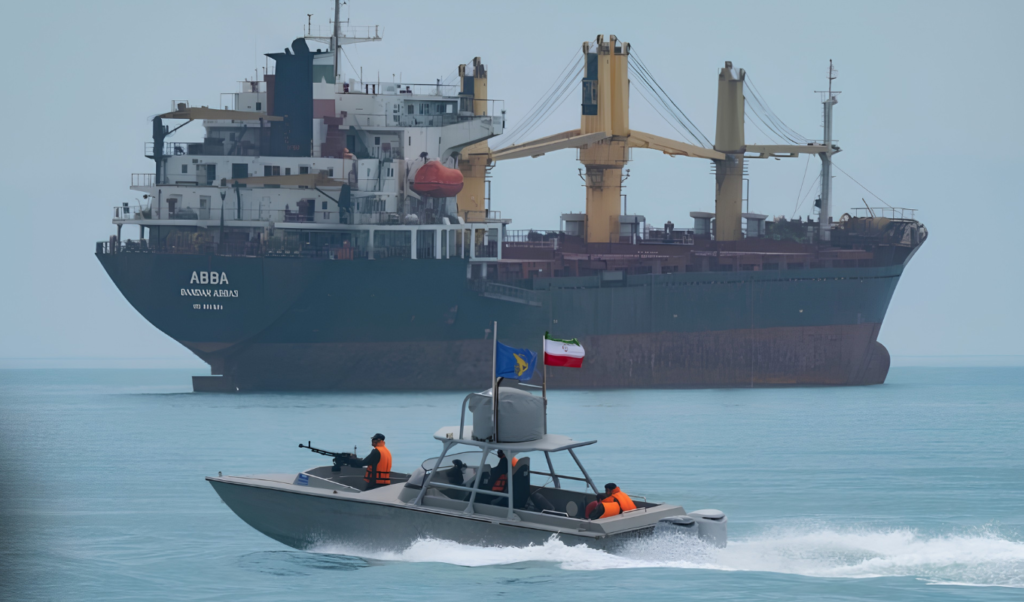
Iran has launched a series of ballistic missile strikes against United States military bases situated in Kuwait and Bahrain amidst escalating tensions in the Persian Gulf. Following these long-range missile operations, Tehran issued an explicit warning stating that any subsequent provocation or aggression would result in the complete closure of the Strait of Hormuz, a critical global maritime transit route for oil and gas. The Iranian state-controlled news outlet, Mehr News Agency, confirmed the development on Saturday, 6 June 2026.
According to an official statement released by the Islamic Revolutionary Guard Corps (IRGC), its Aerospace Force executed the targeted missile strikes. The operations successfully targeted the principal installations of the US “Ali Al-Salem” airbase in Kuwait and the headquarters of the United States Navy’s Fifth Fleet deployed in Bahrain.
Origin and Sequence of the Military Conflict
The direct military confrontation between Iranian and United States forces originated from a dispute involving the unauthorized transit of oil tankers through the Strait of Hormuz. The timeline of events leading up to the ballistic missile strikes has been detailed by the IRGC command:
-
01:30 AM: Four commercial oil tankers attempted to navigate through the Strait of Hormuz without prior regulatory coordination with the IRGC Navy, completely disregarding formal naval warnings. Following a final directive from Iranian naval forces, one tanker was intercepted and halted, while the remaining three vessels reversed their course.
-
02:00 AM: Precisely thirty minutes after the maritime interception, United States unmanned aerial vehicles (drones) launched a sudden airstrike targeting two critical IRGC communication towers located on Kishmi Island and in the Sirik region.
In direct retaliation for the drone strikes on its communication infrastructure, the IRGC mobilised its missile units to strike the designated US military facilities in Kuwait and Bahrain.
Strategic Impact and Regional Breakdown
The Revolutionary Guards issued a stern warning indicating that any recurrence of aggressive behaviour would be met with an expanded and unrestricted military response from Iran. The IRGC command directed its warning to the US-Israeli alliance, stating that if the Strait of Hormuz is rendered non-operational for oil and gas exports, the alliance must bear full responsibility for the resulting global economic destabilisation. Following these kinetic engagements, international military analysts have expressed concern regarding the potential for a wider conventional conflict to expand across the Middle East.
The details of the military engagements and the respective targets involved are structured in the table below:
| Operating Force | Targeted Infrastructure | Weaponry Deployed | Timeline & Context |
| United States Forces | Two IRGC communication towers on Kishmi Island and in the Sirik area | Unmanned Aerial Vehicles (Drones) | 02:00 AM; initiated following the interception of commercial tankers |
| Iranian Forces (IRGC) |
1. Ali Al-Salem Airbase (Kuwait) 2. US Navy Fifth Fleet Headquarters (Bahrain) |
Long-range Ballistic Missiles | Executed in immediate retaliation for the US drone strikes |
The Strait of Hormuz remains a primary chokepoint for global energy security, and the threat of its total closure has placed international maritime monitoring agencies on high alert as the regional security situation develops.