ESPN has published a ranking of the ten most memorable FIFA World Cup songs, highlighting how football and music have long shared a powerful cultural connection. From stadium anthems to global pop hits, these tracks have helped define the atmosphere of modern tournaments, with some becoming enduring symbols of the game itself.
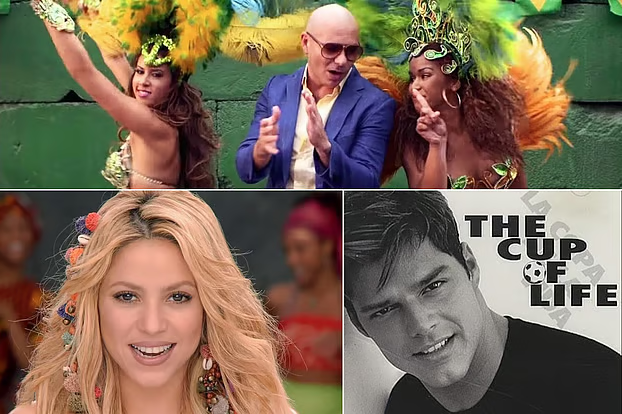
The list ranges from widely celebrated classics such as Waka Waka (This Time for Africa) to earlier anthems like La Copa de la Vida, which remain deeply embedded in football memory. More recent entries, however, have received a more mixed reception from fans and critics alike.
Ranked list overview
| Rank | Song | Year | Artists | Notes |
|---|---|---|---|---|
| 10 | Live It Up | 2018 | Nicky Jam, Will Smith, Era Istrefi | Latin-influenced but widely viewed as underwhelming |
| 9 | Hayya Hayya (Better Together) | 2022 | Trinidad Cardona, Davido, Aisha | Gentle, multicultural tone but limited impact |
| 8 | Un’estate Italiana | 1990 | Edoardo Bennato, Gianna Nannini | Energetic bilingual anthem of the Italian World Cup |
| 7 | The Time of Our Lives | 2006 | Il Divo, Toni Braxton | Slow orchestral ballad from official album |
| 6 | Boom | 2002 | Anastacia | High-energy promotional track with unusual video concept |
| 5 | Día de Enero (2026 World Cup song) | 2026 | Shakira, Burna Boy | Recent release with moderate reception |
| 4 | We Are One (Ole Ola) | 2014 | Pitbull, Jennifer Lopez | Multilingual stadium anthem for Brazil World Cup |
| 3 | Gloryland | 1994 | Daryl Hall, Sounds of Blackness | Traditional gospel-inspired sporting anthem |
| 2 | La Copa de la Vida | 1998 | Ricky Martin | Breakthrough global football anthem |
| 1 | Waka Waka (This Time for Africa) | 2010 | Shakira | Widely regarded as the defining World Cup anthem |
Cultural impact and evolution
The earliest entries on the list, such as Gloryland, reflect a more traditional approach to tournament music, often blending gospel or orchestral influences with sporting themes. By the late 1990s, however, global pop began to dominate, most notably with La Copa de la Vida, which helped establish a template for high-energy, stadium-ready World Cup anthems.
The 21st century saw increasingly international collaborations. Songs like We Are One (Ole Ola) and Hayya Hayya (Better Together) attempted to reflect the global nature of the tournament by combining multiple languages and artists from different regions. Reception to these efforts has varied, with some critics suggesting that cultural fusion does not always translate into memorable hooks.
Among all entries, Waka Waka (This Time for Africa) remains the most iconic. Its fusion of Afro-pop rhythms, catchy chorus, and widespread global airplay helped it transcend sport, becoming a long-lasting cultural phenomenon rather than just a tournament anthem.
Conclusion
World Cup songs have evolved from formal ceremonial compositions into global pop collaborations designed for stadiums, broadcasts, and social media. While not every release achieves lasting popularity, the most successful tracks continue to resonate far beyond the final whistle, becoming part of football’s shared cultural heritage.