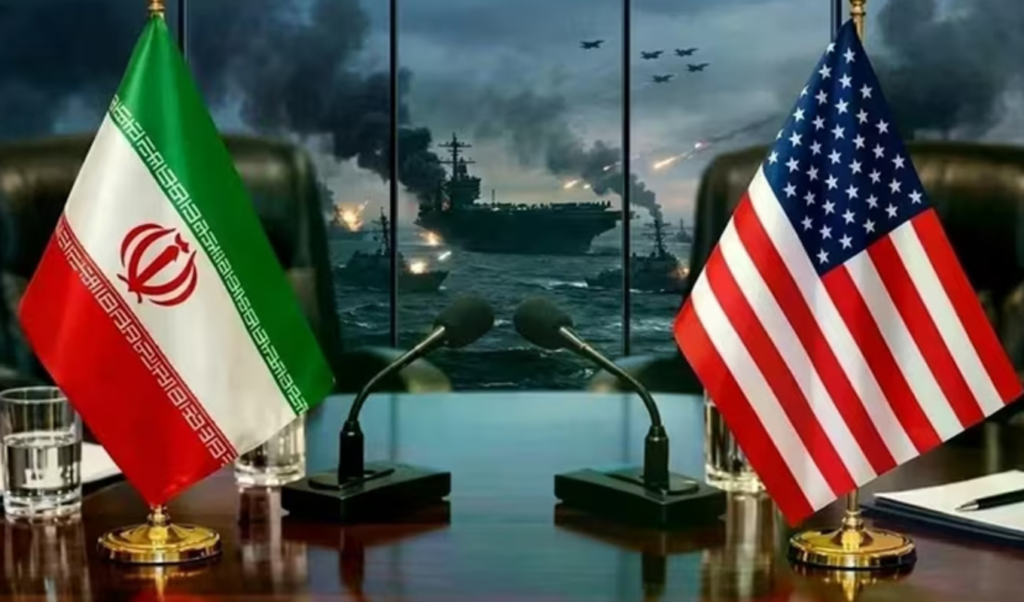
An official diplomatic ceremony scheduled to take place in Switzerland for the formal signing of a memorandum of understanding between the United States and Iran has been cancelled. The administrative decision to call off the physical event follows the completed electronic execution of the bilateral accord by the respective parties. Consequently, a concurrently arranged state visit by the Prime Minister of Pakistan, Shehbaz Sharif, who was scheduled to travel to Switzerland to participate in the international proceeding, has been indefinitely postponed.
Invalidation of the Swiss State Visit
Under the original diplomatic itinerary, Prime Minister Shehbaz Sharif was slated to depart for Switzerland on Friday, 19 June 2026, to attend the high-profile ceremony as a key witness to the US-Iran accord. However, because the primary signatories completed the validation processes ahead of schedule using digital channels, the administrative necessity for an in-person, grand assembly in Switzerland was rendered redundant.
An official representative from the Ministry of Foreign Affairs of Pakistan, speaking on the condition of anonymity, confirmed the formal deferral of the prime ministerial flight. Concurrently, a secondary government source stated that whilst a celebratory public gala will no longer take place, the cancellation of the ceremonial gathering will not obstruct the progression of the geopolitical framework. Subsequent technical negotiations between American and Iranian delegations are scheduled to proceed independently via separate, non-public channels.
Mechanics of the Electronic Treaty Execution
The definitive execution of the US-Iran memorandum of understanding deviated significantly from conventional high-level diplomatic protocols, utilizing a completely digital methodology. On the night of Wednesday, 17 June 2026, official representatives from the United States and the Islamic Republic of Iran embedded their electronic signatures onto the foundational instrument. Following the completion of the bilateral component, Prime Minister Shehbaz Sharif formally appended his signature to the document on Thursday, 18 June 2026, acting in his capacity as the primary facilitator and co-mediator of the accord.
The Deputy Prime Minister and Minister for Foreign Affairs of Pakistan, Ishaq Dar, formally verified the procedural sequence. Speaking to the press, the foreign minister confirmed that following the successful electronic verification by both the United States and Iranian authorities, Prime Minister Shehbaz Sharif executed his endorsement as a mediator. This definitive completion of the formal treaty process consequently eliminated the operational requirement for the scheduled Swiss summit on Friday.
Preliminary Indications and Communications Discrepancies
Public speculation regarding the stability of the Swiss event originally intensified during the early morning hours of Thursday, following a modification made to a public statement published by Prime Minister Shehbaz Sharif on the social media platform X (formerly Twitter). Observers noted that specific blocks of text detailing the upcoming European summit were abruptly deleted from the prime minister’s official feed.
The redacted portion of the digital publication explicitly outlined that Pakistan, supported by fellow co-mediator state Qatar, would convene a special event in Switzerland on 19 June 2026 to celebrate the historic milestone and inaugurate subsequent tiers of multi-lateral dialogue. Although multiple official Pakistani state sources initially insisted on Thursday morning that the international event remained active and unchanged, administrative strategies were entirely reversed by the evening, leading to the absolute cancellation of the physical summit.
The Statutory Framework of International Digital Treaties
To provide the essential legal context governing this event, the execution of international treaties via electronic formats is managed under the framework of the Vienna Convention on the Law of Treaties (VCLT), 1869, alongside modern domestic statutes regulating digital authentication. While historically states relied on physical encounters to exchange signed paper instruments, contemporary international law recognizes digital signatures, scanned exchanges, and electronic memorandums as legally binding, provided that the participating sovereign states formally agree to utilize such digital mediums.
When third-party nations act as formal mediators or facilitators—such as the roles assumed by Pakistan and Qatar in these proceedings—their endorsement serves to authenticate the consensus reached between the primary opposing states. This electronic approach speeds up the ratification process and bypasses the substantial logistical coordination, security protocols, and financial outlays associated with organizing emergency international summits in neutral states like Switzerland.