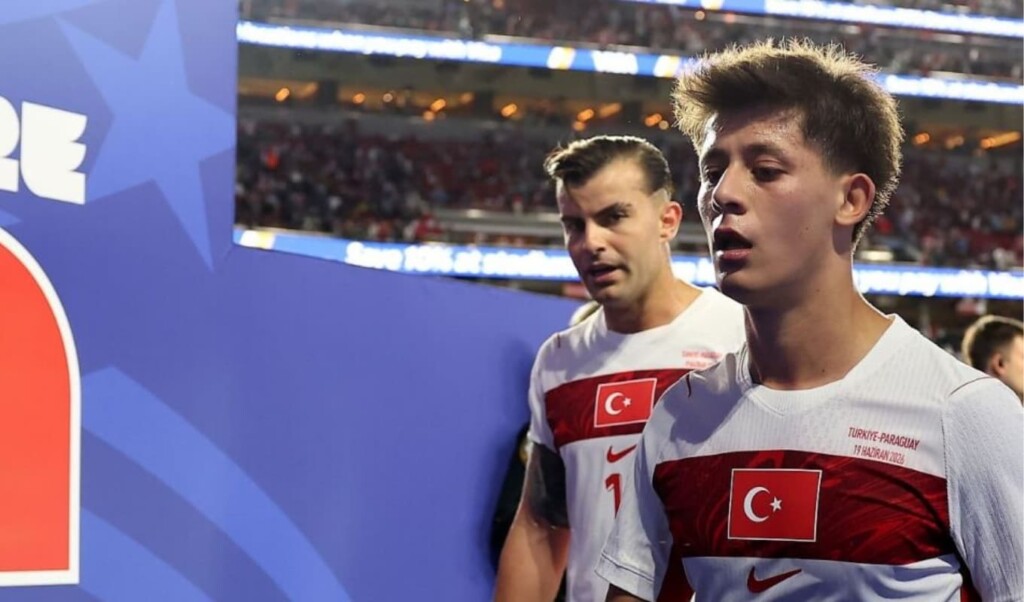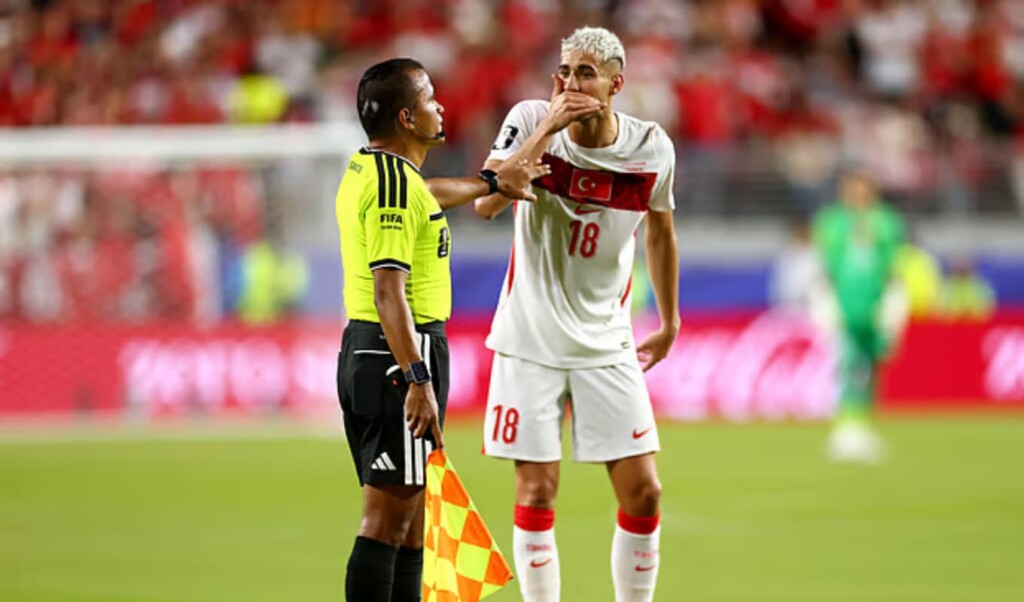
Paraguay forward Miguel Almirón has written his name into football history under bizarre circumstances during his team’s World Cup Group D match against Turkey. The midfield player was shown a direct red card by match referee Iván Barton during first-half stoppage time, triggering immense confusion among players and fans alike. Almirón had not committed a dangerous challenge, used his elbow aggressively, or breached acceptable boundaries whilst speaking to the match official.
The dismissal stemmed entirely from Almirón using his hands to obscure his mouth whilst engaged in a confrontation with Turkish defender Mert Müldür. Following a complaint by Müldür, the El Salvadoran referee strictly enforced a new tournament mandate. This action made Almirón the first player in football history to receive a straight red card for hiding his mouth on the pitch.
The Catalyst: Champions League Precedent
Covering the mouth with a jersey or hand during matches has been common for years, often used to conceal tactical instructions, deliver mental pressure, or initiate verbal taunts. However, the decision by governing authorities to ban the practice was accelerated by a high-profile European incident in February 2026.
During a UEFA Champions League fixture, Benfica’s Argentine winger Gianluca Prestianni pulled his jersey over his mouth while speaking directly to Real Madrid’s Brazilian forward Vinícius Júnior. The action prevented lip-readers and television cameras from identifying what was spoken, sparking a severe public controversy and widespread allegations of racial abuse. Following a comprehensive inquiry, UEFA found Prestianni guilty of homophobic behavior and handed him a six-match ban.
The incident presented a significant dilemma for the sport’s administrative bodies. Despite advanced television coverage capturing every sector of the pitch, the deliberate act of masking one’s mouth left governing bodies without tangible evidence to verify discriminatory or abusive language.
Institutional Enforcement and Discretionary Rules
To address this challenge, FIFA implemented the ban for the 2026 World Cup tournament. FIFA President Gianni Infantino clarified that the regulation serves as a firm deterrent against hidden misconduct.
“If there is nothing to hide, there is no need to cover the mouth,” Infantino stated.
The International Football Association Board (IFAB) has emphasized that covering the mouth will not automatically prompt an immediate dismissal in every scenario. Instead, match officials retain full discretionary power to evaluate the context of each incident. If a referee determines that a player’s behavior is deliberately suspicious, inflammatory, or counterproductive to the integrity of the match, they are authorized to issue a straight red card.
Overview of the Disciplinary Directive
| Policy Element | Regulation Specifics |
| Governing Bodies | Jointly enacted by FIFA and IFAB |
| Enforcement Scope | Effective from the start of the 2026 World Cup |
| Primary Incentive | Eradicating hidden verbal abuse, discrimination, and hate speech |
| Referee Mandate | Subjective assessment of suspicious or provocative gestures |
| Ultimate Sanction | Immediate ejection via a straight red card |