Brazilian football has long maintained a profound global influence, defined by an authentic passion, aesthetic brilliance, and a record five FIFA World Cup titles. The nation’s footballing philosophy centres on Jogo Bonito (the beautiful game)—a belief that football should be played not merely for points or victories, but for the collective joy of the players and spectators. This artistic approach has been elevated across generations by iconic figures such as Pelé, Ronaldinho, Ronaldo, Romário, Rivaldo, Roberto Carlos, Bebeto, Kaká, Neymar, and Vinícius Júnior, whose technical mastery transformed the sport into an art form.
The global expansion of the Brazilian fanbase, notably in countries like Bangladesh, accelerated during the 1980s and 1990s. This surge in popularity was driven by the team’s trademark attacking intent, exceptional agility, and precise ball control. Statistically, Brazil remains the only nation to have qualified for and competed in every single FIFA World Cup tournament since its inception in 1930. Consequently, Brazilian players have historically commanded premium valuations and high demand from elite clubs across Europe and Latin America.
Key Historical and Statistical Overview of Brazilian Football
| Metric / Category | Details and Historical Records |
| FIFA World Cup Titles | 5 (1958, 1962, 1970, 1994, 2002) |
| World Cup Participation | 100% attendance (The only nation to achieve this) |
| Core Football Philosophy | Jogo Bonito (The Beautiful Game) |
| Generational Icons | Pelé, Ronaldo, Ronaldinho, Romário, Kaká, Neymar, Vinícius Júnior |
| Domestic Football Hubs | São Paulo, Rio de Janeiro, Brasília, Salvador, Fortaleza |
| Current Major Objective | The ‘Hexa’ (Securing a historic sixth world title) |
Despite this rich history, Brazil’s performances in the previous two FIFA World Cups were largely mediocre, triggering widespread frustration among their international fanbase. This trend has seemingly extended into the current World Cup tournament. In their opening fixture, the expected rhythmic and dominant display was notably absent, resulting in a 1-1 draw against a disciplined Moroccan side. The result drew criticism on social media, where fans expressed disappointment, and rival supporters used the underwhelming performance to mock the team.
Nevertheless, the core fanbase remains loyal. Supporters reject the idea of evaluating Brazil’s footballing legacy based on isolated matches. Despite a 24-year title drought since their last World Cup victory in 2002, fans continue to trust the current squad—which blends experienced professionals with emerging talent—to secure the elusive ‘Hexa’ (sixth) championship.
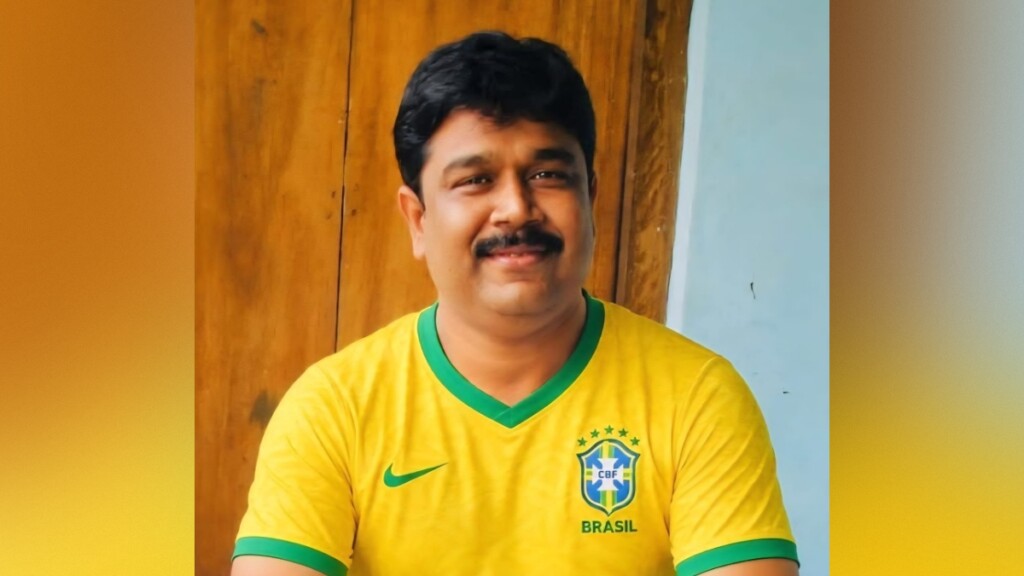
This enduring optimism is visible worldwide. The iconic yellow jersey remains prominent across Brazil’s major urban centres, including its most populous city, São Paulo, the culturally significant Rio de Janeiro, the federal capital Brasília, and the major port cities of Salvador and Fortaleza. Beyond domestic borders, this footballing fervor is equally apparent in New York’s Times Square—located in the tournament’s co-host nation, the United States—as well as throughout the streets of Dhaka, Bangladesh, where supporters continue to wait for a return to Brazil’s historic, winning form.
Manjur Rashid Bidyut
Writer, social analyst and researcher