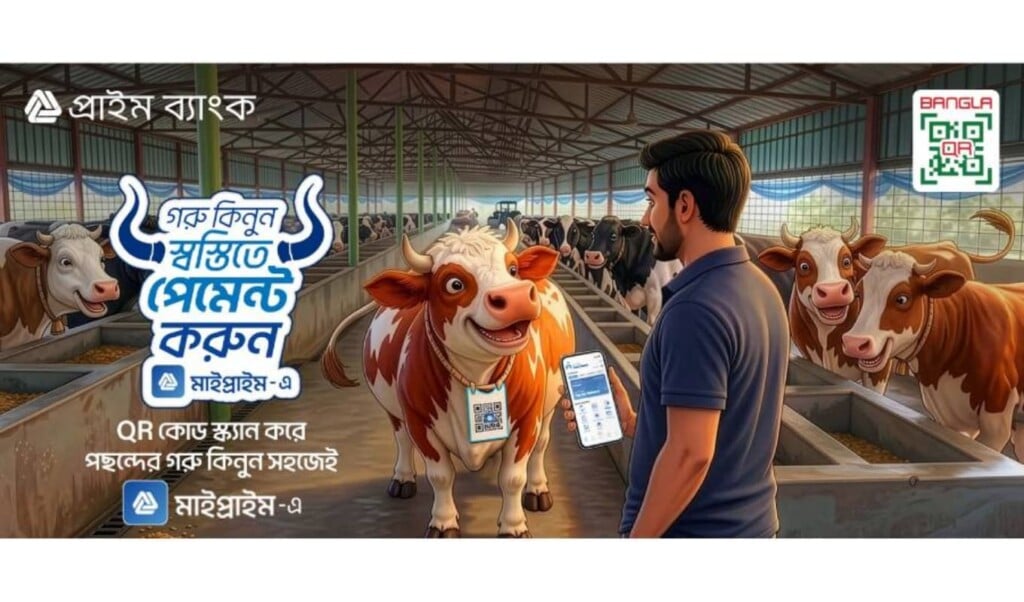
Prime Bank PLC has initiated a novel digital financial service by introducing a Bangla QR-based transaction system specifically designed for the procurement of sacrificial livestock ahead of the Eid-ul-Adha festive period. This deployment marks the first time a commercial banking institution has integrated an interoperable QR code payment protocol within the traditional livestock commerce sector of Bangladesh. The primary objective is to allow consumers to complete high-value retail acquisitions electronically, circumventing the logistical hazards of handling physical banknotes.
App Interfacing and Participating Livestock Holdings
According to an official corporate statement, the contactless payment mechanism functions via the bank’s proprietary mobile banking platform, the MyPrime app. Shoppers visiting designated agricultural facilities can select their preferred sacrificial animal and complete an instantaneous, secure transfer by scanning an on-site Bangla QR code code.
The primary agricultural merchants and livestock venues included in the initial deployment are structured in the table below:
| Merchant Enterprise | Specific Location / Trading Plot | Banking Interface |
| Eshan Cattle Farm | 100 Feet Gorur Haat, Dhaka | MyPrime App (Bangla QR) |
| Mymensingh Agro Farm | Mymensingh District | MyPrime App (Bangla QR) |
| Samarai Cattle Farm | Plot-1673, Staff Quarter Road, Nondipara, Rampura | MyPrime App (Bangla QR) |
Enhancing Security and Convenience in Seasonal Markets
The introduction of this digital architecture is strategically timed to modernise transactions during the high-volume Eid marketplace season. Traditionally, the purchase of sacrificial animals requires substantial cash transactions within crowded, open-air livestock markets (haats). This reliance on cash exposes urban consumers and rural agriculturalists to clear security threats, including physical theft, pickpocketing, and the potential spread of counterfeit paper currency.
By embedding the unified Bangla QR framework into the traditional livestock trade, Prime Bank PLC aims to mitigate these security risks while simplifying the buying experience. The cashless workflow provides rapid vendor settlement and shields shoppers from the vulnerabilities associated with carrying large sums of money in high-density transit environments.
Strategic Financial Expansion and Market Modernisation
This project aligns with Prime Bank’s comprehensive strategy to expand its digital banking services and encourage cashless commerce across Bangladesh. Religious festivals in the country typically trigger massive cash withdrawals, putting significant stress on automated teller machines and banking liquidity.
By digitalising these high-value agricultural trades, the institution supports the national push toward a modern retail economy. The initiative demonstrates the growing capacity of domestic financial technologies to reshape traditional cultural commerce, cementing Prime Bank’s position as a forward-thinking, customer-oriented financial institution.