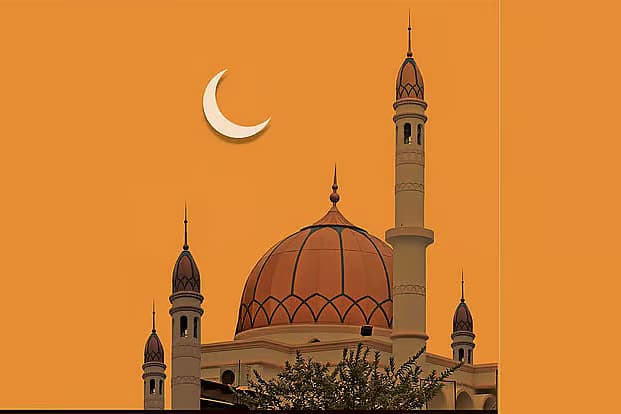
The National Moon Sighted Committee of Bangladesh has officially confirmed the sighting of the crescent moon for the holy month of Zul Hijjah in the domestic sky. Consequently, the month of Zul Hijjah is set to commence on Tuesday, 19 May. Based on this Islamic lunar calendar calculation, the holy festival of Eid ul-Adha will be celebrated across the country on Thursday, 28 May.
The formal decision was reached on Monday evening during an official meeting of the National Moon Sighted Committee, convened at the conference hall of the Islamic Foundation inside the Baitul Mukarram National Mosque in Dhaka. Following the conclusion of the deliberations, the Minister for Religious Affairs, Kazi Shah Mofazzal Hossain (Kaikobad), announced the declaration to the public and the media.
Committee Review and Verified Calendar Schedule
The National Moon Sighted Committee evaluated comprehensive reports received from various field levels, including all district administrations, divisional and district offices of the Islamic Foundation, the Bangladesh Meteorological Department, and the Space Research and Remote Sensing Organisation (SPARRSO).
Zul Hijjah represents the twelfth and final month of the Islamic lunar calendar (Hijri). According to Islamic jurisprudence and traditions, the first ten days of this month hold profound religious significance, culminating in the performance of the annual Hajj pilgrimage and the festival of sacrifice.
The confirmed timeline for the key dates of the upcoming Zul Hijjah period in Bangladesh is outlined in the structured schedule below:
| Religious Milestone | Hijri Date | Gregorian Date | Day of the Week |
| Commencement of Zul Hijjah | 1 Zul Hijjah | 19 May | Tuesday |
| Day of Arafah (Hajj) | 9 Zul Hijjah | 27 May | Wednesday |
| Eid ul-Adha (Day of Sacrifice) | 10 Zul Hijjah | 28 May | Thursday |
Religious Context and Festive Observance
Eid ul-Adha, also widely known as the Feast of the Sacrifice or Qurbani Eid, is one of the two major canonical festivals celebrated by Muslims worldwide. It is traditionally observed on the 10th day of the month of Zul Hijjah. The central religious ritual of this festival involves the slaughter of permissible livestock, such as cattle, goats, sheep, or camels, to seek spiritual closeness and the pleasure of the Almighty.
This practice commemorates the historical and theological narrative of the Prophet Ibrahim’s (Abraham) willingness to sacrifice his son, Ismail (Ishmael), as an act of absolute obedience to God’s command, before a ram was miraculously provided as a substitute.
Following the official announcement made by the Minister for Religious Affairs, administrative and public preparations for the national holiday have commenced. On the morning of 28 May, Muslims across Bangladesh will participate in special congregational Eid prayers at mosques and open-air prayer grounds (Eidgahs), which will be immediately followed by the slaughter of sacrificial animals in accordance with established Islamic guidelines.