Emirates is collaborating with international insurance providers to engineer a dedicated travel insurance product tailored for passengers travelling to or transiting through Dubai. The initiative is strategically designed to bridge a consumer protection gap precipitated by ongoing government travel advisories regarding the Middle East conflict.
Product Specifications and Administrative Intent
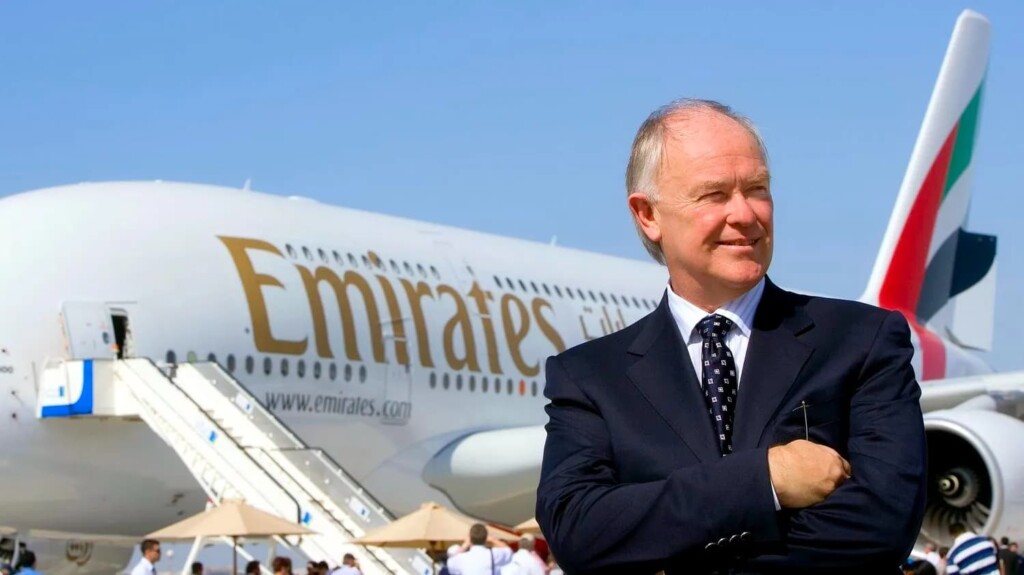
The President of Emirates, Tim Clark, outlined the operational framework of the new insurance package during an interview with a prominent international publication published on 11 June 2026. Clark characterised the forthcoming policy as “reasonably priced” and affirmed that it would guarantee the repatriation of passengers to their home countries. Crucially, this repatriation guarantee remains enforceable irrespective of whether the return journey is operated by Emirates or a competitor airline.
Reflecting on passenger anxieties, Clark stated: “I think one of the big concerns is that if they get caught overseas and they can’t get back.” He further noted that the airline is actively engaging with underwriters “to do the right thing” for its global consumer base.
Disruption of Standard Travel Insurance Policies
More than three months after the onset of the current Middle East conflict, numerous sovereign governments maintain active no-fly recommendations and travel advisories for the Gulf region. These official directives have fundamentally disrupted the travel insurance sector, effectively voiding standard coverage for all new bookings. The invalidation occurs because the vast majority of standard retail insurance policies trigger mandatory war and conflict exclusion clauses immediately upon the issuance of a formal government warning.
While specialist, high-risk insurance coverage remains accessible in the global market, it is structured under significantly higher premium rates and restrictive terms. Consequently, a substantial consumer protection deficit has emerged, which many international travellers only identify upon attempting to register a claim.
Passenger Volume Trends and Fleet Insurance Analysis
Despite the widespread implementation of international travel advisories, approximately 40,000 passengers per day continue to transit through Dubai International Airport. Whilst this represents a contraction from the pre-conflict volume of roughly 100,000 daily transit passengers, the current figures reflect a steady, upward trajectory. Clark highlighted that certain routes, notably flights originating from London, remain “bursting at the seams,” despite the absence of standard insurance options for the corporate and leisure travellers on board.
Simultaneously, financial data indicates that Emirates is navigating its institutional war risk coverage with notable cost efficiency. Reports reveal that Emirates allocates approximately USD 100,000 per week in additional premiums to maintain comprehensive coverage for its entire operational fleet flying into and out of the region. An insurance executive evaluated this premium structure as “outrageously low.” Conversely, competing commercial air carriers are receiving insurance quotations ranging between USD 70,000 and USD 150,000 for each individual flight landing within the Gulf zone.
Statistical Overview of Operations and Insurance Metrics
| Operational and Financial Parameters | Verified Data and Metrics |
| Primary Initiative | Dedicated travel insurance for Dubai-bound and transit passengers |
| Announcement Date | 11 June 2026 |
| Current Daily Dubai Transit Volume | Approximately 40,000 passengers (increasing steadily) |
| Pre-Conflict Daily Dubai Transit Volume | Approximately 100,000 passengers |
| Emirates Weekly Fleet War Risk Premium | Approximately USD 100,000 |
| Competitor Individual Flight War Risk Quote | USD 70,000 to USD 150,000 per landing |
| Service Restoration Timeline | Resumed within 4 days of conflict commencement |
| Dubai Aerial Interception Success Rate | Approximately 98% of nearly 3,000 incoming threats |
| Initial Contingency Fuel Allocation | 5 additional hours of fuel per flight |
Security Infrastructure and Operational Resilience
Following the commencement of hostilities, Emirates restored its scheduled flight services within a four-day window, rapidly rebounding to 40% of its baseline operational capacity. Clark disclosed that regional defence frameworks in Dubai successfully intercepted approximately 98% of nearly 3,000 incoming drones, ballistic or tactical missiles, and cruise missiles.
At present, commercial flights continue to operate within tightly regulated, narrow air corridors that are routinely patrolled by military fighter jets. During the initial phase of the conflict, Emirates aircraft were mandated to carry an additional five hours of contingency fuel to safely accommodate potential mid-air diversions.