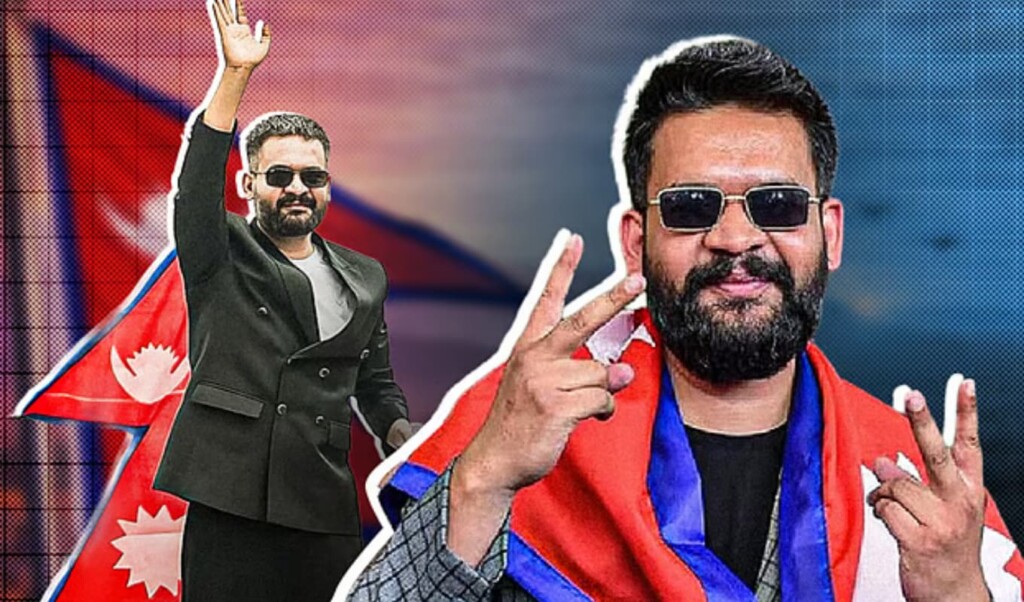
The ascent of Balendra Shah, popularly known as Balen, to the premiership of Nepal marked a historic shift driven by a Gen-Z-led mass uprising. A well-known rapper whose hit track “Ma Nepal Ho, Haseko Herna Chahanchhu” (translated as “I Want to See Nepal Smile”) garnered millions of views and propelled his political trajectory from the Kathmandu mayoral race to the nation’s highest office, Shah now commands a government that has crossed its two-month milestone. However, the initial euphoria surrounding this youthful administration is rapidly giving way to widespread domestic and diplomatic unease.
Parliamentary Absences and Executive Overreach
Unlike the traditional “honeymoon period” often granted to newly elected governments, Prime Minister Shah faced rigorous media scrutiny within his first 50 to 60 days. Major national dailies, including The Kathmandu Post, published multiple critical editorials and commentaries questioning the administration’s adherence to democratic norms.
The primary criticism stems from the 36-year-old Prime Minister’s notable absence from parliament, despite his office being adjacent to the legislative building. Shah did not deliver a single speech in parliament during his first six to seven weeks in office—a precedent-breaking silence in modern Nepalese governance. On 13 May, The Kathmandu Post remarked that his absence undermined democratic accountability, following up with an editorial on 14 May asserting the public’s right to hear executive directives firsthand.
Furthermore, Shah’s parliamentary conduct has drawn criticism. During a joint legislative session on 2 April, he exited midway through President Ram Chandra Poudel’s address. The Prime Minister has consistently declined to participate in parliamentary question-and-answer sessions, delegating these responsibilities to the Finance Minister, leading analysts to observe a shift towards a quasi-presidential style of governance. Executive decisions have further consolidated power, notably the relocation of the National Investigation Department from the Ministry of Home Affairs directly to the Office of the Prime Minister.
Civil Unrest and Economic Stratification
The administration faces intense domestic protests over aggressive urban beautification drives that have demolished slum-like settlements in major cities, including Kathmandu, using bulldozers. This policy has drawn criticism from human rights and anti-poverty organisations, who label the forced evictions inhumane given Nepal’s stark economic disparities.
According to an Oxfam study published earlier this year, wealth distribution in Nepal remains highly unequal:
| Population Segment | Share of National Wealth |
| Top 1% | Approximately 25% |
| Bottom 50% | Less than 5% |
While the government has pledged future rehabilitation programmes for displaced urban dwellers, the execution of evictions prior to resettlement has triggered daily demonstrations across municipal centres.
Judicial Confrontations and Legal Reversals
The appointment of Manoj Kumar Sharma as Chief Justice has emerged as a major constitutional flashpoint. Shah bypassed three senior judges to appoint Sharma, a move the government defends as recommended by the Constitutional Council and approved by a two-thirds majority in parliament. However, because the Prime Minister chairs the Constitutional Council, the appointment has been legally challenged in the Supreme Court. The controversy has caused internal friction within the judiciary, as three sitting Supreme Court judges are senior to the newly appointed Chief Justice.
The administration has also faced multiple legal reversals from the high court regarding unilateral decrees:
-
Trade Unions: On his first day in office, Shah banned student political organisations and civil service trade unions. The judiciary subsequently stayed this ban, ruling that employee unions comply with the Civil Service Act of 1992 and International Labour Organization (ILO) conventions. International labour groups had also filed formal protests with the Prime Minister’s office.
-
Border Tariffs: The High Court stayed a new border management policy that imposed tariffs ranging from 5% to 80% on everyday consumer goods valued above 100 Nepalese Rupees crossing the India-Nepal border. This policy disrupted daily life in the Madhesh region, where locals historically rely on cross-border markets for essential provisions.
Geopolitical Friction and Party Alienation
The ruling Rastriya Swatantra Party (RSP), formed in 2022 by young professionals, adopted Shah just prior to the 5 March elections under a seven-point agreement. As public dissatisfaction mounts, internal party concern has grown. Party insiders report that Shah rarely attends party meetings and maintains minimal communication with party leadership, leaving the RSP with limited influence over executive actions.
On the diplomatic front, the administration’s stated pre-election goal was to transition Nepal from a geopolitical “buffer state” into a “connector state” balancing relations between China and India. However, since the government’s formation on 27 March, engagement with the United States has intensified. Following a visit to Dhaka, US Assistant Secretary of State Paul Kapoor travelled to Nepal, focusing on the status of Tibetan refugees—a development closely monitored by Beijing. Chinese authorities have expressed concern over perceived anti-China sentiment within factions of the new government, particularly after demonstrators during the Gen-Z protests wore “TOB” (The Original Blood) t-shirts, a group associated with pro-Tibetan independence monks.
Simultaneously, relations with India face friction. A scheduled visit to Kathmandu by Indian Foreign Secretary Vikram Misri was cancelled, with media reports indicating that Prime Minister Shah declined the meeting due to a diplomatic policy of not holding formal bilateral talks with foreign officials below head-of-government rank.
This diplomatic stance complicates Nepal’s traditional foreign policy. Historically described by the nation’s founder, Prithvi Narayan Shah, as “a yam between two boulders,” landlocked Nepal relies heavily on balanced diplomacy with its large neighbours. Tensions persist over the disputed Lipulekh region, where both India and China intend to commence commercial trade this June, leading to a sense of exclusion in Kathmandu. Analysts remain skeptical about resolving these border disputes without active engagement, though official plans suggest Shah’s first overseas state visit will be to India to address these boundary issues.
Non-Traditional Governance Style
Beyond policy decisions, Shah continues to challenge traditional political decorum through his personal style. His preference for unconventional attire in parliament—including designer clothing, sportswear, black sunglasses, and casual footwear—frequently goes viral on social media.
On 16 May, Shah departed from his characteristic black attire by posting a photograph in white clothing on Facebook. While some political commentators interpret these stylistic shifts as symbolic gestures towards a more flexible governance approach, the unconventional imagery underscores a broader shift in South Asian political culture, where digital popularity and generational identity increasingly compete with conventional political experience.