Sunday, 5th April 2026

Khabor Wala Desk
Published: 9th February 2026, 9:43 AM
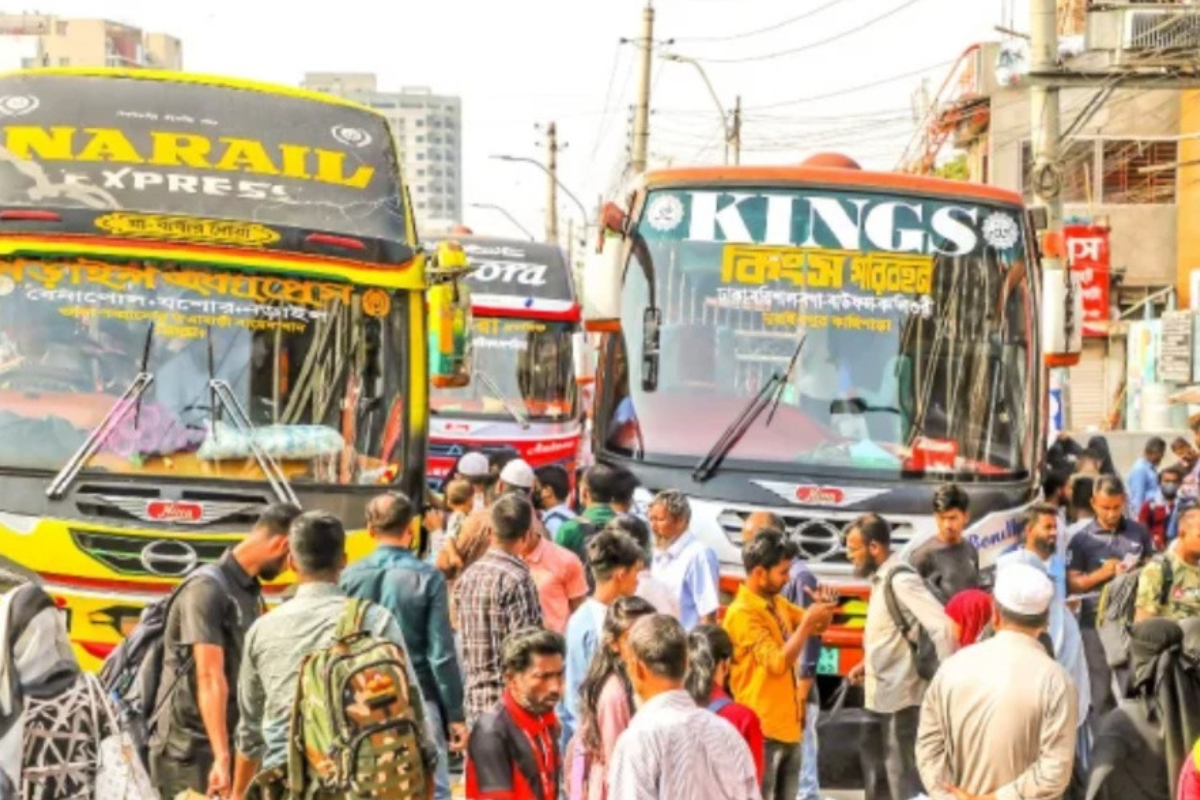
Bangladesh will hold its 13th Jatiya Sangsad (National Parliament) election alongside a nationwide referendum on 12 February, prompting the authorities to impose temporary transport restrictions aimed at safeguarding public order and ensuring the smooth conduct of polling. The Election Commission, in coordination with the Ministry of Road Transport and Bridges, has issued directives limiting the movement of certain categories of vehicles during the polling period. While these measures have raised concerns among travellers about possible disruption to intercity travel, transport owners’ representatives have clarified that long-distance bus services are not subject to a blanket ban.
The Bus and Truck Owners’ Association stated that there is no formal prohibition on intercity buses during the election period. Its president, Ramesh Chandra Ghosh, told the media that services would operate as usual on 11 February. On polling day itself, however, many routes are likely to see reduced frequency or temporary suspensions. He attributed this not to regulatory constraints, but to operational realities: a significant number of drivers, conductors and ticketing staff have requested leave in order to return to their constituencies and cast their votes. According to the association, services are expected to resume gradually on the night of 12 February once voting concludes and staff return to duty.
Under a recent government gazette issued pursuant to Section 32 of the Road Transport Act 2018, several vehicle categories will be barred from operating for 24 hours on polling day, from midnight on 11 February to midnight on 12 February. These include taxi cabs, pick-ups, microbuses and trucks. In addition, motorcycles will be prohibited nationwide for a total of 72 hours, from midnight on 10 February to midnight on 13 February. The restrictions are designed to minimise security risks, curb unlawful movement, and facilitate the deployment of election personnel.
Importantly, the gazette provides for exemptions. Vehicles engaged in emergency services, election-related duties, and the transport of essential goods may be permitted to operate under specific conditions. The circular further notes that long-distance passenger buses and necessary local transport may continue to run, subject to compliance with instructions from law enforcement and local administrations. This clarification has eased fears of a complete shutdown of intercity travel, although passengers have been advised to anticipate delays and limited availability on polling day.
Transport analysts note that election-time controls on vehicle movement are a longstanding feature of Bangladesh’s electoral administration, reflecting security imperatives as well as efforts to prevent the misuse of transport for campaigning or disorder. Nonetheless, the combination of restrictions and staff absenteeism may affect supply chains and passenger mobility, particularly in smaller towns reliant on intercity links. Passengers planning to travel on 12 February are therefore encouraged to confirm schedules in advance and consider travelling on 11 February or later in the evening after polls close.
Summary of Election-Time Transport Restrictions
| Vehicle Category | Restriction Period | Status on Polling Day | Exemptions/Notes |
|---|---|---|---|
| Taxi cabs | 11 Feb 00:00 – 12 Feb 24:00 | Prohibited | Emergency and election duties |
| Pick-ups | 11 Feb 00:00 – 12 Feb 24:00 | Prohibited | Essential goods transport |
| Microbuses | 11 Feb 00:00 – 12 Feb 24:00 | Prohibited | Election-related use |
| Trucks | 11 Feb 00:00 – 12 Feb 24:00 | Prohibited | Essential supplies |
| Motorcycles | 10 Feb 00:00 – 13 Feb 24:00 (72 hours) | Prohibited | Limited emergency exemptions |
| Intercity buses | No blanket ban | Likely reduced services | Dependent on staff availability |
| Local essential transport | No blanket ban | Permitted with conditions | Subject to local directives |
As polling day approaches, coordination between transport operators and authorities will be crucial to balance security considerations with the public’s need for mobility.



Comments