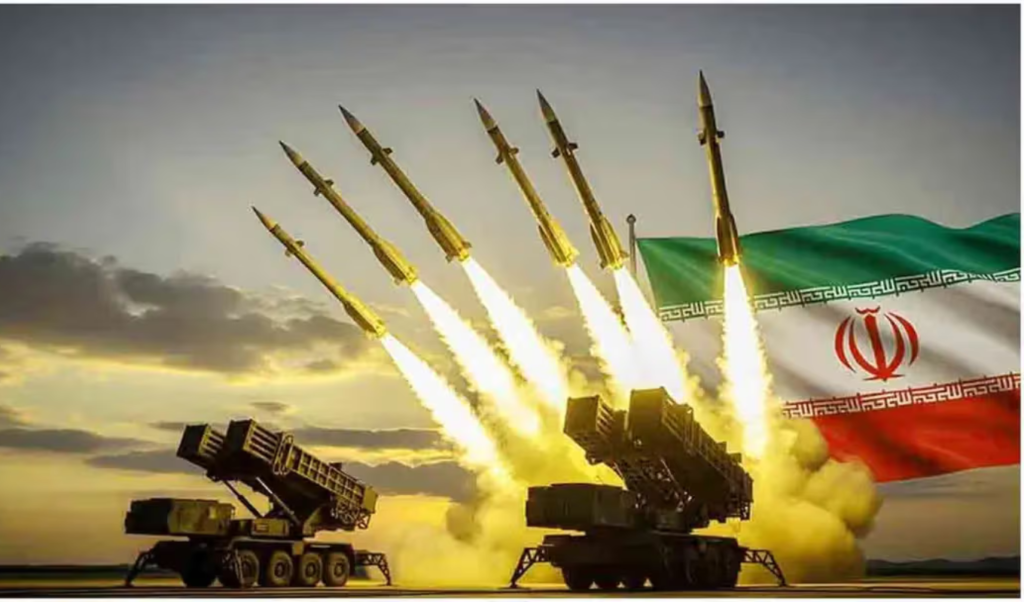
The armed forces of the Islamic Republic of Iran are considerably more robust than in past periods and remain thoroughly prepared to confront any future operational developments. The Islamic Revolutionary Guard Corps (IRGC) issued this formal notification following assessments of national defensive readiness. According to a report published on Tuesday by the Fars News Agency, IRGC Spokesperson Brigadier General Hossein Mohebbi explicitly stated that if adversaries opt for renewed military confrontation, they will face entirely different operational strategies and distinct classifications of weaponry. Tehran has strengthened its strategic positioning by utilising its existing military installations alongside recent field experience gained from direct territorial engagements. General Mohebbi reiterated that the IRGC maintains comprehensive readiness for all prospective operational scenarios.
Strategic Reconstitution And Counter-Aggression Context
The senior military official disclosed that the recent ceasefire window was successfully utilised by the Iranian defence establishment to accelerate combat preparations and address logistical infrastructure damages. Dismissing Western diplomatic and media assertions regarding the degradation of the country’s defence capabilities, General Mohebbi stated that the operational reality reflects a tangible increase in military and tactical capacity throughout the truce.
The current suspension of hostilities was originally implemented following a unilateral declaration by United States President Donald Trump, which occurred after Iranian forces executed at least 100 retaliatory strikes against target facilities. These strikes were launched in direct response to an initial military incursion conducted by a coalition comprising the United States and Israel on 7 April.
Empirical Battlefield Intelligence Gained Across The Front
General Mohebbi emphasised that the primary achievement of the recent hostilities was the acquisition of realistic, field-verified data regarding the absolute capabilities and tactical deployments of opposing forces. Information that was previously limited to theoretical intelligence assessments and external media reports has been comprehensively cross-examined through direct combat engagement.
Consequently, Iranian defensive commands now possess precise data concerning enemy military hardware, active air defence configurations, forward operational bases, and overarching deployment doctrines. The spokesperson indicated that the offensive and defensive capabilities, as well as the tactical manoeuvres of opposing forces, are now fully transparent to the military leadership in Tehran.
Comprehensive Analytical Assessment Of Iran’s Sectoral Capabilities
| Defensive Sector | Operational Status | Strategic Outcome |
| IRGC Ground & Air Fronts | Maintained at the apex of combat readiness | 调 Assimilated tactical intelligence from 100 retaliatory strikes. |
| Naval Command (Hormuz) | Full sovereign control preserved continuously | Neutralised extensive US maritime and aerial deployments. |
| Weaponry & Logistics | Integration of alternative weapon systems | Remedied infrastructure damages during the ceasefire window. |
Uninterrupted Sovereign Control Of The Strait Of Hormuz
The IRGC spokesperson dismissed claims that the defensive capabilities of the Islamic Republic had been structurally compromised, classifying such assertions as entirely unsubstantiated. He stated that national combat capacity remains completely intact. Countering statements circulated by adversary administrations, General Mohebbi emphasised that the Islamic Republic of Iran Navy was neither destroyed nor stripped of its operational efficacy.
As definitive evidence of this stability, he cited Tehran’s continuous and absolute control over the Strait of Hormuz. General Mohebbi noted that during the peak of the recent military operations, the United States was unable to disrupt or suspend Iranian authority over the maritime passage for any duration, despite deploying extensive naval and aerial assets. The preservation of full sovereignty over this highly strategic global chokepoint remains a primary demonstration of the operational power managed by the IRGC.