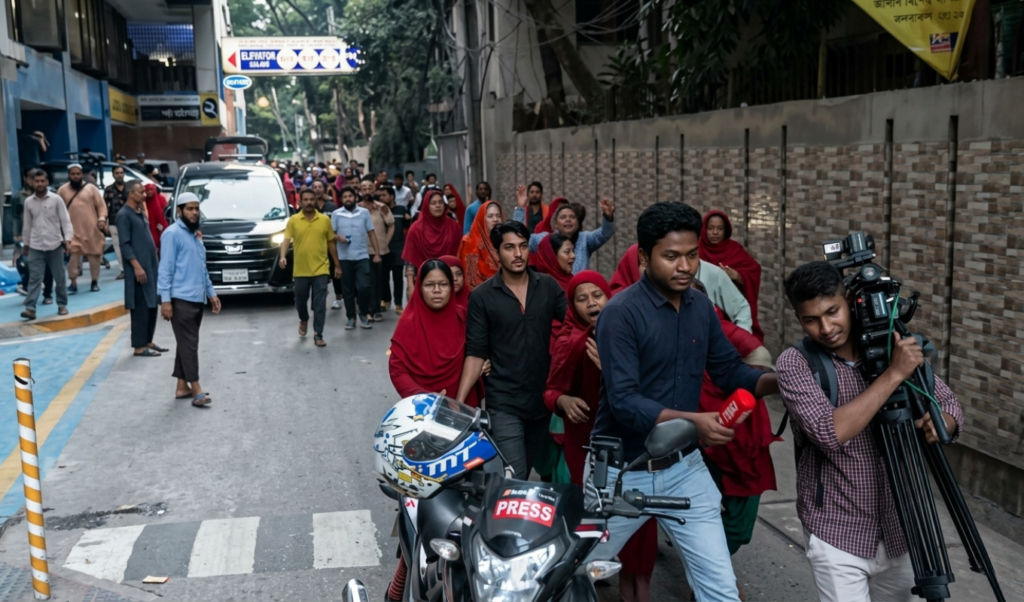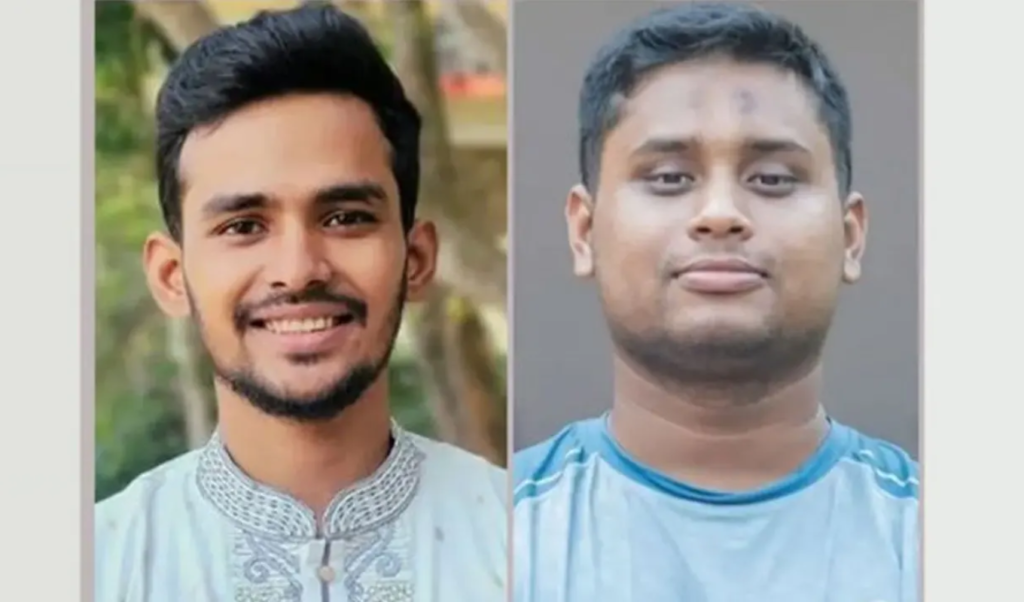
A series of violent, coordinated clashes over a consecutive two-day period in the Bhanga Upazila of Faridpur District has resulted in severe injuries to at least 60 individuals, including both men and women. The unrest, which transpired within the Bablatala area, was ignited by a controversial social media broadcast during the distribution of state-subsidised food relief under the Vulnerable Group Feeding (VGF) scheme ahead of the upcoming Eid-ul-Adha religious festival. The physical confrontations manifested in distinct phases, breaking out on Friday evening, 29 May, and escalating further on the morning of Saturday, 30 May.
The fundamental operational, administrative, and clinical parameters defining this public order crisis are systematically organised within the operational reference matrix below:
| Incident Framework Parameter | Specific Case Realities & Documented Facts | Current Regulatory Status & Institutional Action |
| Primary Incident Catalyst | Facebook Live broadcast alleging rice distribution deficit | Investigative findings pending verification of quantities |
| Territorial Jurisdiction | Chumurdi Union Parishad (No. 8), Bhanga Upazila | Law enforcement personnel actively monitoring the sector |
| Chronological Timeline | Friday evening (29 May) and Saturday morning (30 May) | Situational control successfully established by local police |
| Quantified Casualties | At least 60 active participants severely injured | Victims admitted to the Bhanga Upazila Health Complex |
| Tactical Weaponry Used | Local shields (dhal), spears (teta), and brickbats | Seizure of illegal local weapons ongoing by authorities |
| Institutional Authority | Bhanga Police Station (OC Mizanur Rahman presiding) | Statutory cases pending formal written complaints |
Chronological Progression of the Community Violence
The origins of the dispute trace back to two days prior to Friday, during an official food security distribution drive held at the Chumurdi Union Parishad complex. The government-mandated operation was designed to provide essential grains to economically vulnerable households. During the distribution process, a local resident identified as Akram Khan initiated a live broadcast on the social media platform Facebook, where he publicly alleged that the impoverished recipients were being systematically deprived of their full statutory rice allocations. During the broadcast, Akram Khan directly appealed for administrative intervention from regional civil servants whilst reportedly using highly derogatory language against the managing officials, generating intense local friction.
The verbal dispute transitioned into direct physical violence on Friday evening, 29 May, when Chandan, the younger brother of the Chumurdi Union Parishad Chairman Sohag Mia, confronted Akram Khan regarding the online statements. The exchange rapidly deteriorated from an argument into a physical altercation, prompting mass mobilisation from their respective family structures and community factions.
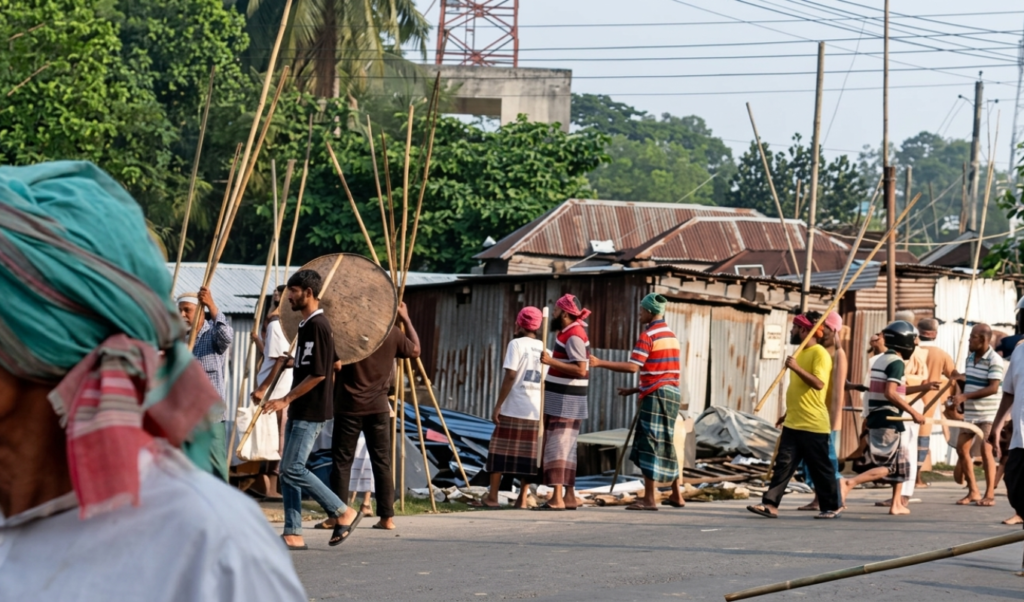
Supporters from both sides quickly assembled, armed with local weapons including specialized protective shields (dhal), locally manufactured spears (teta), and brickbats. The opposing factions were clearly defined by local allegiances: Akram Khan’s group was supported by a local figure named Shahabuddin Molla, whilst Chandan’s faction was backed by the Union Parishad Chairman Sohag Mia and an associate named Israfil. The initial clash on Friday evening persisted for approximately two hours before being temporarily disrupted, leaving at least 30 individuals with severe injuries.
The truce proved short-lived as the factions re-engaged on Saturday morning, 30 May, initiating a second wave of intense rural rioting. This second phase of fighting resulted in an additional 30 casualties, bringing the cumulative total of injured citizens to at least 60. Emergency services and relatives systematically evacuated the wounded from the Bablatala area, transferring them to the Bhanga Upazila Health Complex for urgent clinical stabilization.
Conflicting Depositions from Opposing Factions
The leadership of the opposing factions have delivered entirely contradictory statements regarding the underlying causes of the violent breakdown in public order:
Union Parishad Chairman Sohag Mia stated: “The individual named Akram arrived at the distribution center attempting to unlawfully claim relief grain without possessing a valid VGF card, fraudulently presenting himself as the younger brother of the local Member of Parliament (MP). Upon being denied the allocation due to this procedural invalidity, he initiated the live broadcast to fabricate allegations against my administration and used abusive language. Two days later, he intercepted my younger brother as he was returning home, initiating the argument that ultimately led to the community-wide clashes.”
Akram Khan countered: “The government framework explicitly mandates an allocation of 10 kilograms of rice per VGF cardholder, yet the poor citizens were being deceptively handed only 7 to 8 kilograms. Upon witnessing this corruption, I used social media to bring the matter to light, which successfully prompted the Assistant Commissioner (Land) to personally arrive and supervise the center. My actions were entirely justified, but the Chairman’s brother, Chandan, subsequently assaulted me without cause, triggering the defensive mobilization of residents from two distinct villages.”
Police Intervention and Broader Political Context
The Officer-in-Charge (OC) of the Bhanga Police Station, Mizanur Rahman, provided a formal administrative briefing concerning the law enforcement response and the strategic environment surrounding the unrest. The police official contextualised the incident beyond the immediate relief dispute, identifying deeper socio-political divisions within the upazila.
OC Mizanur Rahman clarified that while the relief distribution served as the immediate flashpoint, the prolonged nature of the two-day rioting was heavily driven by pre-existing disputes regarding the structural formation of local Bangladesh Nationalist Party (BNP) committees and an ongoing struggle for territorial dominance between the two rural factions.
The police command confirmed that emergency deployment squads were sent to the Bablatala area immediately upon receiving the riot reports. The police successfully dispersed the armed groups, restored order, and established a continuous monitoring presence to maintain peace. The OC concluded by noting that no formal written complaints had been submitted by either faction, but affirmed that comprehensive statutory investigations and legal prosecutions would commence immediately upon the receipt of official depositions.
Technical Appendix: The Vulnerable Group Feeding Framework
The Vulnerable Group Feeding (VGF) programme is a state-level social safety net infrastructure operated directly under the Ministry of Disaster Management and Relief of the Government of Bangladesh. Designed as a humanitarian intervention tool, the programme’s primary operational objective is to provide immediate, short-term food security to highly impoverished, distressed, and marginalised households during periods of seasonal scarcity or major national events.
The mechanism relies on the systematic distribution of clean food grains, primarily rice, free of charge to designated cardholders. These distribution drives are typically synchronized with major national or religious observances, such as Eid-ul-Fitr and Eid-ul-Adha, or deployed as a response mechanism prior to impending environmental disasters. Under normal statutory guidelines, the ministry authorises a fixed allocation ranging from 10 to 20 kilograms of grain per certified household to mitigate food insecurity across rural and urban upazilas.