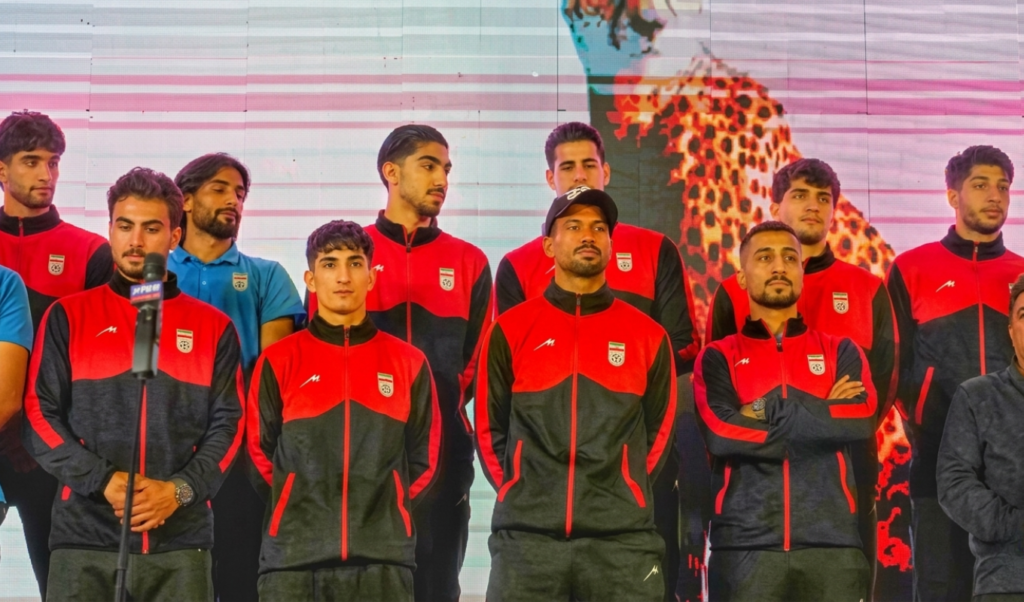
Geopolitical tensions have officially manifested on the international sporting stage ahead of the upcoming FIFA World Cup. The United States government has formally declined to host the Iran national football squad on its territory for the duration of the tournament. Following Washington’s stringent administrative stance, world football’s governing body, FIFA, was forced to intervene and seek an alternative logistical arrangement, approaching the Mexican government to secure accommodation for the Middle Eastern delegation.
Mexico has officially agreed to the request. On Monday, Mexican President Claudia Sheinbaum announced that her country had accepted the responsibility of hosting the Iranian national football team throughout their World Cup campaign.
Geopolitical Friction Influencing Tournament Logistics
According to official media reports, including dispatches from Al Jazeera, the United States political leadership explicitly stated that it would not permit the Iranian contingent to reside within its national borders during the competition. This decision stands despite the fact that all three of Iran’s group-stage fixtures are scheduled to take place inside American stadiums.
Speaking during a formal press conference on Monday, President Claudia Sheinbaum detailed the sequence of events that prompted Mexico’s involvement. Sheinbaum explained that the United States administration made it clear it did not want the Iranian national team to stay overnight on U.S. soil. Following this declaration, a representative from FIFA reached out to the Mexican government to see if the squad could be accommodated across the border instead. The President stated that Mexico saw no valid reason to reject the proposal and subsequently gave full official clearance.
Strategic Base Camp Relocation to Tijuana
The administrative transition has been coordinated with Iranian football authorities. Mehdi Taj, the president of the Iran Football Federation, has confirmed that the national association secured formal approval from FIFA to alter their original logistical blueprint. Consequently, the team’s official World Cup base camp will be transferred from its intended location in Tucson, Arizona, to the Mexican northwestern border city of Tijuana.
Federation officials noted that moving the team’s base of operations directly resolves the operational hurdles stemming from United States visa restrictions, immigration procedures, and broader staff travel limitations. By positioning themselves in Tijuana, which sits directly adjacent to the United States border along the Pacific Ocean, the Iranian squad can manage their commitments efficiently. The location allows the delegation to fly out from Mexico to their American match venues in less than an hour and return post-match without the requirement of staying overnight in the United States.
Pre-Tournament Regional Instability and Fixture Schedules
The complications surrounding Iran’s World Cup preparations follow intense regional conflicts in the Middle East. Military hostilities involving Iran, the United States, and Israel erupted in late February, creating widespread diplomatic tension. The geopolitical crisis initially cast a shadow of uncertainty over whether the Iranian national team, popularly known as “Team Melli,” would be able to participate smoothly in the international competition.
Despite the friction regarding their residential base camp, the Iranian squad remains locked into their competitive schedule within Group G, flying across the border to play their matches as originally planned.
| Group G Fixture Date | Opponent | Match Venue Location |
| 15 June | New Zealand | Los Angeles, California (USA) |
| 21 June | Belgium | Los Angeles, California (USA) |
| 26 June | Egypt | Seattle, Washington (USA) |
With the logistical framework now settled under Mexican hospitality, the Iranian Football Federation is working closely with FIFA and local Mexican authorities to finalise the security and accommodation protocols for their stay in Tijuana ahead of their tournament debut.