Bangladesh’s Minister of Road Transport and Bridges, Sheikh Robiul Alam, has announced the removal of fuel rationing for public and long-distance transport vehicles, signalling relief amid the ongoing national fuel supply pressures. The decision comes as authorities seek to stabilise the operation of buses, coaches, and other mass transit services across the country.
Fuel Supply for Public Transport
Speaking on Saturday in Gulistan, Dhaka, the minister confirmed that from the night of 13 March, long-distance and public transport vehicles will receive adequate fuel without any daily rationing limits. Buses and other public service vehicles are now expected to operate with uninterrupted fuel supplies, ensuring smoother transport services for commuters.
Sheikh Robiul Alam stated:
“From tonight, the daily fuel rationing for public transport vehicles is lifted. All buses and intercity services will now receive sufficient fuel to maintain their schedules efficiently.”
Background: Fuel Supply Challenges
The recent fuel shortages in Bangladesh were compounded by geopolitical tensions in the Middle East, particularly the conflict between Iran, Israel, and the United States. These developments disrupted global oil flows, creating a ripple effect in domestic fuel availability.
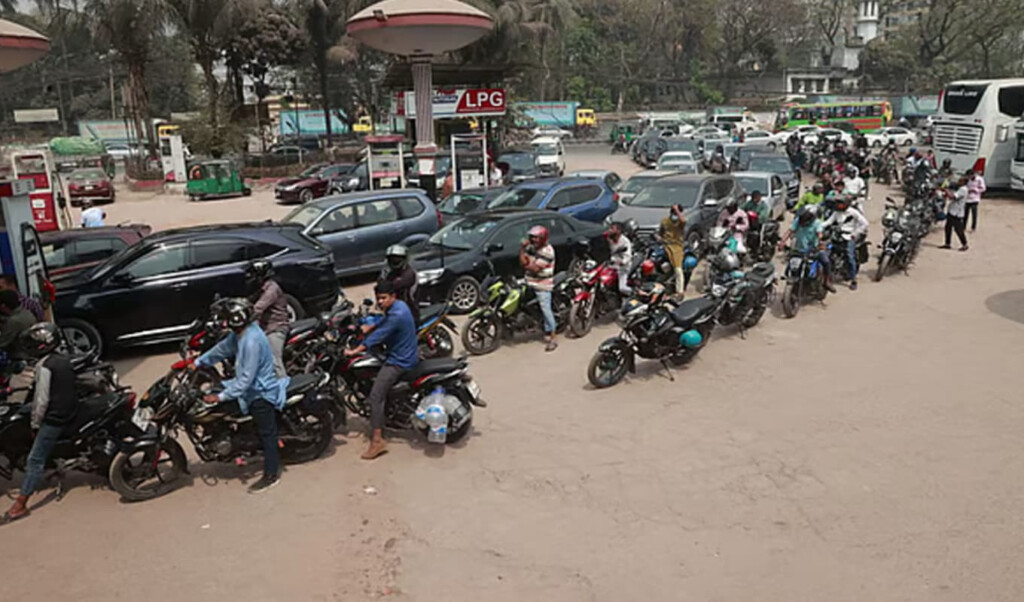
On 6 March, Bangladesh Petroleum Corporation (BPC) imposed strict fuel rationing measures to manage supply. Under these restrictions:
Motorcycles were limited to 2 litres of petrol per day.
Private cars could take a maximum of 10 litres of fuel per day.
Later adjustments for ride-sharing motorcycles in urban areas increased the daily allowance to 5 litres to accommodate higher demand and ensure public mobility.
Public Transport Fuel Allocation: Key Changes
| Vehicle Type | Previous Limit | Current Allocation | Commentary |
|---|---|---|---|
| Bus / Coach | Rationed daily | Unrestricted | Full fuel supply restored for uninterrupted operation |
| Long-distance transport | Rationed | Unrestricted | Ensures connectivity across districts |
| Motorcycles (ride-share) | 2–5 litres | Unchanged | Daily limit maintained at 5 litres for urban services |
| Private cars | 10 litres | Unchanged | Private vehicle rationing continues |
Implications
The removal of fuel rationing for public transport is expected to:
Improve reliability and frequency of buses and coaches.
Reduce commuter delays in urban and intercity transport.
Allow transport operators to plan routes without daily fuel constraints.
Authorities continue to monitor fuel distribution closely to ensure equitable allocation across sectors. While private vehicle rationing remains in place, lifting restrictions for public transport demonstrates a prioritisation of essential mobility for the population.
The move also reflects proactive steps by the government to mitigate the domestic impact of global fuel instability, ensuring that citizens relying on mass transit services are not disproportionately affected by the energy supply crunch.