In January 2024, a report published by the prominent news outlet Axios suggested that the then United States President, Joe Biden, was rapidly losing patience with Israeli Prime Minister Benjamin Netanyahu. At that juncture, Israel’s military campaign in Gaza had been underway for several months. Due to the unwavering backing provided to Israel by Washington, the Biden administration found itself facing profound domestic and international criticism.
Despite these underlying tensions, hostilities persisted unabated throughout the remainder of Biden’s tenure. This pattern of unyielding warfare has remained consistent into the first ten months of Donald Trump’s second presidential term.
Since then, various international media corporations have published numerous accounts detailing alleged policy disputes and friction-filled telephone exchanges between Trump and Netanyahu. These accounts consistently rely upon anonymous official sources. However, despite the persistent dissemination of these reports, the foundational strategic, diplomatic, and military alliance between the United States and its closest Middle Eastern ally, Israel, has shown no tangible signs of deterioration.
Allegations of Private Friction and Policy Continuity
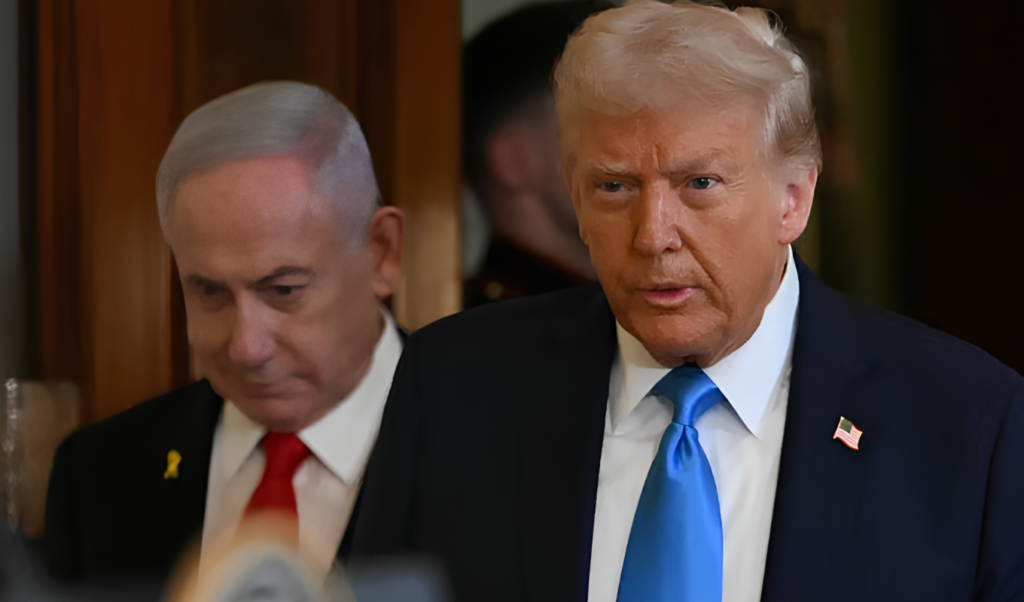
A recent report by Axios asserted that during private deliberations, President Donald Trump referred to Prime Minister Benjamin Netanyahu as “crazy”. The publication further alleged that Trump delivered a severe reprimand to the Israeli leader concerning the escalation of Israeli military operations in Lebanon. Concurrently, an Israeli airstrike targeted the southern Lebanese town of Al-Marwaniyah, resulting in the deaths of six individuals, including two children.
Geopolitical analysts argue that while leaks detailing heated verbal altercations between American leaders and Netanyahu frequently emerge, the overarching policy trajectories remain remarkably static. Ryan Costello, the Policy Director at the National Iranian American Council Action, remarked that media disclosures regarding the private exasperation of US presidents towards Netanyahu have arrived at a juncture where political commentators treat them with outright cynicism. Costello emphasised that unless these purported frustrations translate into concrete policy adjustments, such leaks possess negligible geopolitical significance.
Cross-Administration Parallels in Washington’s Alignment
Despite reports emphasizing Trump’s stern rhetoric towards Netanyahu, Isabel Hayslip, an advocacy manager at the US-based human rights organisation DAWN, observed that Washington’s structural policies remain perfectly aligned with Israeli state objectives.
“Trump is being framed as this strongman leader who gets on the phone and screams at Netanyahu for undermining US policy, but this completely contradicts Trump’s actual policy position. Netanyahu ultimately gets exactly what he wants.”
Hayslip further asserted that Trump lacks ultimate leverage over Israel’s operational choices. She argued that much like his predecessors, Trump has demonstrated an inability to prioritise distinct American strategic interests, opting instead to accommodate Israel’s regional expansionist ambitions.
Quantifiable Indicators of United States Bilateral Support
The resilience of the US-Israel strategic alliance is underscored by extensive military, economic, and diplomatic metrics. The table below delineates the concrete forms of assistance provided by Washington:
| Framework of Assistance | Quantified Actions and Geopolitical Measures |
| Direct Military Aid | Provision of approximately $25 billion in military assistance to Israel since October 2023. |
| Strategic Defence Integration | Direct deployment of US military assets to intercept and neutralise Iranian retaliatory strikes against Israel. |
| Multilateral Diplomatic Shielding | Consistent use of the US veto power within the United Nations Security Council to block multiple ceasefire resolutions. |
The Geopolitical Matrix of the Conflict with Iran
The latest wave of media leaks has surfaced at a complex juncture for the Trump administration. The president faces significant cross-pressures regarding the conflict with Iran, emanating from both his Democratic opponents and segments of his own political base. On 28 February, the United States, in tandem with Israel, initiated a military offensive against Iran. In response, Tehran blocked the strategically vital Strait of Hormuz, precipitating an immediate surge in domestic US petroleum prices and exacerbating inflationary pressures. Critics allege that Trump’s alignment has permitted Israel to draw Washington into a wider regional conflict that does not align with core US strategic priorities.
Simultaneously, diplomatic negotiations aimed at de-escalating the war with Iran have stalled completely. This diplomatic impasse coincides with an intensification of Israeli ground and air operations in Lebanon, accompanied by explicit threats targeting Beirut. This escalation threatens to completely dismantle the fragile ceasefire framework that had been established.
Contradictory Public Assertions and White House Disclosures
Prior to the publication of the Axios report, Donald Trump asserted that he had engaged in direct discussions with both Benjamin Netanyahu and an unnamed representative of the Lebanese militant group Hezbollah. Trump claimed that during these discussions, both parties had formally agreed to a comprehensive cessation of hostilities. However, Netanyahu swiftly contradicted this narrative, publicly declaring that the Israel Defense Forces would proceed unhindered with their planned operations in southern Lebanon.
Furthermore, an earlier Axios report revealed that the White House had transmitted an exceptionally blunt warning to Netanyahu regarding infractions of prior ceasefire understandings. The correspondence reportedly stated:
“If you want to ruin your own reputation and show that you do not abide by agreements, that is your business. But we will not allow you to ruin President Trump’s reputation after we brokered the ceasefire deal in Gaza.”
The Dynamics of Information Warfare
Nigar Mortazavi, a Senior Fellow at the Center for International Policy. Mortazavi argued that by projecting an image of Trump adopting a stern posture towards Israel, the administration aims to mitigate public anger regarding US complicity in an increasingly unpopular conflict. She characterised these leaks as a calculated public relations mechanism designed to signal dissatisfaction without altering structural support.
From a different perspective, Ryan Daniel Costello noted that the strategic leaking of these altercations might be intended as a diplomatic signal directed at Tehran. By portraying Trump as reprimanding Netanyahu over Lebanon, Washington may be attempting to isolate the Lebanese theatre from its broader, direct negotiations with Iran. Wilkins maintained that while high-tempered exchanges have indeed occurred between Trump and Netanyahu, the two leaders remain deeply coordinated on policy towards Iran and broader regional strategies. Mortazavi concluded that the current environment represents a multi-dimensional conflict where physical combat is inextricably linked with intelligence operations and strategic information warfare, utilizing selective leaks and partial truths to manipulate international public perception.