Khabowrala online Desk
Published: 31 Mar 2026, 10:40 pm
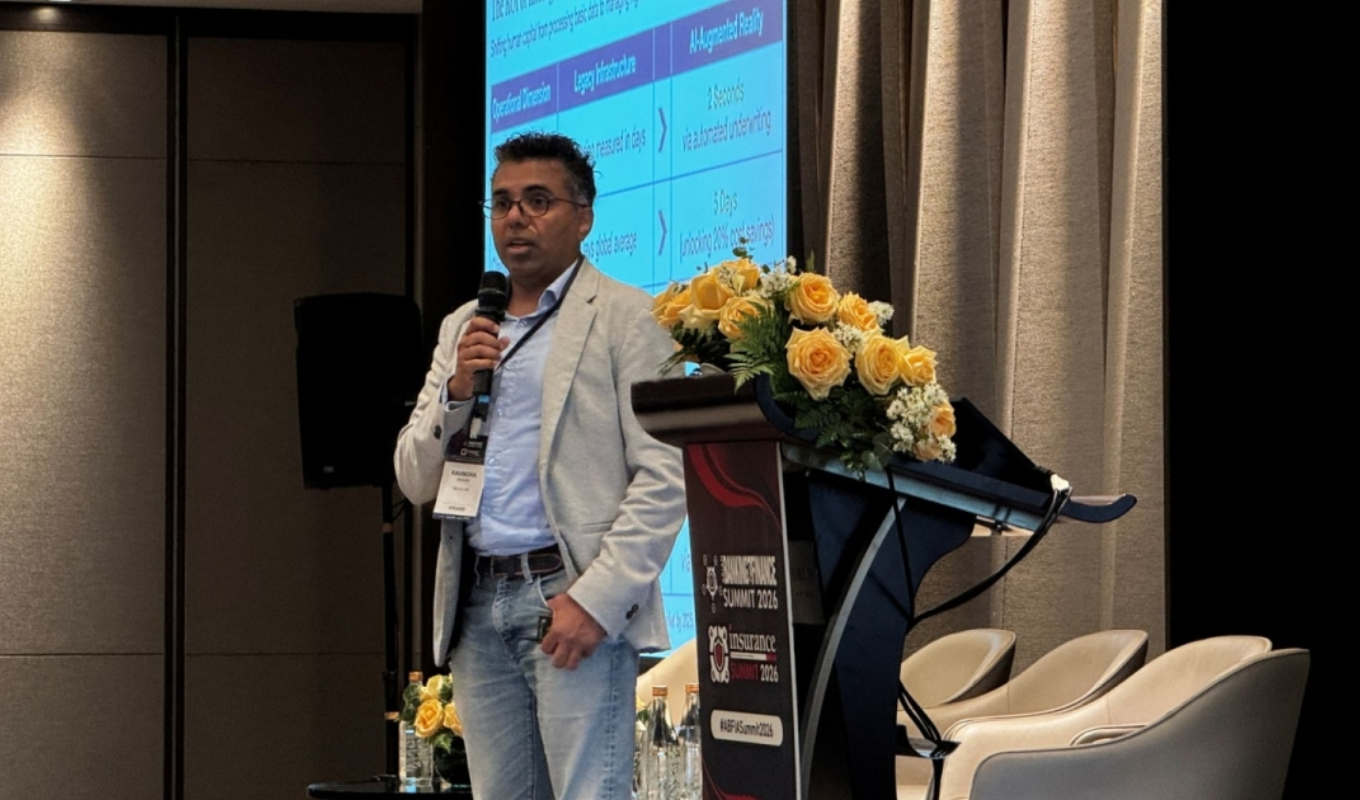
Vietnam’s Techcom Life Insurance Company Limited is positioning itself at the forefront of an “AI-first” transformation in the insurance sector, seeking to overcome a persistent industry hurdle where only a small fraction of artificial intelligence initiatives reach full-scale deployment.
Speaking at the Asian Banking & Finance and Insurance Asia Summit in Ho Chi Minh City, Ravindra Venisetti revealed that fewer than 10% to 15% of AI use cases across the global insurance industry are successfully scaled beyond pilot phases. This gap between experimentation and enterprise adoption continues to constrain the sector, even as investment in AI technologies accelerates.
Techcom Life, however, is attempting to break from this pattern. Launched only months ago, the company has rapidly embedded AI across its operations, aiming to build a lean, technology-driven organisation rather than relying on traditional workforce expansion. Venisetti explained that the firm’s ambition is to operate as an “AI-native” insurer, where automation and data-driven systems underpin nearly all core functions.
A central pillar of this strategy is the deployment of its proprietary AI assistant, “Tori”, which is already being utilised by approximately 85% of the company’s 1,500 agents. The tool provides real-time prompts during client interactions, enhancing sales effectiveness and ensuring more consistent customer engagement. This high adoption rate signals a shift in how insurers are integrating AI not merely as a back-office tool, but as a frontline enabler.
The broader Southeast Asian market presents fertile ground for such innovation. Insurance penetration in Vietnam remains around 2%, significantly lower than in developed economies. This creates a unique opportunity for insurers like Techcom Life to leapfrog legacy systems and adopt modern, cloud-native architectures from the outset.
Venisetti highlighted that, unlike long-established insurers burdened by decades-old infrastructure, newer entrants can design systems optimised for AI integration. In mature markets, fragmented data environments and outdated systems often impede large-scale AI deployment, making transformation both costly and complex.
Industry research underscores the potential benefits of AI adoption. A 2025 study by McKinsey & Company suggests that AI-driven underwriting and claims automation could reduce insurers’ operating costs by up to 40%, whilst improving loss ratios by three to five percentage points. Meanwhile, Deloitte estimates that global investment in insurance AI surpassed $10 billion in 2024, with Asia-Pacific emerging as a key growth region.
Techcom Life is focusing its AI efforts on core insurance functions such as pricing, underwriting, and claims processing. Pricing, in particular, is undergoing significant transformation. Traditionally reliant on static models and spreadsheet-based analysis, it is now being enhanced through dynamic, data-driven algorithms capable of real-time risk assessment.
Fraud detection is another critical area. In Southeast Asia, fraudulent claims are estimated to account for between 10% and 20% of total claims. Whilst AI cannot fully eliminate fraud, it significantly improves pattern recognition and early detection, enabling insurers to mitigate losses more effectively.
Operational innovation at Techcom Life has also been notable. Venisetti disclosed that the company recently developed and deployed an AI-generated document management platform in just three days, without human coding. Additionally, AI agents are already functioning as virtual employees, supporting administrative tasks and even collaborating in software development processes.
| Area | Details |
|---|---|
| AI Adoption Rate | 85% of 1,500 agents using “Tori” |
| Industry Scaling Rate | Only 10%–15% of AI use cases reach full deployment |
| Insurance Penetration (Vietnam) | Approximately 2% |
| Fraudulent Claims Estimate | 10%–20% of claims in Southeast Asia |
| Cost Reduction Potential | Up to 40% (AI-driven automation, McKinsey) |
| Global AI Investment | Over $10 billion in 2024 (Deloitte estimate) |
Despite these advances, Venisetti acknowledged that the primary challenge is no longer technological capability but execution discipline. With a constant influx of new AI ideas, prioritising which initiatives to scale has become increasingly complex.
“We generate 10 to 12 new ideas regularly, but determining where to begin is the real constraint,” he said, underscoring that strategic focus, rather than innovation itself, will ultimately determine success.
As competition intensifies across Southeast Asia’s insurance landscape, Techcom Life’s AI-first approach may offer a blueprint for how emerging insurers can bypass legacy limitations and redefine operational efficiency in the digital age.

> Two Arrested Over Sitakunda Quarry Protest Case
> 175 Bangladeshi Migrants to Return from Libya
> Bangladesh Faces Energy Constraints Amid Global Crisis
> Woman Dies Waiting For Doctor During Lunch Break
> Chattogram Court Hands Nine Life Sentences
> Dhaka Launches Week-Long Drive Against Street Encroachments
> Former Child Star Simrin Lubaba Marries Spiritual Transformation
> UN Diplomat Resigns Warning of Nuclear Strike on Iran
> Iran Rejects Pakistan’s US Talks Mediation Claim
> PCB Fines Naseem Shah Over Political Post Incident
> SIBL Recovery Stalled Amid Governance Failures, Allegations Surface
> HSC Exams in Bangladesh Set for June Start
> Marine Insurance Market Holds Firm Amid Middle East Tensions


A total of 175 Bangladeshi nationals are scheduled to return home from Libya on Wednesday, as part o...

Iran’s Islamic Revolutionary Guard Corps (IRGC) has issued a stark warning, threatening attacks agai...

Pakistan international opener Fakhar Zaman has been handed a two-match suspension following a ball-t...

The Monetary Authority of Singapore (MAS) has raised fresh concerns over insurers’ increasing exposu...

Pakistan Super League (PSL) franchise Lahore Qalandars have suffered a significant setback after the...

Vaibhav Suryavanshi continues to command attention across the cricketing world, with performances th...

Reports emerging from Iran indicate extensive destruction to civilian infrastructure amid ongoing ho...

Veteran playback singer Alka Yagnik, one of the most celebrated voices in South Asian cinema over th...

TOKYO — Japan Post Insurance has acquired a minority equity stake in Japanese insurance distributor...

Life insurance policyholders are facing an escalating crisis in Bangladesh as unpaid claims continue...

The iconic yellow jersey of Brazil carries a weight unlike any other in world football. For the Sele...

Over the past few decades, Bangladesh has achieved significant economic progress. Industrialisation,...


Availabe for iphone & ipads

Available in google play
 বাংলা
বাংলা