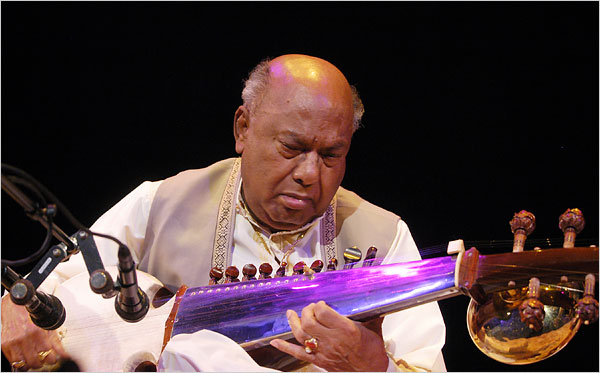
Hemanta Mukherjee remains an monumental figure in Bengali and Indian music, whose contributions continue to resonate across generations. His classic tracks—such as ‘Tumi Ele, Onek Diner Pore Jeno Brishti Elo’, ‘Neer Choto Koti Nei’, ‘Ei Raat Tomar Amar’, ‘Ei Poth Jodi Na Sesh Hoy’, and ‘Muche Jaoa Dinguli’—transitioned seamlessly from gramophones, radio, and cassettes to modern digital streaming platforms. His artistic delivery captures deep emotional spectrums, ranging from romance to nostalgia, securing his status as an essential component of cultural life across both India and Bangladesh.
Early Life and Formative Years in Benares
Born on 16 June 1920 in Benares (Varanasi), Hemanta Mukherjee later relocated to Kolkata with his family. He attended Mitra Institution in Bhawanipur, where he developed lifelong friendships with future literary icons Subhash Mukhopadhyay and Santosh Kumar Ghosh. Initially, Mukherjee aspired to be a writer rather than a vocalist. He regularly wrote short stories, and his literary efforts succeeded in gaining publication in the prestigious Bengali literary magazine, Desh.
Despite lacking formal institutional training in music, his intrinsic affinity for the art grew by listening to gramophone records. His primary musical environment developed at the residence of his friend, Shyamasundar, utilizing an available harmonium and gramophone records. During his school days, he faced a brief suspension for singing with friends in class. The suspension was subsequently revoked following a respectful appeal made by his father to the school administration. This incident and his father’s measured composure deeply influenced Mukherjee’s character, instilling a lifelong patience and quiet perseverance through early professional rejections.
Radio Debut and Early Professional Challenges
Mukherjee’s entry into broadcasting was initiated by his school friend, the poet Subhash Mukhopadhyay, who encouraged him to audition for the All India Radio (then the Broadcasting Corporation) in 1935. For his audition, Mukherjee performed ‘Aajo Pore Go Mone’, a track originally sung by Santosh Sengupta. Despite initial parental reservations regarding music as a viable career, he secured his family’s approval with support from his mother and peers. Subhash Mukhopadhyay penned his first broadcast song, ‘Aamar Gane-te Ele Noborup-e Chirontoni’, which was performed alongside a traditional Bhatiyali folk tune.
| Year | Key Career Milestones and Historical Timeline | Institutional & Creative Context |
| 1920 | Birth of Hemanta Mukherjee | Born on 16 June in Benares, British India. |
| 1935 | Broadcasting Audition and Debut | Successfully auditioned for the All India Radio. |
| 1937 | First Commercial Gramophone Recording | Released ‘Janite Jodi Go Tumi’ via Sailesh Dattagupta. |
| 1944 | Evolution to Self-Composition | Composed ‘Kotha Koyo Nako, Shudo Shono’. |
| 1940s | Strategic Association with the IPTA | Collaborated with Salil Chowdhury on ‘Gayer Bodhu’. |
| 1951 | Relocation to Mumbai | Directed music for the Hindi film Anand Math. |
| 1955 | Commencement of the Uttam-Hemanta Era | Scored and sang for the landmark cinema Shapmochon. |
| 1972 | International Cinematic Integration | Contributed music to the Hollywood feature film Siddhartha. |
| 1989 | Demise of the Maestro | Passed away on 26 September in Kolkata. |
Securing a commercial recording contract proved highly challenging. Mukherjee and his companion approached several labels—including Senola, Pioneer, Megaphone, and HMV—with little initial success. His breakthrough materialised through an introduction facilitated by his father’s friend, Shanti Basu, to the established composer Sailesh Dattagupta. Impressed by his vocal range, Dattagupta arranged for his debut recording in 1937 under the Columbia label, featuring the tracks ‘Janite Jodi Go Tumi’ and ‘Bolo Go Bolo More’, with lyrics by Noreswar Bhattacharya.
Artistic Maturation and the Collaborative Era
Initially labelled by critics as “Chhotto Pankaj” due to the stylistic influence of Pankaj Mullick, Mukherjee deliberately worked to establish a distinct vocal identity. In 1944, he composed and released two songs: ‘Kotha Koyo Nako, Shudo Shono’ and ‘Aamar Biroho Aakashe Priya’. The restrained emotional delivery and precise diction of ‘Kotha Koyo Nako’ marked a definitive shift in modern Bengali music.
During the mid-1940s, his association with the Indian People’s Theatre Association (IPTA) brought him into contact with the composer and lyricist Salil Chowdhury. In the late 1940s, they produced ‘Kono Ek Gayer Bodhur Kotha’, a six-minute narrative song detailing the socio-economic struggles and famine conditions in rural Bengal. This production challenged conventional romantic formats and integrated socio-political realities into mainstream music. Their partnership generated further historic tracks, including ‘Runner’, ‘Obak Prithibi’, ‘Palkir Gaan’, and ‘Ghum Bhangar Gaan’, effectively documenting contemporary social transitions.
Cinematic Impact, Bollywood Success, and International Exposure
By the mid-1950s, Mukherjee’s voice became inextricably linked with the iconic actor Uttam Kumar, defining the acoustic identity of the romantic lead in Bengali cinema. This collaboration began with the 1955 film Shapmochon and extended through classic films such as Harano Sur, Saptapadi, Mayamriga, Dui Bhai, Indrani, Jiban Trishna, and Haat Baralei Bondhu.
In 1951, Mukherjee relocated to Mumbai at the invitation of director Hemen Gupta to compose the musical score for the Hindi film Anand Math. He established a highly successful career in playback singing and composition within the Hindi film industry (known under the moniker Hemant Kumar), delivering national hits like ‘Yeh Raat Yeh Chandni Phir Kahan’, ‘Hai Apna Dil To Aawara’, ‘Na Tum Hamen Jano’, and ‘Chup Hai Dharti’. His composition for the film Naghin earned him the prestigious Filmfare Award for Best Music Director. His work achieved international recognition in 1972 when director Conrad Rooks integrated his Bengali tracks ‘O Nodi Re’ and ‘Pother Klanti Bhule’ into the Hollywood feature film Siddhartha, starring Shashi Kapoor and Simi Garewal.
Interpretation of Rabindrasangeet and Universal Appeal
Mukherjee played a pivotal role in democratising Rabindrasangeet (the songs of Rabindranath Tagore) for the broader middle-class audience. Retaining the foundational structure of the genre, he utilised an accessible, emotionally direct delivery that brought Tagore’s compositions into domestic spaces and public gatherings. His renditions of tracks like ‘Aamar Aar Hobe Na Deri’, ‘Keno Pantho E Choncholota’, ‘Aamar Ei Poth Chawayetai Anondo’, and ‘Purano Sei Diner Kotha’ expanded the reach of the genre across the subcontinent.
Unlike peers who specialised strictly within single genres, Mukherjee balanced mass-appeal political anthems, romantic playback tracks, and classical compositions. Following decades of continuous artistic output, the artist passed away on 26 September 1989, leaving behind a body of work that continues to serve as an enduring cultural touchstone.