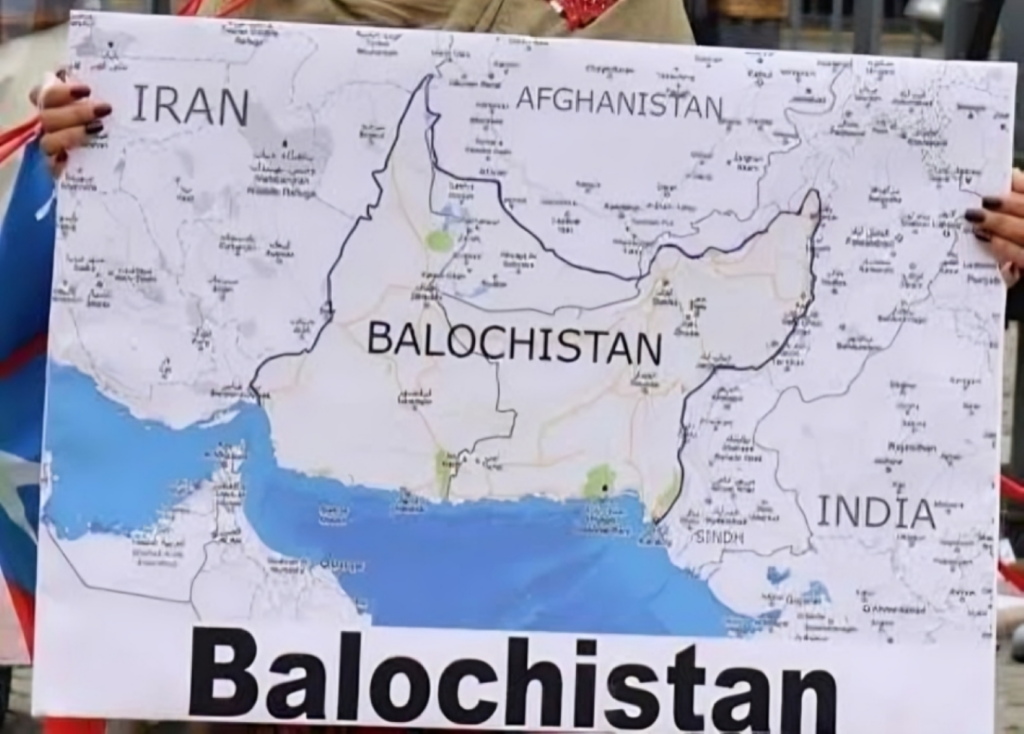
Balochistan, the largest province of Pakistan, remains one of the country’s most fascinating yet lesser-explored regions. Known for its rugged landscapes, breathtaking coastlines, and rich cultural heritage, Balochistan offers a unique travel experience for adventurers and culture enthusiasts alike. Despite being relatively untouched by mainstream tourism, this southwestern province holds immense potential for those seeking an off-the-beaten-path destination.
Geography and Natural Beauty
| Feature | Description |
| Coastline | Balochistan boasts a stunning 770 km coastline along the Arabian Sea, home to pristine beaches like Gwadar, Ormara, and Pasni. |
| Mountain Ranges | The province is defined by rugged mountain ranges, including the Sulaiman, Kirthar, and Makran ranges, offering striking landscapes and challenging trekking routes. |
| Deserts and Plateaus | The vast Kharan Desert and the high-altitude Balochistan Plateau provide dramatic landscapes and unique ecosystems. |
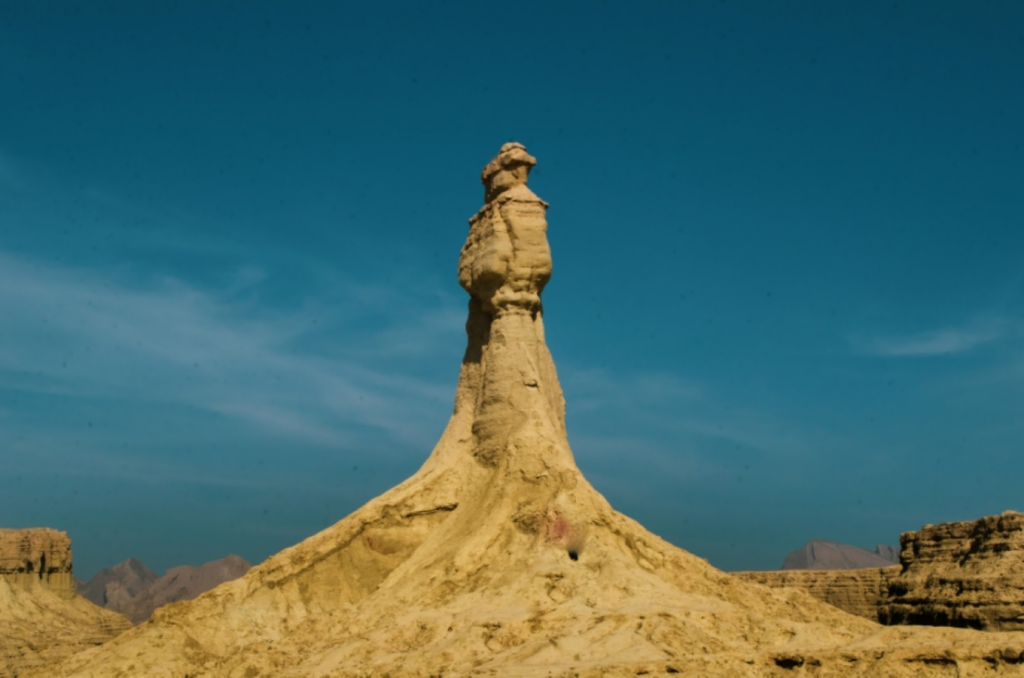
| National Parks | Hingol National Park, the largest in Pakistan, is known for its diverse wildlife, dramatic canyons, and the iconic Princess of Hope rock formation. |
Cultural Heritage and Ancient Sites
Balochistan’s cultural landscape is as diverse as its physical terrain. The province is home to ancient archaeological sites that date back thousands of years.

Mehrgarh: Cradle of Early Civilization
Mehrgarh, located in the Kacchi Plain near the Bolan Pass in present-day Balochistan, is one of the world’s earliest known farming settlements, dating back to around 7000 BCE. It is considered a significant archaeological site, offering invaluable insights into the transition of human societies from nomadic hunter-gatherers to settled agricultural communities. Often referred to as the cradle of early civilization in South Asia, Mehrgarh predates both the Indus Valley Civilization and the Egyptian pyramids, making it a cornerstone in understanding human history.
Key Highlights of Mehrgarh:
| Feature | Details |
| Location | Kacchi Plain, near Bolan Pass, Balochistan, Pakistan |
| Period | Neolithic (7000 BCE – 2500 BCE) |
| Significance | One of the earliest known farming settlements, precursor to the Indus Valley Civilization |
| Excavation | Discovered by French archaeologist Jean-François Jarrige and his team in 1974 |
| Key Discoveries | Mud-brick structures, grain storage silos, early dentistry tools, and finely crafted pottery |
Mehrgarh is notable for its sophisticated early agricultural practices, including the cultivation of wheat and barley, as well as the domestication of cattle, sheep, and goats. The site has revealed advanced mud-brick architecture, with houses featuring multiple rooms, which indicates an early understanding of urban planning. Archaeologists have also unearthed evidence of early dentistry, including drilled teeth dating back to 5500 BCE, highlighting the remarkable technological and medical advancements of this ancient community.
Moreover, the pottery and artefacts found at Mehrgarh display a high level of craftsmanship and artistic expression. These include intricately designed terracotta figurines, beads, and decorative motifs, reflecting a complex social and cultural structure. The presence of semi-precious stones and beads from distant regions suggests active trade networks, further emphasizing the advanced nature of this early society.
Mehrgarh’s significance lies not only in its antiquity but also in its role as a precursor to the more widely known Indus Valley Civilization. It provides critical evidence of the gradual shift from nomadic life to a more settled, agrarian-based society, laying the foundation for the rise of complex urban centres in the region.
Visiting Mehrgarh offers a unique opportunity to step back in time and witness the roots of human civilization, making it a must-see destination for history enthusiasts, archaeologists, and travellers eager to explore the ancient past.

Hinglaj Mata Temple:
Hinglaj Mata Temple, also known as Hinglaj Shakti Peeth, is one of the most sacred pilgrimage sites for Hindus, located in the heart of the Hingol National Park in the Makran region of Balochistan, Pakistan. This ancient shrine, dedicated to the goddess Hinglaj Mata, is considered one of the 51 Shakti Peethas, revered for its deep spiritual significance and ancient connections to Hindu mythology.
Historical and Mythological Significance
The temple’s history dates back thousands of years, with its roots entwined in the Hindu epic Mahabharata and the Puranas. According to legend, the goddess Sati, the divine consort of Lord Shiva, immolated herself in protest against her father Daksha’s disrespect towards her husband. In his grief and fury, Shiva carried Sati’s charred body across the universe, triggering cosmic destruction. To save the world, Lord Vishnu intervened, using his Sudarshana Chakra to cut Sati’s body into 51 pieces, each falling to a different part of the Indian subcontinent, becoming sacred Shakti Peethas. Hinglaj Mata Temple marks the spot where Sati’s head is believed to have fallen, making it a place of profound spiritual power.
Pilgrimage and Rituals
Every year, thousands of Hindu devotees from across Pakistan, India, and around the world embark on a challenging pilgrimage to this remote temple, situated amidst the rugged landscapes of the Hingol National Park. The journey itself is seen as a test of faith and endurance, as pilgrims traverse deserts, mountains, and rivers to reach the sacred site.
The primary festival celebrated here is the annual “Hinglaj Yatra”, a four-day event that draws pilgrims from diverse backgrounds. The rituals at Hinglaj Mata Temple are unique, blending Vedic traditions with local customs. Devotees offer coconuts, vermilion, and flowers to the deity, seeking blessings for protection, prosperity, and spiritual enlightenment.
The Temple’s Natural Setting
What sets Hinglaj Mata Temple apart from other Shakti Peethas is its extraordinary natural setting. The temple is located within a cave on the banks of the Hingol River, surrounded by the dramatic landscapes of the Hingol National Park. The park itself is known for its striking geological formations, including the famous “Princess of Hope” rock formation and “Sphinx of Balochistan”, as well as diverse wildlife such as ibex, chinkara, and the elusive Balochistan bear.
Modern Significance and Cultural Harmony
In modern times, the temple has become a symbol of interfaith harmony, with local Muslims often assisting in the maintenance and protection of the sacred site. It stands as a powerful testament to the region’s rich cultural diversity and the deep spiritual connections that transcend religious boundaries.
Hinglaj Mata Temple remains not only a vital spiritual destination but also a cultural landmark, attracting pilgrims, historians, and travellers seeking to explore the ancient spiritual heritage of the Indian subcontinent.

Makran Coastal Highway – A Scenic Marvel of Pakistan’s Coastline
The Makran Coastal Highway (N-10) is one of Pakistan’s most iconic and picturesque roadways, stretching over 653 kilometres (406 miles) from the bustling port city of Karachi in Sindh to the Iranian border at Gwadar in Balochistan. Completed in 2004 by the National Highway Authority (NHA) with financial and technical assistance from the Government of Pakistan, this engineering marvel has significantly boosted the region’s connectivity, trade, and tourism.
Key Features of the Makran Coastal Highway
| Feature | Details |
|---|---|
| Route | Connects Karachi to Gwadar, passing through Ormara, Pasni, and Hingol. |
| Total Length | 653 km (406 miles) |
| Construction Period | 2002-2004 |
| Built By | National Highway Authority (NHA), Pakistan |
| Significance | Critical for trade and tourism, part of the China-Pakistan Economic Corridor (CPEC) |

Quetta – The Fruit Garden of Pakistan
Quetta, the capital city of Balochistan, is often referred to as the “Fruit Garden of Pakistan” due to its abundant orchards and lush valleys that produce some of the country’s finest fruits. Nestled in a mountainous basin at an altitude of approximately 1,680 metres (5,510 feet) above sea level, Quetta is surrounded by majestic peaks like Zarghoon, Chiltan, and Takatu. The city’s unique blend of natural beauty, rich history, and vibrant cultural heritage make it one of the most captivating destinations in Pakistan.
Key Features of Quetta
| Feature | Details |
| Location | Capital of Balochistan, Western Pakistan |
| Elevation | 1,680 metres (5,510 feet) |
| Population | Approximately 1.1 million (2024 estimate) |
| Climate | Semi-arid with cold winters and hot summers |
| Economy | Agriculture, trade, mining, and handicrafts |
| Languages | Pashto, Balochi, Urdu, Brahui, and Hazaragi |
Historical and Cultural Significance
Quetta has a rich history that dates back to ancient times, with evidence of human settlement in the region for over 5,000 years. The city’s name is derived from the Pashto word “Kwatta,” meaning fort, a reference to the natural fortification provided by the surrounding mountains. It has historically served as a critical trade and military hub, connecting South Asia, Central Asia, and the Middle East.
British Influence: Quetta gained strategic importance during the British colonial era as a military garrison town. It became the headquarters of the British Indian Army’s Baluchistan Agency and played a crucial role in the Second Anglo-Afghan War (1878-1880).
Earthquake of 1935: The city was almost completely destroyed by a devastating earthquake in 1935, which claimed the lives of over 30,000 people. Quetta was rebuilt with modern infrastructure, though the tragedy remains a significant chapter in its history.
Cultural Diversity and Ethnic Heritage
Quetta is a melting pot of cultures, with a diverse population that includes Pashtuns, Baloch, Hazaras, Brahuis, and Punjabis. This multicultural blend is reflected in the city’s vibrant bazaars, rich cuisine, and colourful festivals.
Pashtun Heritage: The majority of Quetta’s population is Pashtun, known for their strong tribal traditions, hospitality, and distinctive attire.
Hazara Community: Quetta is home to a significant Hazara community, known for their rich cultural traditions and unique cuisine. The Hazara community has contributed significantly to the city’s art, architecture, and economy.
Famous Landmarks and Attractions
Quetta offers a wide range of attractions for visitors, including historical forts, bustling markets, and serene natural landscapes:
Hanna Lake: A beautiful turquoise lake surrounded by mountains, ideal for picnics and boating.
Ziarat Residency: The historic wooden residence where Quaid-e-Azam Muhammad Ali Jinnah spent his last days.
Hazarganji-Chiltan National Park: A wildlife sanctuary home to the rare Chiltan Markhor, leopards, and a variety of bird species.
Quetta Bazaars: The city’s markets, like Suraj Ganj Bazaar, Liaquat Bazaar, and Prince Road, are known for their vibrant atmosphere, traditional Balochi handicrafts, carpets, and dried fruits.
Spin Karez: An ancient underground irrigation system, highlighting the engineering skills of early settlers in the region.
The Fruit Basket of Pakistan
Quetta’s fertile valleys produce a wide range of fruits, including apples, pomegranates, apricots, cherries, almonds, and grapes, which are exported to markets worldwide. The annual “Quetta Fruit Festival” celebrates this agricultural abundance, attracting traders and tourists from across the country.
| Fruit | Season | Speciality |
| Apples | Autumn | Known for their crisp texture and sweet taste |
| Pomegranates | Late summer to autumn | Deep red and highly nutritious |
| Cherries | Late spring to early summer | Sweet and juicy, often exported |
| Grapes | Late summer | High sugar content, perfect for raisins |
| Almonds | Autumn | Widely used in Pakistani cuisine and sweets |
Modern Quetta – A City of Resilience and Growth
Despite the challenges posed by political instability and natural disasters, Quetta remains a resilient and rapidly growing city. It plays a crucial role in the China-Pakistan Economic Corridor (CPEC), serving as a vital trade link between Gwadar Port and China’s Xinjiang region.

Natural Beauty and Scenic Landscapes
The Makran Coastal Highway is known for its stunning natural beauty and breathtaking landscapes. As it snakes along the Arabian Sea, the highway offers dramatic views of rugged mountains, pristine beaches, and striking rock formations. Some of the most notable natural attractions along the route include:
- Princess of Hope: A naturally sculpted rock formation resembling a regal woman gazing into the distance, located in the Hingol National Park.
- Buzi Pass: A winding mountain pass offering panoramic views of the coast and surrounding hills.
- Hingol National Park: Pakistan’s largest national park, home to a diverse range of wildlife, including the rare Sindh ibex, wild Sindhi gazelles, and majestic Hingol River canyons.
- Ormara Beach: A serene and lesser-known beach town with crystal-clear waters and white sand, perfect for a peaceful seaside escape.

Cultural and Historical Significance
The highway also passes through regions rich in cultural heritage and history:
- Ancient Port of Gwadar: Once a part of the Omani Empire, this strategic port city is now a cornerstone of the China-Pakistan Economic Corridor (CPEC).
- Pasni: An ancient fishing port with roots in the era of the Alexander the Great, who is believed to have passed through this region.
- Jiwani: Located near the Iranian border, this town has historical significance dating back to World War II, when the British built an airstrip for military operations.

Economic Importance
Beyond its scenic appeal, the Makran Coastal Highway plays a critical role in boosting Pakistan’s economy by facilitating trade and commerce between the Middle East and South Asia. It serves as a vital artery for the China-Pakistan Economic Corridor (CPEC), linking Gwadar Port to the rest of Pakistan and providing China with a direct maritime route to the Arabian Sea.

Adventure and Tourism Potential
For adventure enthusiasts and road-trippers, the Makran Coastal Highway is a dream come true. Its relatively low traffic, smooth roads, and awe-inspiring landscapes make it ideal for long drives, motorcycle tours, and camping trips. The highway also offers excellent opportunities for photography, stargazing, and wildlife observation.

Adventure and Ecotourism
For those seeking adventure, Balochistan is a paradise. The province offers a range of thrilling activities:
- Diving and Snorkeling: The crystal-clear waters of the Arabian Sea provide excellent opportunities for underwater exploration.
- Hiking and Mountaineering: The rugged terrain of the Sulaiman and Makran ranges challenges even the most experienced trekkers.
- Desert Safaris: Explore the sweeping sand dunes of the Kharan Desert, home to unique flora and fauna.
- Wildlife Safaris: Hingol National Park hosts a variety of wildlife, including the rare Balochistan bear, leopards, and ibex.

Challenges and Opportunities
While Balochistan’s tourism potential is immense, it faces significant challenges:
- Infrastructure Development: The need for better roads, accommodations, and communication networks.
- Security Concerns: Although many parts are safe, ongoing security issues in certain regions can deter tourists.
- Environmental Conservation: Balancing tourism with the preservation of delicate ecosystems is crucial.
- Community Engagement: Involving local communities in tourism initiatives can boost the economy and promote cultural preservation.
Despite its challenges, Balochistan stands as a hidden gem, offering an unparalleled blend of natural beauty, rich history, and cultural diversity. As Pakistan seeks to expand its tourism sector, promoting Balochistan as a prime destination could transform the region into a significant economic and cultural hub.
For those with a spirit of adventure and a desire to explore the unknown, Balochistan promises a journey unlike any other.