Wednesday, 29th April 2026
Breaking News :
Four Rivers Above Danger Level, Floods Threaten Five Districts Iran Prepared to Present Revised Diplomatic Proposal to Washington UN Urged by 173 Lawyers to Revoke Awami League Ban Tehran Proposes Phased Framework for Regional Stability and Maritime Access Five Arrested in Connection with Murder of Customs Official in Comilla Defying Strait Ban: IRGC Attacks Cargo Ship off Oman Arrest Warrant Issued against MP Amir Hamza Trump Warns Iran Amid Rising Hormuz Strait Tensions Nationwide Fuel Price Surge Raises Economic Concerns DMP Busts Major Mobile Smuggling Network in Dhaka Raid Four Rivers Above Danger Level, Floods Threaten Five Districts Iran Prepared to Present Revised Diplomatic Proposal to Washington UN Urged by 173 Lawyers to Revoke Awami League Ban Tehran Proposes Phased Framework for Regional Stability and Maritime Access Five Arrested in Connection with Murder of Customs Official in Comilla Defying Strait Ban: IRGC Attacks Cargo Ship off Oman Arrest Warrant Issued against MP Amir Hamza Trump Warns Iran Amid Rising Hormuz Strait Tensions Nationwide Fuel Price Surge Raises Economic Concerns DMP Busts Major Mobile Smuggling Network in Dhaka Raid Four Rivers Above Danger Level, Floods Threaten Five Districts Iran Prepared to Present Revised Diplomatic Proposal to Washington UN Urged by 173 Lawyers to Revoke Awami League Ban Tehran Proposes Phased Framework for Regional Stability and Maritime Access Five Arrested in Connection with Murder of Customs Official in Comilla Defying Strait Ban: IRGC Attacks Cargo Ship off Oman Arrest Warrant Issued against MP Amir Hamza Trump Warns Iran Amid Rising Hormuz Strait Tensions Nationwide Fuel Price Surge Raises Economic Concerns DMP Busts Major Mobile Smuggling Network in Dhaka Raid Four Rivers Above Danger Level, Floods Threaten Five Districts Iran Prepared to Present Revised Diplomatic Proposal to Washington UN Urged by 173 Lawyers to Revoke Awami League Ban Tehran Proposes Phased Framework for Regional Stability and Maritime Access Five Arrested in Connection with Murder of Customs Official in Comilla Defying Strait Ban: IRGC Attacks Cargo Ship off Oman Arrest Warrant Issued against MP Amir Hamza Trump Warns Iran Amid Rising Hormuz Strait Tensions Nationwide Fuel Price Surge Raises Economic Concerns DMP Busts Major Mobile Smuggling Network in Dhaka Raid Four Rivers Above Danger Level, Floods Threaten Five Districts Iran Prepared to Present Revised Diplomatic Proposal to Washington UN Urged by 173 Lawyers to Revoke Awami League Ban Tehran Proposes Phased Framework for Regional Stability and Maritime Access Five Arrested in Connection with Murder of Customs Official in Comilla Defying Strait Ban: IRGC Attacks Cargo Ship off Oman Arrest Warrant Issued against MP Amir Hamza Trump Warns Iran Amid Rising Hormuz Strait Tensions Nationwide Fuel Price Surge Raises Economic Concerns DMP Busts Major Mobile Smuggling Network in Dhaka Raid Four Rivers Above Danger Level, Floods Threaten Five Districts Iran Prepared to Present Revised Diplomatic Proposal to Washington UN Urged by 173 Lawyers to Revoke Awami League Ban Tehran Proposes Phased Framework for Regional Stability and Maritime Access Five Arrested in Connection with Murder of Customs Official in Comilla Defying Strait Ban: IRGC Attacks Cargo Ship off Oman Arrest Warrant Issued against MP Amir Hamza Trump Warns Iran Amid Rising Hormuz Strait Tensions Nationwide Fuel Price Surge Raises Economic Concerns DMP Busts Major Mobile Smuggling Network in Dhaka Raid Four Rivers Above Danger Level, Floods Threaten Five Districts Iran Prepared to Present Revised Diplomatic Proposal to Washington UN Urged by 173 Lawyers to Revoke Awami League Ban Tehran Proposes Phased Framework for Regional Stability and Maritime Access Five Arrested in Connection with Murder of Customs Official in Comilla Defying Strait Ban: IRGC Attacks Cargo Ship off Oman Arrest Warrant Issued against MP Amir Hamza Trump Warns Iran Amid Rising Hormuz Strait Tensions Nationwide Fuel Price Surge Raises Economic Concerns DMP Busts Major Mobile Smuggling Network in Dhaka Raid Four Rivers Above Danger Level, Floods Threaten Five Districts Iran Prepared to Present Revised Diplomatic Proposal to Washington UN Urged by 173 Lawyers to Revoke Awami League Ban Tehran Proposes Phased Framework for Regional Stability and Maritime Access Five Arrested in Connection with Murder of Customs Official in Comilla Defying Strait Ban: IRGC Attacks Cargo Ship off Oman Arrest Warrant Issued against MP Amir Hamza Trump Warns Iran Amid Rising Hormuz Strait Tensions Nationwide Fuel Price Surge Raises Economic Concerns DMP Busts Major Mobile Smuggling Network in Dhaka Raid Four Rivers Above Danger Level, Floods Threaten Five Districts Iran Prepared to Present Revised Diplomatic Proposal to Washington UN Urged by 173 Lawyers to Revoke Awami League Ban Tehran Proposes Phased Framework for Regional Stability and Maritime Access Five Arrested in Connection with Murder of Customs Official in Comilla Defying Strait Ban: IRGC Attacks Cargo Ship off Oman Arrest Warrant Issued against MP Amir Hamza Trump Warns Iran Amid Rising Hormuz Strait Tensions Nationwide Fuel Price Surge Raises Economic Concerns DMP Busts Major Mobile Smuggling Network in Dhaka Raid Four Rivers Above Danger Level, Floods Threaten Five Districts Iran Prepared to Present Revised Diplomatic Proposal to Washington UN Urged by 173 Lawyers to Revoke Awami League Ban Tehran Proposes Phased Framework for Regional Stability and Maritime Access Five Arrested in Connection with Murder of Customs Official in Comilla Defying Strait Ban: IRGC Attacks Cargo Ship off Oman Arrest Warrant Issued against MP Amir Hamza Trump Warns Iran Amid Rising Hormuz Strait Tensions Nationwide Fuel Price Surge Raises Economic Concerns DMP Busts Major Mobile Smuggling Network in Dhaka Raid

World

Gulf Cooperation Council Formally Rejects Iranian Transit Toll for Hormuz Strait

Khabor Wala Desk

Published: 29th April 2026, 6:23 PM

Gulf Cooperation Council Formally Rejects Iranian Transit Toll for Hormuz Strait

In a significant diplomatic confrontation that threatens to further destabilise regional maritime security, the six member nations of the Gulf Cooperation Council (GCC) have formally rejected a proposal by the Islamic Republic of Iran to impose a transit fee on vessels navigating the Strait of Hormuz. The decision was reached during a high-level ministerial summit held in Jeddah, Saudi Arabia, on Tuesday, 28 April 2026.

The collective refusal involves Saudi Arabia, the United Arab Emirates (UAE), Kuwait, Qatar, Bahrain, and Oman. Following the conclusion of the deliberations, GCC Secretary-General Jasem Mohamed Albudaiwi issued a definitive statement categorising the proposed levy as “illegal” and fundamentally “unacceptable”. He further clarified that neither the Council as a collective entity nor its individual member states would comply with any demands for such payments.


Geopolitical Context and Iranian Demands

The Strait of Hormuz, a vital maritime artery approximately 167 kilometres in length, serves as the sole sea passage from the Persian Gulf to the open ocean. It remains one of the world’s most strategically important chokepoints, through which approximately one-fifth of the world’s total oil consumption passes daily. Any disruption to traffic or the imposition of unilateral administrative hurdles inevitably triggers volatility in global energy markets.

The current dispute originated from an escalation in regional hostilities involving Iran, the United States, and Israel. On 28 February 2026, amidst heightened tensions, Tehran temporarily suspended maritime traffic through the Strait. Iranian authorities initially declared that any vessels identified as having affiliations with American or Israeli interests would be subject to military strikes.

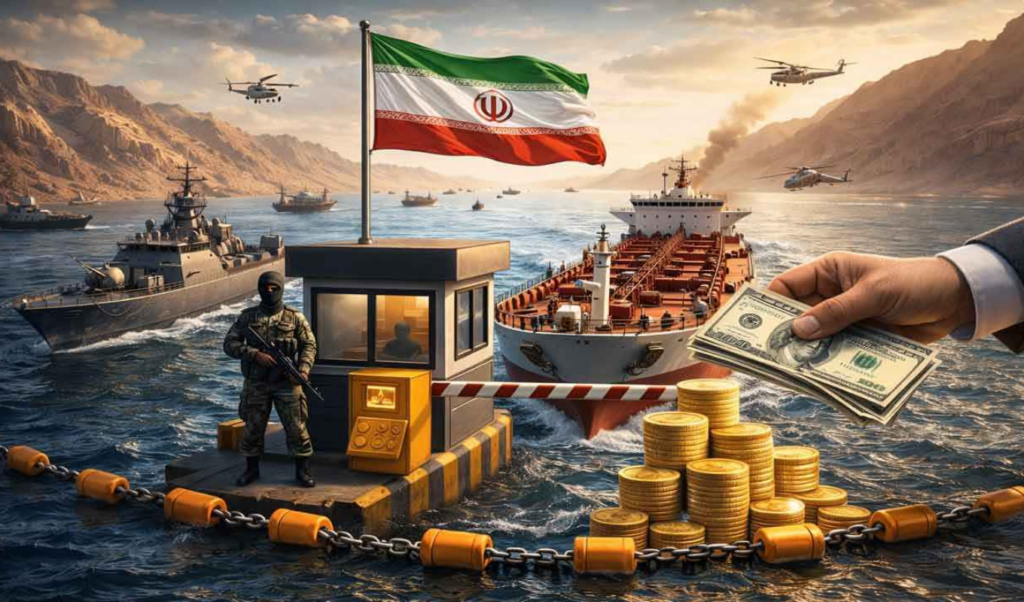
While Iran subsequently eased these restrictions to allow the passage of commercial shipping, it introduced two stringent new conditions for transit:

  1. Financial Levy: The payment of a one-dollar toll per barrel of oil transported through the waterway.

  2. Military Authorisation: The requirement for all vessels to obtain explicit clearance from the Islamic Revolutionary Guard Corps (IRGC) before entering the Strait.


The GCC Position and International Law

The Jeddah summit served as a platform for the Gulf states to assert their adherence to international maritime conventions, specifically the United Nations Convention on the Law of the Sea (UNCLOS). Under international law, the Strait of Hormuz is recognised as an international waterway where the right of transit passage applies to all vessels. The GCC nations argue that Iran’s attempt to monetise this passage constitutes a violation of established global norms and sovereign rights.

Secretary-General Albudaiwi emphasised that the GCC would not recognise Iran’s unilateral attempts to alter the legal status of the Strait. Diplomatic observers note that the rejection is not merely a financial dispute over the proposed toll, but a strategic move to prevent Iran from establishing a precedent of administrative and military control over a global commons.


Implications for Global Energy Security

The refusal by the GCC to entertain these tolls significantly raises the stakes in the Persian Gulf. If Iran attempts to enforce the collection of fees or physically intercept vessels that refuse to pay, it could lead to military confrontations and a prolonged closure of the Strait. Such an event would likely result in an immediate and sharp increase in global crude oil prices, impacting economies far beyond the Middle East.

Furthermore, the requirement for IRGC authorisation is viewed by the GCC as a security risk, effectively allowing a branch of the Iranian military to vet and monitor the sovereign commercial activities of neighbouring states. For nations like Kuwait and the UAE, which rely heavily on the Strait for their petroleum exports, any Iranian interference is viewed as an existential threat to their economic stability.

The international community, including major oil-importing nations in Asia and Europe, is monitoring the situation with concern. While the GCC has taken a firm diplomatic stance in Jeddah, the potential for a secondary escalation remains high should Tehran proceed with the enforcement of its tolling regime. The situation represents a critical juncture in the ongoing struggle for maritime hegemony in the Middle East.


Comments