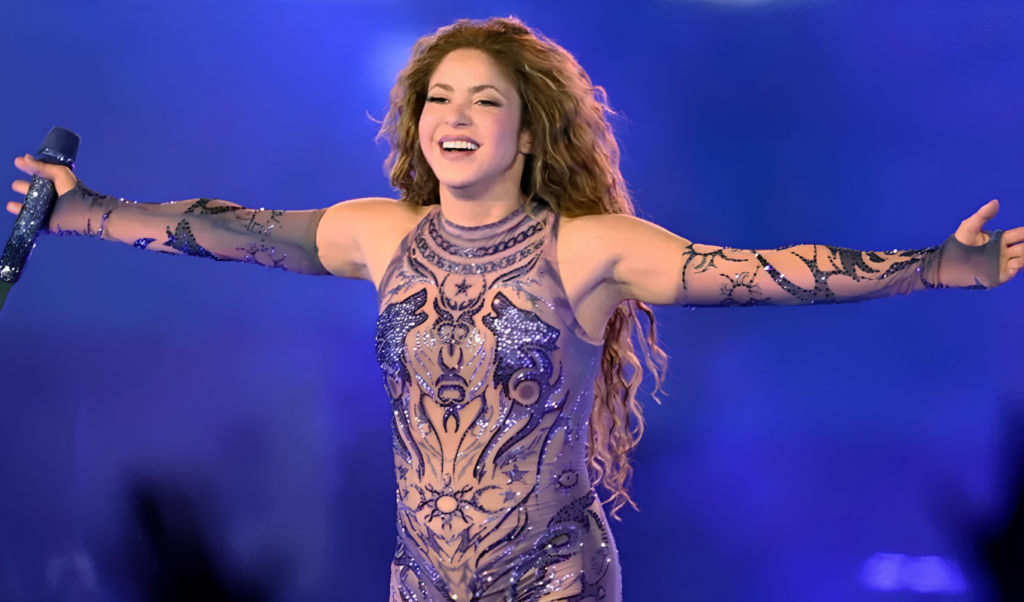
The Colombian singer, songwriter, and dancer Shakira stands as one of the most prominent figures in global music. Across a career spanning more than three decades, she has been instrumental in elevating Latin music onto the global stage. A defining pillar of her legacy remains her enduring association with the FIFA World Cup, marked by a series of memorable performances and official anthems.
The Genesis of Shakira’s World Cup Legacy
Shakira’s formal connection with the FIFA World Cup reached global prominence during the 2010 tournament held in South Africa. She performed the tournament’s official anthem, “Waka Waka (This Time for Africa)”, alongside the South African fusion band Freshlyground.
The track transcended the traditional boundaries of a tournament theme song, developing into one of the most successful sports anthems in history. Her high-profile performances at both the opening and closing ceremonies solidified her status as a permanent symbol of the tournament. The song achieved massive commercial success, selling millions of copies globally and topping international music charts. To this day, “Waka Waka” remains one of the best-selling and most-viewed World Cup songs of all time.
Chronology of Tournament Involvements
Shakira’s engagement with football’s premier tournament extends across multiple editions. Her involvement spans direct performances, official anthems, and promotional campaigns.
| Tournament Year | Host Nation | Song Title / Role | Official Status |
| 2006 | Germany | “Hips Don’t Lie” (Final Ceremony) | Promotional Performance |
| 2010 | South Africa | “Waka Waka (This Time for Africa)” | Official World Cup Anthem |
| 2014 | Brazil | “La La La (Brazil 2014)” | Official World Cup Song |
| 2018 | Russia | Opening / Promotional Ceremonies | Guest Performer |
| 2026 | United States & Canada | “Dai Dai” (featuring Burna Boy) | Official World Cup Anthem |
Musical Origins, Rise, and Global Icon Status
Born Shakira Isabel Mebarak Ripoll in Barranquilla, Colombia, in 1977, the artist demonstrated an early aptitude for poetry and musical composition. Her initial entry into the commercial music industry was marked by challenges, as her first two studio albums failed to attain significant commercial success.
Her breakthrough arrived in 1995 with the release of the album Pies Descalzos, which established her as a major star across Latin America. She subsequently achieved global mainstream recognition with her 2001 English-language crossover single, “Whenever, Wherever”. This global trajectory was further accelerated by the 2006 release of “Hips Don’t Lie”, which became one of her most successful international singles and firmly integrated Latin pop into contemporary global culture.
Presently, Shakira operates as a global cultural icon. Her relationship with the tournament remains active for the 2026 edition, where she features on the official tournament anthem titled “Dai Dai”. Produced in collaboration with the Nigerian Afro-beats artist Burna Boy, the track synthesises Afro-beats and Latin pop elements. The composition is structured around the tournament’s core theme of global unity, incorporating football motifs, references to participating nations, and high-energy rhythms designed to replicate stadium atmospheres. This ongoing integration of her musical output with the tournament has earned her the distinct reputation as the defining voice of the FIFA World Cup.