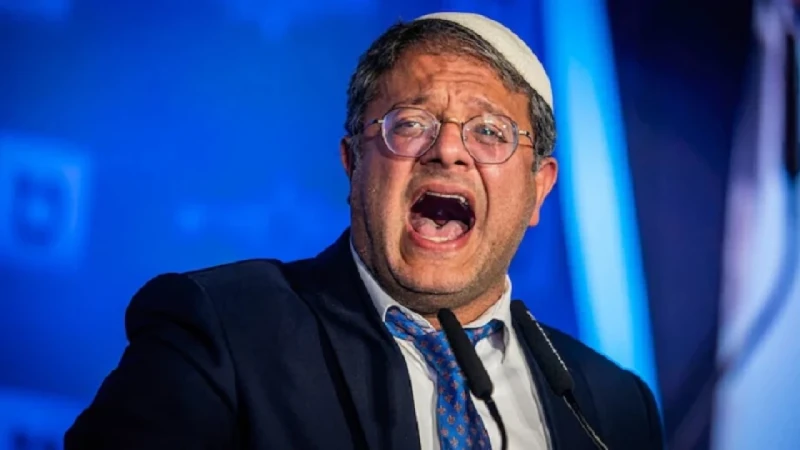
Israeli National Security Minister Itamar Ben-Gvir has explicitly stated that his country is by no means subordinate to the United States. In a statement published on the social media platform X (formerly Twitter), Ben-Gvir asserted that Israel is an independent and sovereign nation, and consequently, any compromise or agreement that undermines its national security interests remains entirely unacceptable.
Ben-Gvir’s Stance on Hezbollah and Military Strategy
According to the National Security Minister, Israel will not enter into any form of compromise or political settlement until the military and operational capabilities of the Lebanon-based militant group, Hezbollah, are completely dismantled. He further emphasised that there is absolutely no possibility of withdrawing Israeli troops from the areas that the Israel Defense Forces (IDF) have cleared of the armed group’s infrastructure.
Concurrently, Ben-Gvir issued a stern warning that Israel would not revert to any prior status quo that could jeopardize the safety of its northern border settlements. He reiterated that the Israeli military would not hesitate to launch a decisive response should any further attacks be directed towards Israeli territory.
American Counter-Perspective and Observations by Joe Kent
In stark contrast to the unyielding military stance maintained by the Israeli minister, alternative analytical viewpoints are emerging from within United States policy circles. Joe Kent, the former chief of the US National Counterterrorism Center—who notably parted ways with the Trump administration due to fundamental policy disagreements regarding Iran—has voiced a positive assessment of the ongoing diplomatic initiatives aimed at establishing a US-Iran ceasefire.
In a post shared on his official X account, Kent suggested that a suspension of United States military and intelligence assistance to Israel could significantly enhance the longevity and durability of any potential ceasefire. He further alleged that Israel has historically attempted to disrupt and derail similar diplomatic understandings on various occasions. Kent cautioned that unless the US administration implements appropriate and definitive measures, comparable destabilising scenarios are highly likely to recur in the future.
The core assertions and strategic positions outlined by the respective officials from both nations are summarised in the table below:
| Official and Designation | Country | Core Stance and Strategic Assertions |
|
Itamar Ben-Gvir (National Security Minister) |
Israel |
* Asserts Israel is a sovereign state, not subordinate to the US. * Rejects compromise until Hezbollah’s capabilities are destroyed. * Opposes the withdrawal of troops from cleared zones. |
|
Joe Kent (Former Chief, National Counterterrorism Center) |
United States |
* Views the US-Iran ceasefire initiatives as a positive step. * Advocates for suspending US military and intelligence aid to Israel. * Accuses Israel of historically sabotaging diplomatic agreements. |
Geopolitical Context and Implications
The public remarks by Itamar Ben-Gvir coincide with a period of intensified international diplomatic efforts, spearheaded largely by Washington, to negotiate ceasefires and restore regional stability across the Middle East. However, the rigid stance articulated by Ben-Gvir highlights the deep-seated resistance within the conservative factions of the Israeli administration against altering their military trajectory in response to foreign diplomatic pressure. On the other hand, the perspective shared by American security experts like Joe Kent underscores a growing debate within the United States regarding the extent of unconditional military leverage provided to foreign allies in conflict zones.