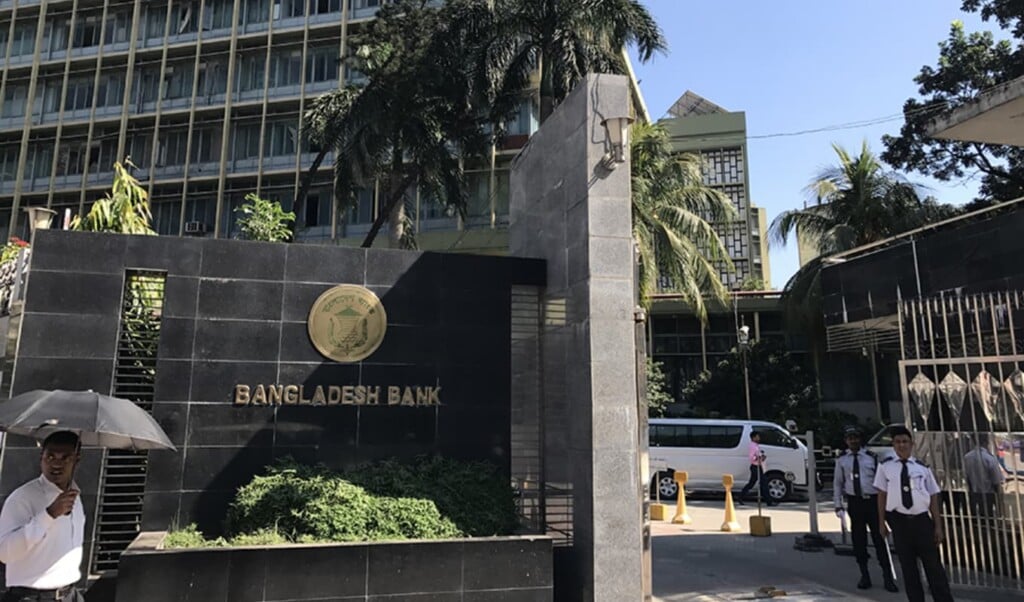
The central bank of Bangladesh has instructed commercial financial institutions to accelerate the adoption of alternative trade finance mechanisms. This directive is designed to gradually lower the country’s overwhelming reliance on traditional Letter of Credit (LC) frameworks for international commerce. According to an official regulatory circular distributed by Bangladesh Bank on Thursday, authorised dealer (AD) banks have been granted the authority to handle a wider array of international trade settlement options.
The updated regulatory parameters explicitly permit commercial banks to facilitate diverse trade financing alternatives. These include advance payments, open account exports, and standard documentary collection methodologies, specifically Documents against Payment (DP) and Documents against Acceptance (DA).
Integration of Supply Chain Finance and Electronic Records
While Bangladesh Bank confirmed that Letters of Credit remain entirely valid and globally recognised trade instruments, the regulator emphasized the growing necessity of implementing modern, flexible tools. The new circular focuses on expanding open account transactions, documentary collections, and structured supply chain finance (SCF) models, including reverse factoring and dedicated supplier or buyer financing systems.
Under the new operational rules, import transactions can be completed without a standard LC, provided they are conducted via verified purchase and sales contracts. These transactions must fully comply with all applicable statutory regulations and do not place any direct financial liability on the processing banks unless a separate payment guarantee has been explicitly contracted.
To optimize liquidity across domestic supply networks, commercial banks are urged to implement structured reverse factoring systems. This mechanism permits suppliers to receive early payments against trade invoices that have been formally validated by creditworthy corporate buyers. Furthermore, the central bank has directed the banking sector to adopt digital trade documentation systems. Electronic files—including digital commercial invoices and transport records—may be formally accepted for trade settlement, provided they undergo rigorous verification, maintain unambiguous legal validity, and clear institutional risk assessments.
Technical Breakdown of Authorised Trade Instruments
The revised framework outlines specific regulatory and operational parameters for international trade settlements:
| Instrument Type | Payment Execution | Primary Risk Bearer | Institutional Liability |
| Letter of Credit (LC) | Settled upon verified document compliance | Issuing Financial Institution | Mandatory payment obligation upon correct presentation |
| Advance Payment | Executed entirely prior to goods being shipped | Importer (Buyer) | Administrative processing only; no credit exposure |
| Open Account | Executed after the delivery of goods | Exporter (Seller) | Processing agent without inherent financial guarantee |
| Documents against Payment (DP) | Paid at sight prior to document release | Balanced via banking intermediaries | Financial institution acts strictly as a collecting agent |
| Documents against Acceptance (DA) | Settled on a specified future maturity date | Exporter post-acceptance of terms | Zero liability unless bank explicitly guarantees the bill |
| Reverse Factoring (SCF) | Early discount funding prior to invoice maturity | Aligned with the buyer’s credit rating | Optional financing driven by bank-approved invoices |
Financial analysts and trade experts state that these structural changes will enhance international transactional efficiency, inject critical working capital into import-export channels, and accelerate the integration of Bangladesh into automated global supply chains while preserving necessary regulatory safeguards.