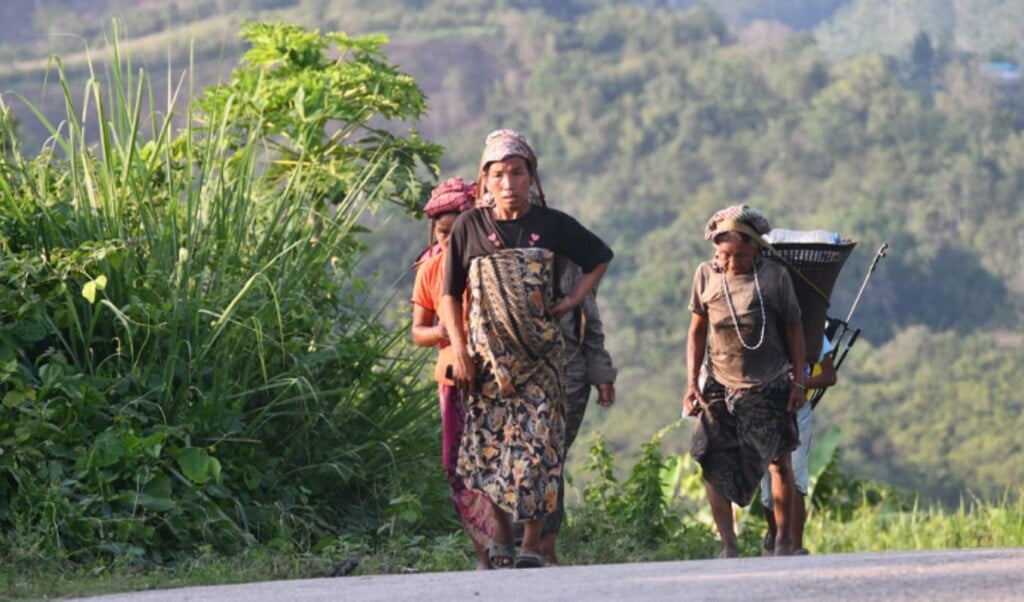
While Bangladesh’s national insurance penetration rate stubbornly hovers between a mere 0.33% and 0.5% of Gross Domestic Product (GDP), the financial safety net drops away almost entirely in the Chittagong Hill Tracts (CHT). Across the rugged terrains of Rangamati, Khagrachhari, and Bandarban, the formal financial sector remains largely invisible to the local population. Industry analysts point to a compounding mix of complex linguistic hurdles, an urban-centric marketing model, deep-seated cultural alienation, and an industry-wide crisis of credibility that leaves these indigenous communities exposed to severe economic risks.
The Language of Exclusion and Marginalized Geography
At the heart of the CHT financial freeze is a fundamental communication breakdown. Insurance as a concept relies on absolute clarity, yet the industry speaks a language foreign to the hills. Standard policies are dense with complex financial jargon. Terms like surrender value or lapsed policy are confusing enough for ordinary citizens; for indigenous communities like the Chakma, Marma, Tripura, and Mro, they create an immediate, alienating barrier to entry.
This linguistic gap is widened by the physical and cultural geography of the region:
-
The Plains-Hills Divide: The vast majority of field agents are recruited from plains districts. Lacking any fluency in local dialects or familiarity with unique cultural structures, their sales pitches fail to connect.
-
Geographical Fractures: Communities are scattered across remote, mountainous terrains with limited infrastructure, making regular face-to-face follow-ups and relationship-building logistically difficult for outside firms.
-
Monolingual Marketing: Promotional materials, policy documents, and financial literacy brochures are printed strictly in the national language, effectively locking out those who primarily speak or read native hill languages.
The Trust Deficit: A Reality Check in Numbers
Beyond communication issues, the insurance sector suffers from a profound deficit of public trust. In small, tightly knit hill communities, word travels fast when a neighbor faces bureaucratic hurdles or delays trying to collect a payout on a matured policy. This localized skepticism is backed up by jarring industry data.
According to data compiled by the Insurance Development and Regulatory Authority (IDRA) covering January through September 2025, the industry’s payout record struggles to inspire confidence. Out of 4,600 crore in premiums collected across the country, only 2,221 crore was paid out in settled claims. Meanwhile, the mountain of outstanding, unpaid claims grew to an alarming 9,624 crore.
National Insurance Claims & Payout Metrics (Jan–Sep 2025)
| Insurance Category | Total Premiums Collected (Tk) | Total Claims Settled (Tk) | Sector-Specific Settlement Rate |
| Life Insurance | 3,050 crore | 2,106 crore | 35.18% |
| Non-Life Insurance | 1,547 crore | 275 crore | 7.55% |
| Combined Industry Total | 4,600 crore | 2,221 crore | 23.00% (Industry Average) |
The Settlement Gap: A meager 23% average claim settlement rate across the entire industry—skewed heavily downward by a single-digit payout rate in non-life insurance—fuels the widespread belief that insurance is a one-way financial street.
While initial sales pitches focus on security and easy returns, the actual claims process often introduces a labyrinth of paperwork and hidden clauses that alienate rural policyholders, solidifying a multi-generational aversion to formal risk management.
Charting a Path Toward Native Financial Inclusion
To bridge the gap between the insurance sector and the CHT, industry experts argue that the entire business model requires an overhaul. If commercial providers want to tap into the hill tracts market, they must adapt to its cultural landscape rather than expecting the population to assimilate to theirs.
Economic strategists and cultural advocates outline several necessary reforms:
-
Hyper-Localized Recruitment: Companies must prioritize hiring and training indigenous youth from within the CHT to serve as the primary face of field operations, instantly dissolving dialect barriers and building authentic community trust.
-
Multilingual Documentation: Core policy terms, benefits, and educational booklets need to be translated into major local languages, such as Chakma and Marma, using simplified explanations instead of rigid technical terminology.
-
Targeted Micro-Insurance: Regulators should incentivize the creation of low-premium, high-transparency micro-insurance products tailored specifically to the agrarian and artisanal economic realities of the hill communities.
Only by shifting from a rigid, top-down approach to an inclusive, localized framework can the insurance industry hope to dismantle these historic barriers and provide the Chittagong Hill Tracts with the economic security they need.