Khaborwala online desk
Published: 15 Nov 2025, 09:26 am

The sea at night is shrouded in darkness. On the southwest coast of St. Martin’s Island, the roar of engines merges with the sound of waves. Several trawlers sway on the tidal waters—moving toward Myanmar’s Rakhine with lights turned off. Bags filled with rice, lentils, oil, onions, medicines and essential goods are stored inside the trawlers. Behind the façade of fishing lies a dangerous trade. In exchange for these Bangladeshi goods, trawlers return with yaba and crystal meth worth crores of taka.
St. Martin’s Island, Shahparir Island and Teknaf, adjacent to the Naf River and Bay of Bengal, have become the new hotspot for this ‘goods-for-drugs trade’. Sending goods worth 2 million taka returns drugs worth at least 20 million taka. Using deep-sea routes and fishing docks, this secret trade continues. Local influential people, fishermen and Rohingyas are involved. The notorious ‘Seven Star Group’ leads the network.
Barter trade dates back to prehistoric times—rice for wheat, fish for vegetables—long before the invention of currency. That ancient practice has now returned in a dreadful form.
Taking advantage of the Arakan Army’s dependence on food and medicine, an illicit network has built this barter empire. Locally known as ‘Bangla Goods’, these products are smuggled at night through the sea route; before dawn, trawlers return from Rakhine loaded with drugs. Women, children and Rohingyas are used in carrying and offloading. To evade suspicion, staged ‘kidnapping dramas’ are arranged.
According to BGB and Coast Guard information, drugs worth 1.5 billion taka and Bangladeshi goods worth millions were seized in the past 9 months. Over a hundred smugglers were arrested, yet the three-point syndicate—Teknaf, Shahparir Island and St. Martin’s—remains active in the darkness of the deep sea.
It is known that the Arakan Army has taken control of Rakhine after ousting the junta, but they remain practically isolated. With communication cut off from Myanmar’s mainland, they rely on Bangladesh for food, essential goods and medicines. Taking advantage of this, illicit traders—many of them Rohingyas—have formed networks. Local influential people, public representatives, fish traders and fishermen are also involved.
Bangladeshi rice, lentils, oil, potatoes, onions, fertilizers and cement are transported to Rakhine via sea. In return come yaba and crystal meth. For every 2 million taka worth of goods, drugs worth at least 20 million taka are received.
The main hotspots are St. Martin’s, Shahparir Island, Teknaf and the deep-sea routes of Cox’s Bazar. Drugs brought in exchange for ‘Bangla Goods’ are unloaded via fishing docks and spread across the country. Women, children and Rohingyas are used for transport.
On 3 November, the reporter spoke anonymously at St. Martin’s jetty with a key figure in the smuggling ring—former ward member Abdur Rashid alias Rashid Member. He said he has been trading with Rakhine since 2009. Initially, he brought watermelons to Dhaka’s Sadarghat. He also crossed the Naf River to visit Rakhine, where he claims to have a large syndicate.
According to him, “Drug trade in exchange for Bangla Goods is more profitable. Even if caught, the loss is small. With goods worth 2 million taka, you can get drugs worth 20 million. Even if two or three out of five consignments are seized, you still profit.” Though he did not directly admit involvement, he said, “The Arakan Army seized my trawler eight times. I was on board four times. They kept the goods and fish but released us.”
According to investigations by news media, at least four smuggling points were identified in St. Martin’s—southwest coast (near Cheradia), west coast (West Beach), Dabbariya Point and the northeastern corner.
As dusk faded, the reporter visited the southwest coast near Cheradia Island. At night, mid-sized trawlers hide rice, lentils, oil, potatoes, onions and fertilizers under temporary tents. Fishermen said lights are turned off to avoid Coast Guard surveillance. Goods are unloaded from trawlers to small boats. The same pattern takes place at Dabbariya Point and West Beach.
According to BGB data, from January to September, drugs worth 1.589 billion taka were seized. Bangladeshi goods worth over 2.1 million taka were also confiscated. Seventy-nine smugglers were arrested and 99 cases were filed.
In 9 months, BGB seized yaba worth 1.398 billion taka and arrested 66 people in 77 cases. They also seized 2.946 kg of crystal meth worth 147.3 million taka, arresting seven people in two cases. Additionally, liquor, beer, cannabis, Phensedyl and heroin worth 312,000 taka were seized, with five arrested in seven cases.
According to the Coast Guard, between June and mid-September, 304.86 grams of gold, 515 sacks of urea, 1,280 bags of cement and 115 tons of goods were seized during attempted smuggling to Myanmar. Fifteen boats were seized and 102 traffickers arrested in 14 cases.
The smuggling route map shows that the Arakan Army uses St. Martin’s and Shahparir Island waters for drug trafficking. Drugs from Nyaikandia Camp are transported via deep sea to a floating pool 10–12 nautical miles inside Bangladeshi waters, then delivered using small trawlers when opportunity allows.
Key figures include Abdur Rashid (Danda Rashid), Rashid Member, and Rohingya Monaf (Barmaiya Monaf), among others. Smuggling networks operate in Shahparir Island, Teknaf and Sabrang as well.
Local intelligence claims many trawler seizure incidents are staged. Fishermen willingly go to Rakhine and pretend to be kidnapped. Some are detained for failing to pay for drugs received from the Arakan Army.
A man named Azad—accused of embezzling 9.3 million taka from the Arakan Army—is considered a key figure on the Bangladesh side. Due to non-payment, several boats and fishermen from Teknaf were recently detained.
Abdur Rashid of St. Martin’s also allegedly withheld money. Local fishermen said the Arakan Army would fire shots upon seeing his large black trawler. The incident involving 18 fishermen taken aboard three trawlers might be connected.
A man named Rafiq, residing in Danyawaddy of Rakhine, runs much of the network from Myanmar. Others like Abul Kalam, Goura Putu, Juhur Ahmed, Saleh Ahmed and Mizan are also involved.
Teknaf UNO Sheikh Ehsan Uddin said, “Efforts are underway to rescue the detained fishermen. They are being advised not to enter Myanmar waters. Anti-smuggling operations by law enforcement continue.”
Lt. Col. Ashiqur Rahman of Teknaf Battalion (2 BGB) said, “BGB maintains zero tolerance against smugglers. Along with strict surveillance, regular operations continue.”
Khaborwala/TSN

> Veteran Singer Dalia Naushin Dies
> Bangladesh Police Recruitment: Sergeant Vacancies Open Nationwide
> Jadeja Surpasses Malinga in Historic IPL Milestone
> Court Orders Damages in Defamation Case
> Moored Launch Sinks at Chormain Ghat
> Iraq Secure Historic World Cup Return After Forty Years
> Former Child Star Simrin Lubaba Marries Spiritual Transformation
> UN Peacekeepers Killed in Lebanon Strikes
> Brazil Vs. Croatia: Clash After 1,208 Days
> Japan Post Deepens KKR Alliance
> Life Insurance Payout Crisis Deepens
> Dhaka Raid Nets Liquor Worth Tk 70 Lakh in Kafrul


Renowned Bangladeshi Nazrul Sangeet exponent and veteran voice artist of the historic Swadhin Bangla...
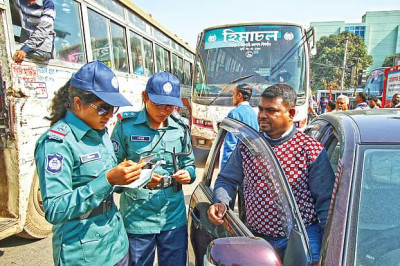
The Bangladesh Police have officially announced a recruitment drive for the position of Sergeant, of...

A Lahore sessions court has delivered its final verdict in a high-profile defamation dispute between...

A moored passenger launch, Manik-4, sank on Wednesday afternoon at Chormain Ghat in Chormain Ghat af...

Police in Srimongol Moulvibazar, have arrested two suspects in connection with the murder of 14-year...
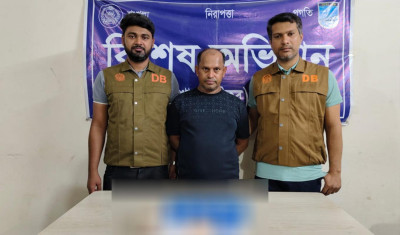
A professional drug trafficker has been arrested in Savar, on the outskirts of Dhaka, following a ta...

An unidentified female body was discovered inside an abandoned trunk left by the roadside in Shreebo...
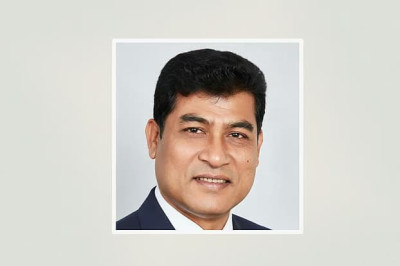
Following a razor-thin defeat in the recent 13th National Parliamentary Elections, Nazrul Islam Moll...
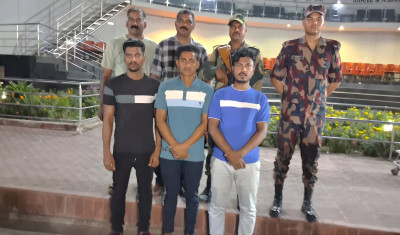
Three Bangladeshi youths who had earlier been trafficked and subsequently detained in India have bee...
A disturbing incident in Cumilla’s Daudkandi municipality has led to the arrest of a teenager accuse...
A ten-month-old infant has died after showing symptoms consistent with measles at Shaheed Ziaur Rahm...
The apparent military imbalance between the United States and Iran suggests a swift and decisive out...


Availabe for iphone & ipads

Available in google play
 বাংলা
বাংলা