Published: 10 Mar 2026, 06:43 am
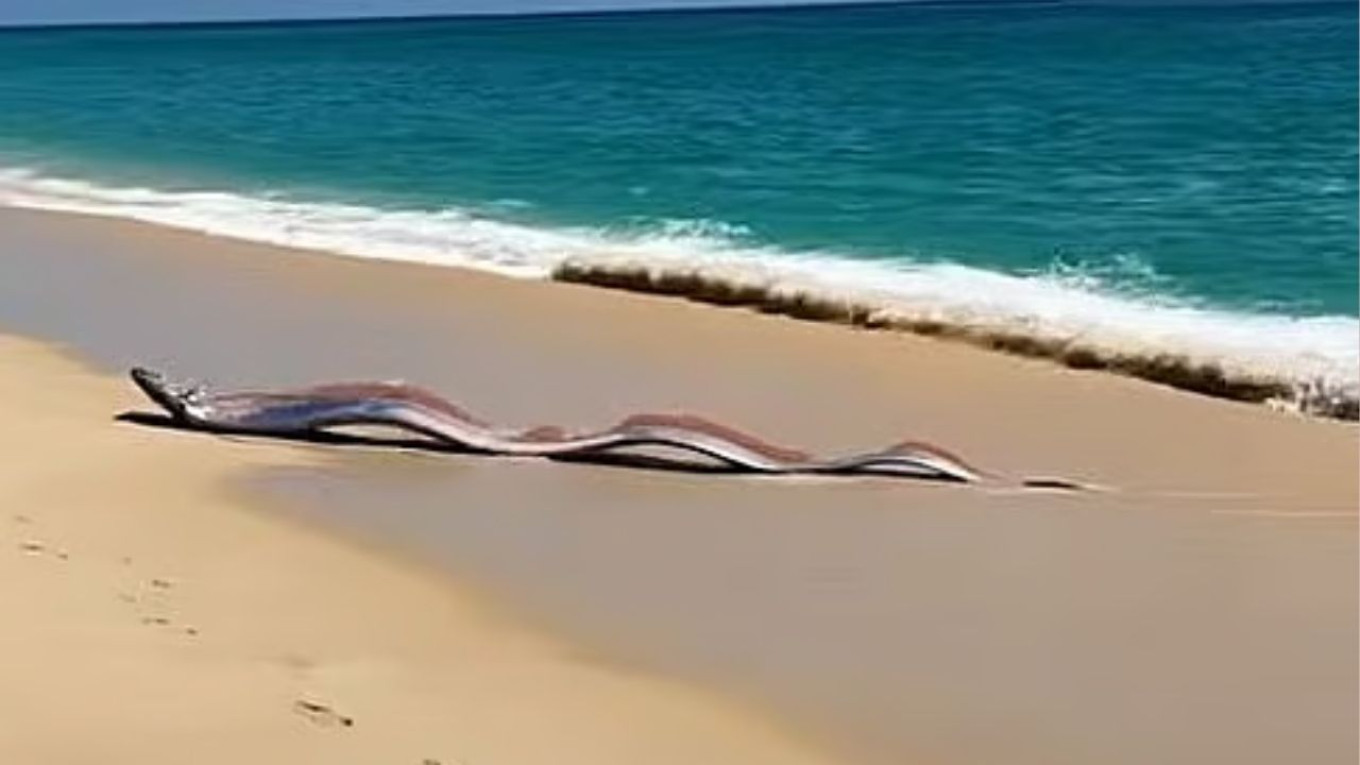
The pristine shores of Cabo San Lucas, Mexico, became the stage for an extraordinary and, for some, unsettling encounter last month. Two American tourists, Monica Pittenger and her sister Katie, stumbled upon a pair of rare, giant oarfish washed up on the sand. While marine biologists view the sighting as a rare scientific opportunity, ancient folklore suggests these "Messengers from the Sea God’s Palace" are harbingers of imminent natural catastrophe.
Commonly known as the "earthquake fish," the oarfish (Regalecus glesne) is a creature of mystery. It typically resides in the "mesopelagic" or twilight zone of the ocean, at depths exceeding 3,000 feet. Because they live so far below the surface, humans rarely encounter them alive; most sightings occur only when the fish are dead or dying. To witness two healthy, 30-foot specimens struggling in the surf simultaneously is described by experts as "nearing the miraculous."
The superstition surrounding the oarfish dates back to 17th-century Japan. According to legend, these fish rise to the surface to warn of shifting tectonic plates. While scientists remain sceptical, several high-profile coincidences have kept the myth alive in the modern era:
| Event Date | Location | Observation | Outcome |
|---|---|---|---|
| March 2011 | Japan | ~20 Oarfish found on coast | Magnitude 9.1 Tohoku Earthquake |
| February 2017 | Philippines | Multiple sightings in Agusan | Magnitude 6.7 Earthquake |
| Last Month | Mexico | Two 30-foot specimens | Ongoing observation |
The 2011 Japanese disaster, which claimed nearly 20,000 lives, is often cited by believers as the most chilling evidence of the fish's "prophetic" nature, as dozens were found beaching themselves in the months leading up to the Great East Japan Earthquake.
For the Pittenger sisters, the encounter felt less like an omen and more like a scene from a science-fiction epic. "The fish were like giant silver ribbons, shimmering and thrashing on the sand," Monica recounted. Despite the intimidating size of the creatures—which can grow up to 36 feet and weigh over 600 pounds—Katie and a group of five bystanders spent hours battling the tide to guide the distressed animals back to deeper waters.
Scientists suggest that when oarfish appear in the shallows, it is often due to illness, disorientation caused by shifting currents, or extreme weather events rather than seismic activity. Nevertheless, for the residents of Cabo San Lucas, the sight of these deep-sea titans remains a haunting reminder of the ocean's unsolved mysteries.

> Gold Prices Fall Amid Global Market Volatility
> Iranian Women Footballers Seek Safety in Australia
> Mass Resignation of NCP Leaders in Rangamati
> Community Bank Arranges Textile Sector Financing
> Young Man Fatally Stabbed in Shantibagh Dispute
> Dhaka Tops Global Air Pollution Rankings Again
> Nina Ong Transforms Great Eastern Life Indonesia
> Xavi Claims Laporta Blocked Messi’s Barcelona Return
> Sri Lanka Offers Free Visa to Rescued Iranian Sailors
> BNP MP Welcomes Freed Awami League Leader with Flowers
> Bruno Mars’ ‘The Romantic’ Debuts at No. 1
> Zurich Insurance Acquires RedClick from Generali


Five members of the Iranian women’s national football team have taken refuge in a secure location in...

The G7 group of advanced economies has reached a preliminary consensus to refrain from releasing eme...

The President of the European Commission, Ursula von der Leyen, has issued a stark warning regarding...

The Mineiro Championship final in Brazil, traditionally a showcase of South American footballing fla...

The ethical fault lines within the artificial intelligence sector have shifted dramatically followin...

In a significant move to revitalise their international standing, Sri Lanka Cricket (SLC) has offici...

In a striking reversal of the traditional security assistance dynamic, President Volodymyr Zelenskyy...

Lionel Messi reportedly wanted to return to Barcelona—but why did the eagerly anticipated “last danc...

Global oil markets have been thrown into turmoil following Iran’s retaliatory strikes in response to...

The European football title races are heating up across the continent, with several leagues witnessi...

On 28 February, a catastrophic incident shook the city of Minab in Iran, when a primary school was h...

The distance spanned nearly four thousand kilometres, from Sydney to Perth. While the Western Sydney...


Availabe for iphone & ipads

Available in google play
 বাংলা
বাংলা