Khaborwala Online Desk
Published: 17 Jan 2026, 03:14 pm
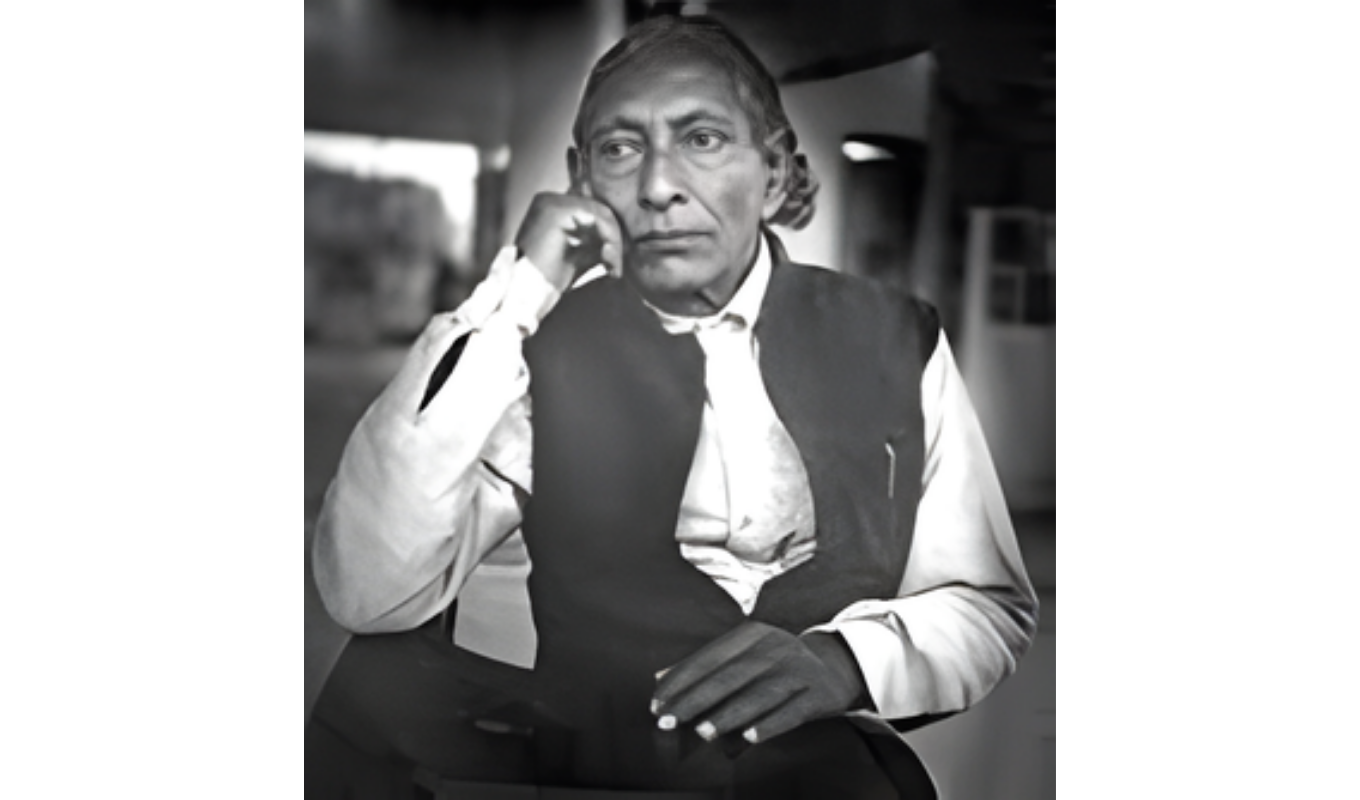
The couplet that opens with an evocation of small village homes and shared lives encapsulates the soul of rural Bengal—its earthiness, intimacy and humane simplicity. The author of those evergreen lines was Bande Ali Mia, affectionately known across generations as “Golpo Dadu”, the grandfather of stories. His literary legacy occupies a singular place in Bengali letters, where poetry, prose and the imaginative world of children meet with uncommon tenderness.
Bande Ali Mia was a writer of remarkable range. Poet, novelist, journalist, children’s author, playwright and visual artist, he devoted his creative life to portraying village existence and the inner universe of childhood with empathy and aesthetic restraint. His work is notable not for grandiloquence but for its quiet clarity, grounded in lived experience and moral warmth.
He was born on 17 January 1906 in Radhanagar village of Pabna district, into a lower middle-class family. His father, Munshi Umed Ali, served in a minor clerical post at the Pabna Judges’ Court. Despite limited financial means, the household placed strong emphasis on education, shaping the young Bande Ali Mia’s intellectual discipline and ethical outlook from an early age.
An accomplished student, he passed his matriculation examination from Pabna’s Majumdar Academy in 1923 and later enrolled at the Calcutta Art Academy, where he graduated in first division. This formal training in the visual arts sharpened his sense of form, imagery and composition—qualities that would later become hallmarks of his literary style.
His professional life began in journalism. In 1925, he joined the magazine Islam Darshan as a reporter. Between 1930 and 1946, he worked as a teacher in schools run by the Calcutta Corporation, balancing pedagogy with an increasingly prolific literary career. During his years in pre-Partition Calcutta, he came into close contact with Rabindranath Tagore and Kazi Nazrul Islam, encounters that profoundly refined his literary consciousness.
By this period, his creative output had reached extraordinary volume. Nearly 200 books were published during his lifetime, spanning poetry, short stories, novels and children’s literature. His plays and narrative songs were also released by gramophone companies, achieving wide popularity beyond the printed page.
After 1964, Bande Ali Mia relocated to Dhaka, later serving at Rajshahi Radio. Broadcasting allowed his voice and stories to reach an even broader audience, cementing his reputation as a beloved literary elder. His writing is distinguished by its vivid portrayal of pastoral landscapes, simple moral worlds and the imaginative freedom of children—elements that continue to resonate with readers today.
His contributions were recognised with major honours, including the Bangla Academy Award and the President’s Award. He was later posthumously awarded the Ekushey Padak, one of the highest civilian honours for cultural achievement.
Bande Ali Mia passed away on 27 June 1979 at his residence in Kazir Hat, Rajshahi. He remains far more than a poet or storyteller: he endures as the literary voice of rural Bengal, a lifelong companion to children’s imaginations, and a custodian of humane beauty in Bengali literature.
Key Milestones in Bande Ali Mia’s Life
| Year | Event |
|---|---|
| 1906 | Born in Radhanagar, Pabna |
| 1923 | Passed matriculation from Majumdar Academy |
| 1925 | Began career in journalism |
| 1930–46 | Taught in Calcutta Corporation schools |
| 1962 | Received Bangla Academy Award |
| 1964 | Joined radio services in Dhaka and Rajshahi |
| 1979 | Died in Rajshahi; later honoured with Ekushey Padak |

> Walsh Appointed Zimbabwe’s Bowling Consultant
> AR Rahman Faces Challenges in Bollywood Over Religion
> Solitude and Grace: The Life of Suchitra Sen
> BTS Reveal Arirang As New Album
> Strategic Overhaul in Asia’s Insurance Sector
> Is Liverpool’s Salah–Van Dijk Era Ending
> Fire Breaks Out in Dhaka’s Uttara Home, Six Dead
> Egg prices have fallen, fish and chicken markets remain stable
> "AR Rahman hinted that the shift of power in Bollywood has affected his career."
> “Harford Mutual donated $600,000 in 2025”
> “LIAJ chief outlines three priority areas for Japan’s life insurance sector in 2026”
> A$AP Rocky Escalates Drake Feud in New Track
> Critics say FIFA lacks democratic practice, label Infantino authoritarian
> Nazmul has not resigned yet; cricketers remain steadfast on playing


“I am a solitary person,” says legendary actress Suchitra Sen, reflecting on a life lived on her own...

In a decisive effort to maintain law and order across Dhaka, the Dhaka Metropolitan Police (DMP) con...

The Insurance Development and Regulatory Authority (IDRA) has officially announced an invitation for...
A devastating head-on collision between two passenger buses on the Dhaka–Sylhet highway in Osmani Na...

Tension erupted at Sylhet’s M A G Osmani Medical College Hospital on Friday night following an attac...

Bangladesh is grappling with an acute shortage of liquefied petroleum gas (LPG), triggering a sharp...
In a move that signals a pragmatic shift in regional diplomacy, the Indian Ministry of External Affa...
The dream of seeing the "Bengal Tigers" roar on the grandest stage of international football has rec...
A harrowing incident in the Rupganj Upazila of Narayanganj has left two people dead following a botc...

In a remarkable turn of events during the latest fixture of the Bangladesh Premier League (BPL), Sho...

In a chilling discovery that has sent shockwaves through the local community, the decomposed remains...
The run-up to the 13th National Parliamentary Election has been marred by tragedy in Mymensingh’s Dh...


Availabe for iphone & ipads

Available in google play
 বাংলা
বাংলা